👉 Register for Free. How to Diagnose Sleep Apnea Faster in Primary Care – FREE Webinar by Dr. Audrey Wells. – Friday, April 24 at 12 PM ET

Why Your Over-the-Counter Snoring Mouthguard Isn’t Treating Your Sleep Apnea
That drugstore snoring mouthguard may have quieted your nights, but if you have sleep apnea it is likely leaving the real problem untouched, and Dr. Avinesh Bhar, a board-certified sleep physician at SLIIIP.com, sees the fallout when people mistake a quieter night for a treated one. Silencing the sound of snoring is not the same as fixing the breathing pauses underneath it. A boil-and-bite device can hush the noise while the deeper issue keeps going.
SLIIIP’s board-certified sleep physicians can do sleep evaluations for sleep apnea. Virtual consultations in all 50 states. Home sleep tests shipped to your door.
Snoring Is a Symptom, Not the Whole Story
Snoring is the sound of air squeezing past relaxed tissue in your throat. It can be harmless, or it can be the loudest clue that your airway is collapsing during sleep. The trouble is that the sound alone does not tell you which one you have.
Sleep apnea means your breathing actually pauses again and again, and snoring is just one possible sign of it, not proof of it either way. Some people with apnea snore loudly, some barely snore at all, and this guide on sleep apnea without snoring explains that gap.
So when a device targets the noise, it is chasing a symptom, not the condition. To understand how the two relate, this overview of sleep apnea and snoring is a helpful place to start.

What an Over-the-Counter Snoring Mouthguard Actually Does
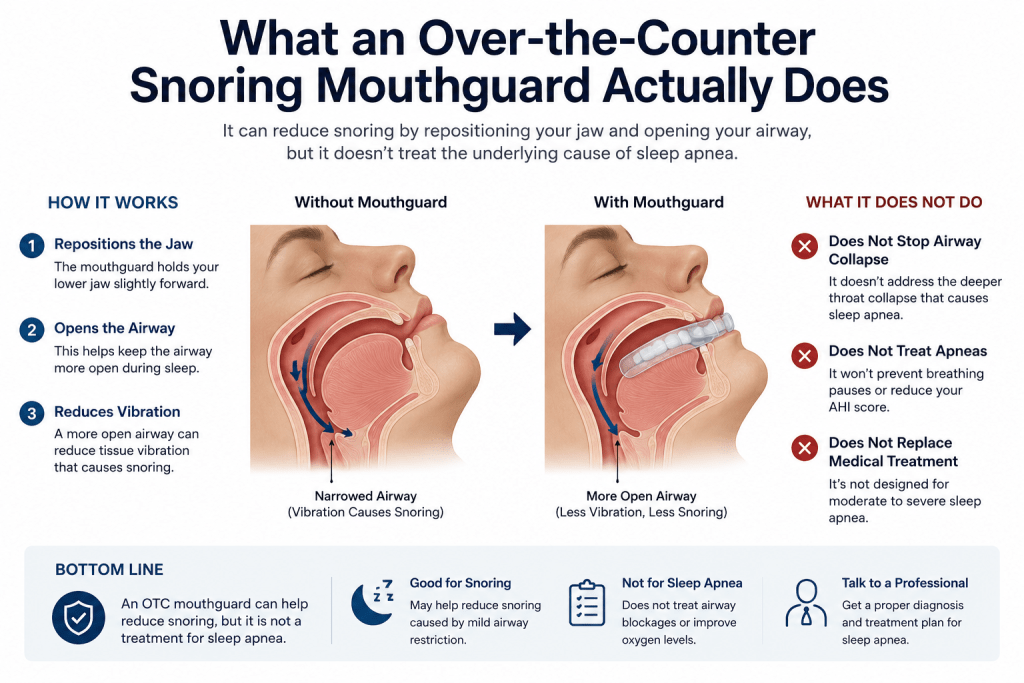
A store-bought guard is built to reduce vibration, which is what softens the sound. It nudges your jaw or tongue forward a little to open the airway just enough to quiet snoring, but it is a one-size-fits-most product with no medical calibration behind it. That design goal is comfort and noise, not measured airway support.
These devices are usually the boil-and-bite kind. You soften them in hot water and press them onto your teeth, which gives a rough fit rather than a precise one. There is no pressure testing, no follow-up, and no way to confirm your breathing has improved.
For occasional, harmless snoring with no apnea, that can be fine. The problem starts when one quietly stands in for treatment you actually need. This comparison of a custom oral appliance versus a mouthguard lays out the difference clearly.
Why a Quieter Night Can Be a False Comfort
Here is the risk that trips people up. When a snoring mouthguard hushes the sound, everyone in the house sleeps better, so it feels like the problem is solved even if the breathing pauses continue in silence. Your partner stops complaining, and the warning sign disappears.
That silence can be misleading. If apnea is still happening, your body is still waking itself dozens of times a night to restart your breathing, whether or not you make noise. You may keep waking up tired, foggy, or unrefreshed even though the snoring is gone.
In other words, muting the alarm does not put out the fire. If you still feel wiped out despite quiet nights, that mismatch is worth taking seriously, and this read on whether it is worth getting tested can help you decide.
Custom Oral Appliances Are a Different Thing Entirely
It is worth being clear that not all mouth devices are created equal. A custom oral appliance is a medical device, fitted by a dentist and prescribed after a diagnosis, and for some people with mild to moderate sleep apnea it can be a real treatment option that a clinician recommends. That is a world apart from a drugstore guard.
The difference is precision and oversight. A custom appliance is molded to your mouth, adjusted over time, and chosen because your test results support it. It is one tool a clinician may reach for, alongside options like CPAP, and this overview of an oral appliance for sleep apnea explains how it works.
Whether an appliance or another approach fits you is a medical decision, not a shopping one. This comparison of an oral appliance versus CPAP shows how the choices stack up once you have a diagnosis in hand.
Watch: Is Sleep Treatment Working? – SLIIIP.COM
Why You Need a Diagnosis First
You cannot treat what you have not measured. According to Dr. Avinesh Bhar, the first step is never a device off a shelf but a proper evaluation, because the test tells you whether you have apnea, how severe it is, and which options actually fit. A sleep evaluation is one piece of a broader look at your health, not a formality to skip.
A home sleep test makes that first step easy. It records your breathing, oxygen, and pauses in your own bed, and a physician reads the results. You can see how it works in this overview of home sleep apnea testing, and if you are not sure you even have apnea, this list of common signs is a good gut check.
Once you know your numbers, the path forward gets clear. A clinician can match you to the right treatment instead of leaving you to guess in a pharmacy aisle. This plain overview of what sleep apnea is can ground you before that conversation.
The Real Cost of Leaving Sleep Apnea Untreated
This matters because untreated apnea is not just about feeling tired. Research links ongoing, untreated sleep apnea to strain on the heart and blood pressure over time, which is why quieting the snoring without addressing the apnea can leave a real health question unanswered. These are associations studied by scientists, and a clinician can explain what they mean for you.
The daytime toll is real too. Fragmented sleep can leave you drowsy, irritable, and foggy, and it can make driving and focus harder. A quiet night that still leaves you exhausted is a sign the underlying issue may still be there.
None of this is meant to alarm you, only to make the case for a real evaluation over a quick fix. This article on how sleep apnea affects the heart explains why doctors take it seriously, without the scare tactics.
What to Do Instead
The better path is simple and starts with information, not a purchase. Get evaluated first, then let a clinician recommend the treatment that fits your results, whether that is CPAP, a custom oral appliance, or another approach. That order protects you from spending money on a device that was never going to be enough.
If snoring is your main concern and testing rules out apnea, that is genuinely good news, and options for simple snoring open up. This guide on how to stop snoring covers gentle steps for harmless cases.
But if apnea is in the picture, a store guard is not the answer. The Centers for Disease Control and Prevention offers a plain resource on sleep health, and the National Heart, Lung, and Blood Institute has a clear overview of sleep apnea, both worth a read before you decide.
Getting Started the Right Way
Turning this into action is easier than it sounds. A quick virtual visit lets a clinician review your symptoms and decide whether a home sleep test makes sense, so you can trade guesswork for a clear plan. You never have to leave home to get moving.
If you have been leaning on a drugstore device and still feel off, that is reason enough to check. A short conversation can tell you whether your guard is doing its job or hiding a bigger one.
The bottom line is that a store guard can quiet a room, but only a real evaluation can tell you what your sleep actually needs. Starting there is the surest way to protect your rest and your health.
At Sliiip, we accept the following insurances:

SLIIIP’s board-certified sleep physicians can do sleep evaluations for sleep apnea. Virtual consultations in all 50 states. Home sleep tests shipped to your door.
Frequently Asked Questions
Does an over-the-counter snoring mouthguard treat sleep apnea?
No. A store-bought device is designed to reduce the sound of snoring, not to treat the breathing pauses of sleep apnea. Those need a proper evaluation.
Can a mouthguard cure sleep apnea?
No device cures sleep apnea, and a drugstore guard does not treat it at all. A custom oral appliance may help some people, but only after a diagnosis and under clinician guidance.
Is snoring the same as sleep apnea?
No. Snoring is a sound, while sleep apnea is a pattern of paused breathing. You can snore without apnea, and you can have apnea with little snoring.
Why do I still feel tired if my snoring stopped?
If a device quiets the noise but apnea continues, your body still wakes itself to restart breathing. That fragmented sleep can leave you tired even on silent nights.
What is the difference between a mouthguard and a custom oral appliance?
A store mouthguard is a rough, boil-and-bite product for noise. A custom oral appliance is a fitted medical device prescribed after a diagnosis, as this comparison explains.
Are custom oral appliances effective for sleep apnea?
For some people with mild to moderate apnea, a clinician may recommend one as a real option. Whether it fits you depends on your test results and medical picture.
How do I know if I have sleep apnea?
Common signs include loud snoring, gasping awake, and daytime exhaustion. A home sleep test measures your breathing to confirm it, as this list of signs describes.
Can I have sleep apnea without loud snoring?
Yes. Some people have breathing pauses with little snoring, which this guide on sleep apnea without snoring covers.
Is it dangerous to leave sleep apnea untreated?
Research links untreated apnea to strain on the heart and blood pressure over time. A clinician can explain what that means for your situation.
Why does silencing snoring feel like a fix?
When the noise stops, everyone sleeps better and the warning sign disappears. That can feel like a solution even if the apnea underneath continues.
Do I need a diagnosis before choosing a device?
Yes. Testing tells you whether you have apnea and how severe it is, which guides the right treatment. Choosing a device without that is guesswork.
Can a home sleep test tell me what I need?
A home sleep test measures your breathing overnight for sleep apnea, and a physician reviews it. From there, a clinician can match you to the right option.
Is a boil-and-bite guard ever okay?
For occasional, harmless snoring with no apnea, it may be fine. The problem is using one as a stand-in for treatment you actually need.
Should I stop using my mouthguard right away?
You do not have to make sudden changes on your own. Talk with a clinician about whether it is helping or masking a bigger issue.
Can a store-bought guard make apnea worse?
It usually does not worsen apnea, but by hiding the snoring it can delay a diagnosis. That delay is the real risk.
What treatments might a clinician recommend?
Depending on your results, options can include CPAP, a custom oral appliance, or other approaches. The right choice follows the diagnosis.
How does an oral appliance compare to CPAP?
Each suits different people and severity. This comparison of an oral appliance versus CPAP shows how they differ once you have a diagnosis.
Is snoring alone worth getting checked?
Loud, frequent snoring is worth a look, especially with daytime tiredness. If testing rules out apnea, simple snoring options open up.
Can I get evaluated without going to a lab?
Yes. A virtual consultation plus a home sleep test lets you get evaluated from your own bedroom, with a physician reviewing the results.
How do I start with SLIIIP?
Book a virtual consultation with a board-certified sleep physician to talk through your symptoms. If a home sleep test fits, one ships to your door.
Take the Next Step
A snoring mouthguard can quiet a room, but it cannot tell you whether your breathing stops at night, and only a real evaluation can. If you have been relying on a store-bought device and still wake up drained, that is the clearest sign it is time to find out what your sleep actually needs.
SLIIIP’s board-certified sleep physicians can do sleep evaluations for sleep apnea. Virtual consultations in all 50 states. Home sleep tests shipped to your door.
Latest posts
-
Why Your Over-the-Counter Snoring Mouthguard Isn’t Treating Your Sleep Apnea
That drugstore snoring mouthguard may have quieted your nights, but if you have sleep apnea it is likely leaving the real problem untouched, and Dr. Avinesh Bhar, a board-certified sleep…
-
Why Your CPAP AHI Score Flares Up When You Have a Cold
If your CPAP AHI score suddenly climbs the same week a cold hits, that jump is no coincidence, and Dr. Avinesh Bhar, a board-certified sleep physician at SLIIIP.com, sees this…
-
Why Virtual Sleep Clinics Are Replacing Traditional Overnight Sleep Labs
For decades, getting checked for a sleep disorder meant a night wired up in a lab, but virtual sleep clinics have flipped that model, and Dr. Avinesh Bhar, a board-certified…
Get updates
Spam-free subscription, we guarantee. This is just a friendly ping when new content is out.

