👉 Register for Free. How to Diagnose Sleep Apnea Faster in Primary Care – FREE Webinar by Dr. Audrey Wells. – Friday, April 24 at 12 PM ET


Frequent Night Urination: Could It Be a Sleep Disorder?
Frequent night urination interrupts sleep for millions of people, and Dr. Avinesh Bhar, Board-Certified Sleep Physician at SLIIIP.com, points out that those repeated trips to the bathroom can sometimes be tied to what is happening with your breathing and rest at night.
When you wake up again and again to use the bathroom, the reason may be more about your sleep than your bladder.
Most people assume waking up to pee is just a fact of getting older or drinking too much before bed. Sometimes that is true. But for some people, the pattern points back to the quality of their sleep.
SLIIIP’s board-certified sleep physicians can do sleep evaluations for sleep apnea. Virtual consultations in all 50 states. Home sleep tests shipped to your door.
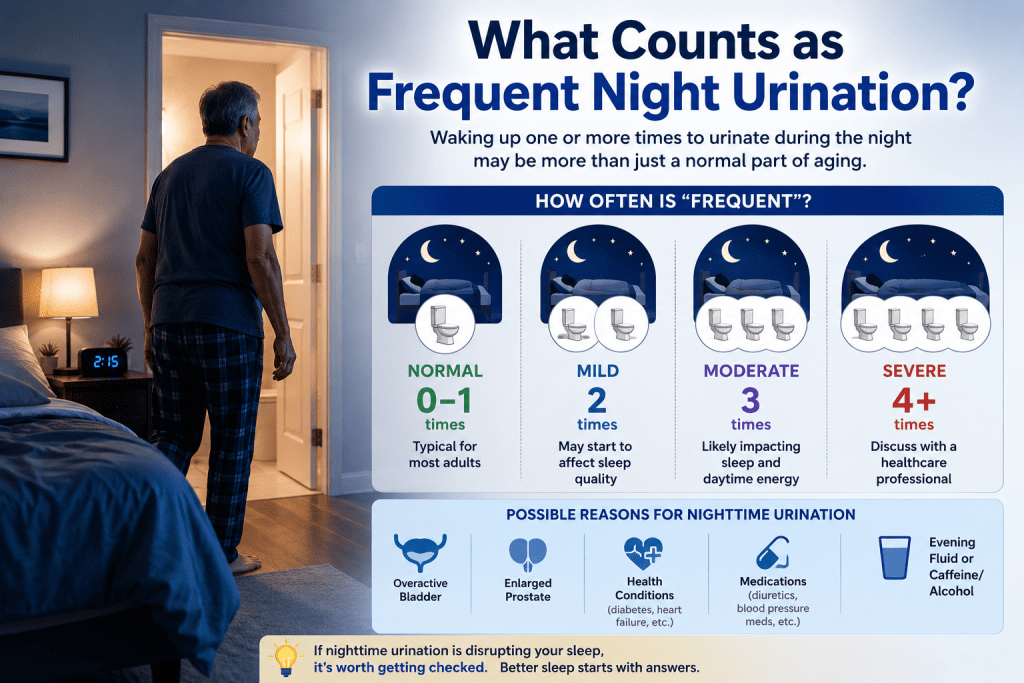
What Counts as Frequent Night Urination
Waking once in a while to use the bathroom is normal for most people. The pattern that gets attention is waking up two, three, or more times a night, every night. Doctors sometimes call this nighttime urination, and it can leave you feeling like you never get a solid stretch of rest.
Waking repeatedly to urinate is not just about the bathroom trips themselves, but about how much they break up your sleep. Each time you wake, your body has to settle back down, and that can chip away at the deep, restoring stages of rest.
The goal here is not to label anything or make a medical judgment. The goal is to help you understand the possible reasons so you can take simple steps. If your nights keep getting interrupted, a sleep telemedicine visit can help you sort it out.
CHECK YOUR SLEEP SYMPTOMS: TAKE THE 2 MINUTE QUIZ
TAKE THE QUIZ
Common Reasons People Wake Up to Urinate
There are many everyday reasons for nighttime bathroom trips. Drinking a lot of fluids in the evening is a common one. So is caffeine or alcohol late in the day, since both can increase how much you go.
Other factors include certain routines, the timing of meals, and simply being a lighter sleeper. For many people, small changes to evening habits can reduce nighttime bathroom trips on their own. This is why looking at your daily routine is a smart first step.
But when the basics are covered and the pattern continues, it can be worth asking whether something about your sleep itself is playing a role. That is where the connection to sleep disorders comes in.
How Frequent Night Urination Can Connect to Sleep
Here is the part that surprises many people. Sometimes waking to urinate is not the cause of broken sleep, but a result of it. When sleep is disturbed by a breathing issue, the body may send stronger signals to wake and use the bathroom.
Sleep-related breathing patterns, like sleep apnea, can disturb the body in ways that may increase nighttime urination for some people. When breathing pauses during sleep, the body works harder, and that stress can affect signals tied to the bladder. So the bathroom trip may be the noticeable part of a deeper sleep pattern.
If this idea is new to you, our overview of what sleep apnea is explains the basics. You can also review the common signs of sleep apnea to see if any others sound familiar.
Other Signs Worth Noticing
Nighttime urination rarely shows up alone when sleep is the cause. People often also notice loud snoring, gasping awake, morning tiredness, or trouble staying asleep. If you wake gasping, our article on why you wake up gasping for air is a helpful read.
You may also find that you wake at the same time each night. Our piece on waking up at 2am explores why that happens. The pattern of clues together is more telling than any single sign.
Why Broken Sleep Wears You Down
Even if the bathroom trips feel quick, the interruptions add up. Each wake-up pulls you out of deeper sleep, and getting back into that deep rest takes time. By morning, you may feel like you barely slept.
Sleep that keeps breaking apart leaves the body without the steady, deep rest it needs to recharge. Over weeks and months, that can show up as low energy, foggy focus, and a short fuse during the day.
If you often wake up worn out, our article on why you feel exhausted no matter how much you sleep can help you think through possible reasons. And if you want to protect your deeper sleep, our guide on how to get more deep sleep shares useful habits.
According to the National Heart, Lung, and Blood Institute, healthy sleep supports many body systems. Protecting your rest is a smart part of any wellness plan.
Healthy Habits That May Reduce Nighttime Trips
Below are simple, wellness-based habits many people find helpful. None of these are treatments or cures. They are everyday lifestyle steps you can try while you also seek clear answers about your sleep.
Adjust evening fluids. Try to ease off large drinks in the hour or two before bed.
Watch caffeine and alcohol. Both late in the day can increase nighttime bathroom trips for many people.
Keep a steady schedule. A consistent bedtime and wake time help your body settle into a rhythm.
Use the bathroom before bed. A simple routine step that can reduce one wake-up for some people.
Limit evening screens. Bright light at night can delay your natural sleep signal.
Build a calm wind-down. Reading or stretching before bed can help you drift off and stay asleep.
If you keep waking through the night, our article on how to stop waking up multiple times at night offers a practical look. The Centers for Disease Control and Prevention also shares plain-language guidance on healthy sleep habits.
Watch: A doctor explains why you wake up at 3am
When to Talk With a Sleep Physician
If you have adjusted your evening habits and still wake often to use the bathroom, especially alongside snoring or morning tiredness, it may be time to get a professional look. You do not have to guess on your own.
A sleep evaluation can help you understand whether a sleep disorder is part of your nighttime pattern. Dr. Avinesh Bhar and the SLIIIP team can review your sleep history, talk through your symptoms, and arrange a home sleep test if needed.
The process is built around convenience. You can meet a board-certified physician through a virtual visit, and a home sleep test can be shipped right to your door. There is no need to spend a night in a lab or rearrange your week. Getting answers is a step toward more restful nights.
At Sliiip, we accept the following insurances:

SLIIIP’s board-certified sleep physicians can do sleep evaluations for sleep apnea. Virtual consultations in all 50 states. Home sleep tests shipped to your door.
Frequently Asked Questions
- What is frequent night urination?
It is waking up two, three, or more times a night to use the bathroom, often enough that it breaks up your sleep on a regular basis. - Is waking up to pee always a problem?
No. Waking once in a while is normal. The pattern worth noticing is waking up several times every night. - Can a sleep disorder cause frequent night urination?
For some people, yes. Sleep-related breathing patterns like sleep apnea can disturb the body in ways that may increase nighttime urination. - Does drinking before bed cause nighttime trips?
Often, yes. Large drinks, caffeine, or alcohol late in the day can increase how often you wake to use the bathroom. - How is sleep apnea linked to nighttime urination?
When breathing pauses during sleep, the body works harder, and that stress can affect signals tied to the bladder for some people. - What other signs go along with this?
People often also notice loud snoring, gasping awake, morning tiredness, or trouble staying asleep through the night. - Why do I wake up at the same time every night?
Many things can cause this. Our article on waking up at 2am explores the common reasons in plain language. - Can frequent waking make me tired even after enough hours?
Yes. Each wake-up pulls you out of deep sleep, so you may spend enough time in bed and still feel unrested. - What everyday habits can help?
Easing off evening fluids, limiting caffeine and alcohol, keeping a steady schedule, and using the bathroom before bed may help. - What is a home sleep test?
It is a sleep study you can do in your own bed. The device is shipped to you, and the results help a physician understand your nights. - Do I have to visit a lab for a sleep evaluation?
No. SLIIIP offers virtual consultations in all 50 states, and home sleep tests can be shipped to your door. - Should I track how often I wake at night?
Keeping a simple note of your wake-ups and habits can help you and a physician spot patterns more easily. - Can stress affect nighttime waking?
Stress can disturb sleep, which may lead to more wake-ups, including bathroom trips. Calming routines may help some people. - How much sleep do adults need?
Most adults benefit from at least seven hours of sleep each night to support overall health and wellness. - Is frequent night urination more common with age?
It can become more common over time, but a steady, disruptive pattern is still worth understanding through an evaluation. - Can a partner help me notice signs?
Yes. A bed partner may notice snoring or gasping that points to a sleep pattern worth checking. - Will fixing my sleep stop the bathroom trips?
Results vary by person. Understanding the cause is the first step, and a physician can help you make an informed plan. - Should I worry about one night of frequent waking?
A single rough night usually is not a concern. A steady pattern over weeks is more worth looking into. - What happens during a sleep evaluation?
A physician reviews your sleep history and symptoms and may arrange a home sleep test to better understand your nighttime breathing. - How do I get started with SLIIIP?
You can schedule a virtual sleep evaluation online, and a board-certified physician will guide you, including arranging a home sleep test if needed.
Take the Next Step Toward Better Rest
Waking up again and again can wear you down, but understanding why is the first step toward more restful nights. You do not have to figure it out alone.
SLIIIP’s board-certified sleep physicians can do sleep evaluations for sleep apnea. Virtual consultations in all 50 states. Home sleep tests shipped to your door.
Latest posts
-
Why Can’t I Wake Up Even After Getting Enough Sleep?
Last updated: October 2, 2026. Medically reviewed by Dr. Avinesh Bhar, Board-Certified Sleep Physician, SLIIIP.com. If you can’t wake up after enough sleep, the cause is usually not the number…
-
Why Does My Heart Rate Drop So Low While I Sleep?
Last updated: October 2, 2026. Medically reviewed by Dr. Avinesh Bhar, Board-Certified Sleep Physician, SLIIIP.com. Your heart rate drops low while sleeping mainly because your body needs less work from…
-
Why Are My Naps Never Refreshing?
Last updated: October 2, 2026. Medically reviewed by Dr. Avinesh Bhar, Board-Certified Sleep Physician, SLIIIP.com. Naps that leave you groggy usually come down to how long you sleep, when you…
Get updates
Spam-free subscription, we guarantee. This is just a friendly ping when new content is out.

