👉 Register for Free. How to Diagnose Sleep Apnea Faster in Primary Care – FREE Webinar by Dr. Audrey Wells. – Friday, April 24 at 12 PM ET

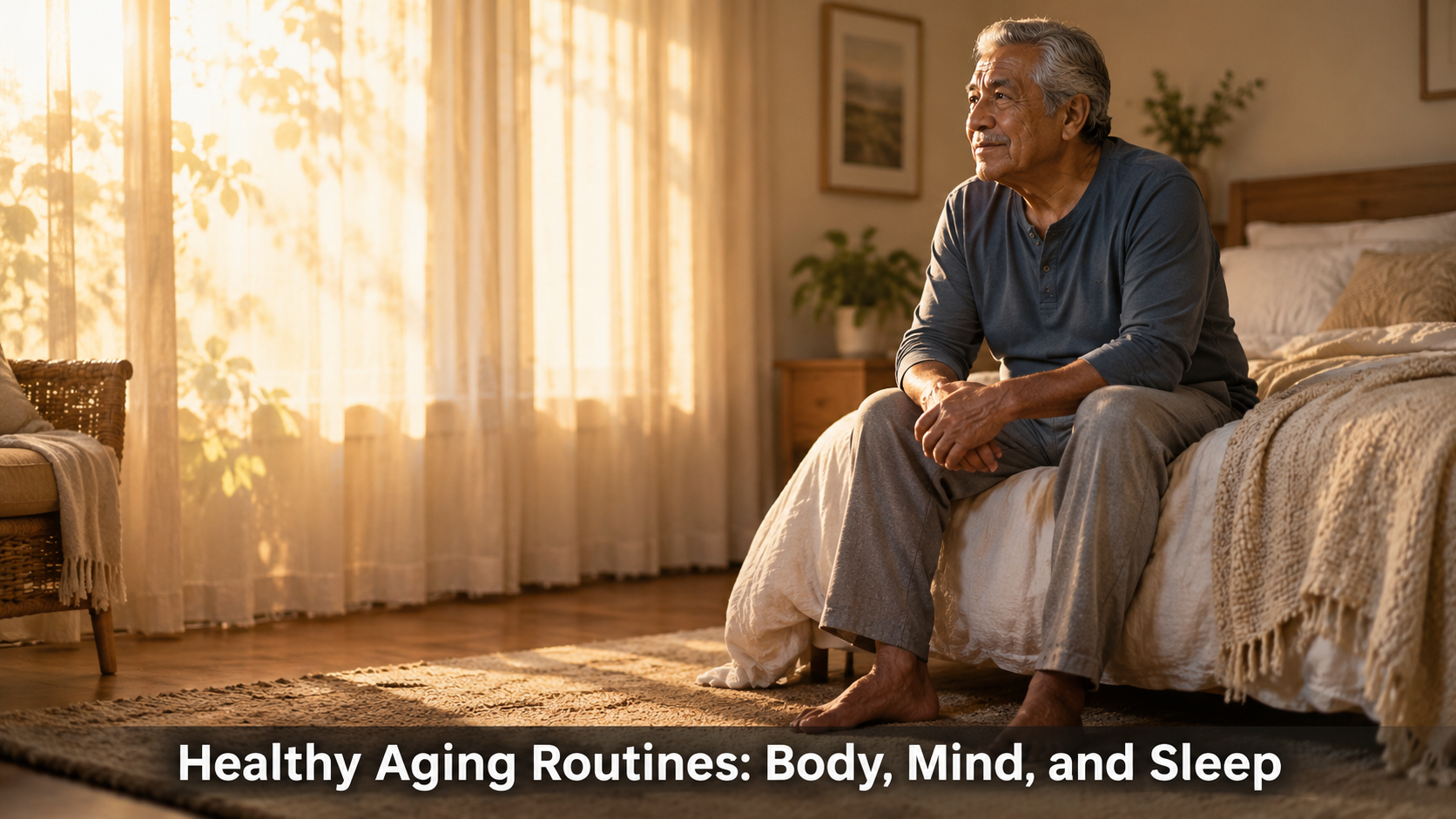
Healthy Aging Routines: Building a Daily Plan for Body, Mind, and Sleep
Last updated: September 6, 2026. Medically reviewed by Dr. Avinesh Bhar, Board-Certified Sleep Physician, SLIIIP.com.
A healthy aging routine covers far more ground than most people expect, and sleep is only one piece of it. Dr. Avinesh Bhar, Board-Certified Sleep Physician at SLIIIP.com, often sees patients who have overhauled their diet and exercise habits but never looked closely at their sleep, missing one of the pillars that ties the whole picture together. A well-rounded healthy aging routine includes physical activity, nutrition, regular screenings, social connection, and consistent sleep, each supporting the others. SLIIIP.com treats adults through virtual sleep evaluations, and Dr. Bhar explains where sleep fits into the bigger picture of aging well.
SLIIIP’s board-certified sleep physicians can do sleep evaluations for sleep apnea. Virtual consultations in all 50 states. Home sleep tests shipped to your door.
Physical Activity: The Foundation of Healthy Aging
Adults 65 and older need at least 150 minutes of moderate-intensity aerobic activity each week, along with muscle-strengthening and balance exercises, according to the CDC.
Despite this guidance, most older adults fall short of it. Balance and strength training matter as much as cardio, since they reduce fall risk and help maintain independence over time.
Nutrition Habits That Support Aging Well
A healthy aging diet emphasizes protein to help preserve muscle mass, fiber for digestive and metabolic health, and adequate hydration, which becomes easier to overlook with age.
Reducing sodium and saturated fat supports cardiovascular health, which becomes more important as heart disease risk rises with age. Small, consistent changes tend to work better long term than major diet overhauls.
CHECK YOUR SLEEP SYMPTOMS: TAKE THE 2 MINUTE QUIZ
TAKE THE QUIZ
How Much Sleep Do Older Adults Actually Need?
The same as younger adults. Older adults need about seven to nine hours of sleep a night, though sleep tends to become lighter and more fragmented with age, according to the National Institute on Aging.
Waking up more often during the night is common, but that does not mean poor sleep should be accepted as a normal, unavoidable part of aging.
Why Sleep Deserves a Place in Your Routine, Not Just an Afterthought
Sleep affects nearly every other part of a healthy aging routine. Poor sleep makes it harder to stick with exercise plans, affects appetite and food choices, and is linked to a higher risk of falls due to daytime fatigue.
Sleep disorders like sleep apnea and insomnia become more common with age, and their symptoms are sometimes mistaken for normal aging rather than something treatable. For a closer look at how sleep itself changes with age, see our guide on why sleep feels lighter as you age.
Building Sleep Into a Daily Routine
A consistent wake time, even on weekends, is one of the most reliable ways to support steady sleep as you age. Morning light exposure helps reinforce the body’s internal clock, which can drift earlier with age.
Limiting alcohol and caffeine in the evening, keeping the bedroom cool and dark, and avoiding large meals close to bedtime all support better sleep quality. These habits are simple, but consistency matters more than any single change on its own.
Screenings and Checkups That Belong on Your Calendar
Healthy aging routines work best alongside regular medical checkups. Blood pressure, cholesterol, and blood sugar screening frequency should be discussed with your doctor based on your personal risk factors.
Vision and hearing checks matter more with age, since changes in either can affect balance and safety. A sleep evaluation is worth adding to that list, particularly if snoring, morning headaches, or persistent daytime fatigue are part of your pattern.
Watch: Dr. Wells Explains How Sleep Apnea May Age the Body
Social Connection and Mental Engagement
Healthy aging is not only physical. Staying socially connected and mentally engaged, whether through hobbies, community activities, or regular contact with family and friends, supports overall well-being and has been linked to better health outcomes over time.
Building these habits into a routine, the same way you would schedule exercise, helps them stick over the long run.
When to See a Doctor
Talk to your doctor about any new or worsening symptoms, including changes in sleep, energy, memory, or mobility, rather than assuming they are simply part of getting older.
Dr. Avinesh Bhar, Board-Certified Sleep Physician at SLIIIP.com, recommends a sleep evaluation for older adults who snore loudly, wake up gasping, or feel excessively tired during the day, since these symptoms are common signs of sleep apnea rather than an inevitable part of aging. A home sleep test can determine whether a treatable sleep disorder is part of the picture.
At Sliiip, we accept the following insurances:

SLIIIP’s board-certified sleep physicians can do sleep evaluations for sleep apnea. Virtual consultations in all 50 states. Home sleep tests shipped to your door.
Frequently Asked Questions About Healthy Aging Routines
How much sleep do older adults need?
About seven to nine hours a night, the same amount recommended for younger adults.
How much exercise should older adults get each week?
At least 150 minutes of moderate-intensity aerobic activity, plus muscle-strengthening and balance exercises.
Is it normal to wake up more often at night as you age?
Yes, sleep tends to become lighter and more fragmented with age, though ongoing poor sleep should still be discussed with a doctor.
What foods support healthy aging?
A diet with adequate protein, fiber, and hydration, along with limited sodium and saturated fat, supports healthy aging.
Are sleep apnea symptoms different in older adults?
Symptoms are similar, but they are sometimes mistaken for normal aging rather than recognized as a treatable condition.
How often should older adults get cholesterol or blood pressure checked?
This depends on individual risk factors; your doctor can recommend a personalized schedule.
Does balance training really help prevent falls?
Yes, balance and strength training are directly linked to reduced fall risk in older adults.
Can poor sleep affect memory in older adults?
Yes, sleep plays a role in memory consolidation, and poor sleep quality has been studied in connection with cognitive health.
Is daytime fatigue a normal part of aging?
Persistent daytime fatigue is common but is not something to simply accept, since treatable conditions like sleep apnea can be a cause.
Does social connection really affect physical health?
Yes, staying socially engaged has been linked to better overall health outcomes in older adults.
What vision and hearing checks matter for healthy aging?
Regular vision and hearing exams help catch changes that can affect balance, safety, and quality of life.
Can exercise improve sleep quality in older adults?
Yes, regular physical activity is associated with better sleep quality, though exercising too close to bedtime can be counterproductive.
How does hydration affect healthy aging?
Adequate hydration supports digestion, kidney function, and cognitive clarity, and thirst signals can become less reliable with age.
Should older adults nap during the day?
Short naps can be helpful, but long or late naps can interfere with nighttime sleep.
What is the connection between sleep apnea and falls?
Daytime fatigue from untreated sleep apnea can affect balance and reaction time, contributing to fall risk.
Can a healthy aging routine prevent sleep apnea?
It can reduce some risk factors, such as excess weight, but sleep apnea can still occur independent of lifestyle factors.
How do I build a sustainable healthy aging routine?
Start with small, consistent changes in a few areas rather than overhauling everything at once.
Is snoring something to bring up with a doctor?
Yes, especially if it is loud, frequent, or accompanied by witnessed breathing pauses or daytime fatigue.
Can medications affect sleep in older adults?
Yes, some medications commonly used by older adults can affect sleep quality, which is worth discussing with a doctor.
When should sleep be evaluated as part of a healthy aging plan?
Any time sleep issues are persistent, affect daytime function, or come with snoring or breathing pauses, a sleep evaluation is worth considering.
SLIIIP’s board-certified sleep physicians can do sleep evaluations for sleep apnea. Virtual consultations in all 50 states. Home sleep tests shipped to your door.
Latest posts
-
Bipolar Disorder and Sleep: What the Connection Means for You
Last updated: September 6, 2026. Medically reviewed by Dr. Avinesh Bhar, Board-Certified Sleep Physician, SLIIIP.com. Bipolar disorder and sleep are closely tied together, with changes in sleep often serving as…
-
Healthy Aging Routines: Building a Daily Plan for Body, Mind, and Sleep
Last updated: September 6, 2026. Medically reviewed by Dr. Avinesh Bhar, Board-Certified Sleep Physician, SLIIIP.com. A healthy aging routine covers far more ground than most people expect, and sleep is…
-
World Heart Day and Sleep Apnea: What Your Heart Wants You to Know
Last updated: September 6, 2026. Medically reviewed by Dr. Avinesh Bhar, Board-Certified Sleep Physician, SLIIIP.com. World Heart Day falls on September 29 each year, and in 2026 the World Heart…
Get updates
Spam-free subscription, we guarantee. This is just a friendly ping when new content is out.

