
Can a Home Sleep Test Detect Mild Sleep Apnea? What It Can Miss
Last updated: November 4, 2026. Medically reviewed by Dr. Avinesh Bhar, Board-Certified Sleep Physician, SLIIIP.com.
Yes, a home sleep test can detect mild sleep apnea, but it can also miss it. A normal home result does not rule out mild sleep apnea when symptoms remain. Dr. Avinesh Bhar, Board-Certified Sleep Physician at SLIIIP.com, points to one common reason. Most home devices do not measure actual sleep, so a score near the mild cutoff can read too low. Your result works best when a physician reads it alongside your symptoms and health history.
SLIIIP’s board-certified sleep physicians can do sleep evaluations for sleep apnea. Virtual consultations in all 50 states. Home sleep tests shipped to your door.
Can a Home Sleep Test Detect Mild Sleep Apnea?
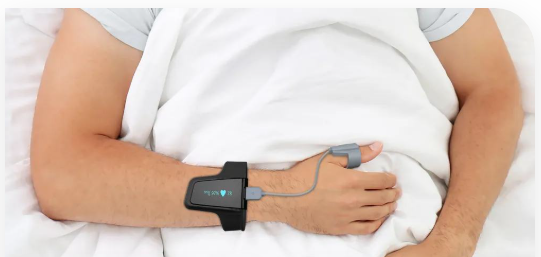
A home sleep test can pick up mild sleep apnea, but it is less sensitive than a full sleep study in a lab. Many people with mild disease get a clear result at home. Others get a normal or borderline score even though breathing events are happening.
The American Academy of Sleep Medicine guideline supports home testing for uncomplicated adults at higher risk of moderate to severe obstructive sleep apnea.
The same guideline notes that groups with mostly mild sleep apnea tend to have more negative or unclear home results. So a positive home test usually gives useful information. A negative home test gives you less certainty, and it deserves a closer look.
What Counts as Mild Sleep Apnea on a Test?
Mild obstructive sleep apnea usually means 5 to 14 breathing events per hour of sleep. That number is called the apnea-hypopnea index, or AHI. An apnea is a pause in breathing. A hypopnea is a period of shallow breathing.
Sleep doctors commonly group adult results this way.
- Under 5 events per hour: usually considered within the normal range
- 5 to 14 events per hour: mild
- 15 to 29 events per hour: moderate
- 30 or more events per hour: severe
Notice how narrow the gap is at the low end. A small counting difference can move a score from 6 to 4. A score of 40 stays severe even if it is off by a few points. Measurement error matters most for people close to the mild cutoff.
Our guide on how to read your home sleep test results explains the other terms on your report.
Why Can a Home Sleep Test Miss Mild Sleep Apnea?
Home tests can miss mild sleep apnea because they often count fewer events and divide them by a longer period of time. According to the AASM guideline, these limits can lead to an underestimate of the true AHI. Four issues come up most often.
1. The test may count time awake as sleep
A lab study uses brain wave sensors to see when you are asleep. Many home devices do not have them, so they divide events by recording time instead. Some devices add a motion sensor or another signal to estimate sleep time.
Here is a simple example with made-up numbers. Say you have 30 breathing events, and the device records for 7 hours. You were only asleep for 5 of those hours. Dividing by 7 gives a score of about 4.3, which looks normal. Dividing by 5 gives a score of 6, which falls in the mild range.
2. Some breathing events leave no clear trace
Some hypopneas end with a brief wake-up in the brain and only a small oxygen drop. Standard home sensors cannot see that brain signal. A person can have fragmented sleep from these events while the home score stays low. This pattern is a common concern with upper airway resistance syndrome too.
3. One night may not show your usual pattern
Breathing events can change from night to night. In some people with milder disease, events cluster during REM sleep or while sleeping on the back. If you slept on your side or had little REM sleep that night, the count may come out lower than usual.
4. The recording may be too short or too weak
The AASM guideline calls for at least 4 hours of good flow and oxygen data. Loose sensors or a very short night can leave too little to read. In that case, the result may be inconclusive. Our article on a failed or inconclusive home sleep test covers that situation in more detail.
Who Is a Good Fit for a Home Sleep Test?
A home test fits best for adults with a high chance of moderate to severe sleep apnea and no major heart, lung, or nerve conditions. The AASM describes higher risk as daytime sleepiness plus at least two of three features.
- Loud snoring most nights
- Witnessed pauses in breathing, gasping, or choking
- A diagnosis of high blood pressure
Fewer classic signs do not mean you cannot use a home test. They do mean your doctor may be more careful with a normal result.
CHECK YOUR SLEEP SYMPTOMS: TAKE THE 2 MINUTE QUIZ
TAKE THE QUIZ
What Should You Do If Your Home Test Is Normal but You Still Have Symptoms?
Talk with a sleep physician about whether an in-lab study is the right next step. The AASM guideline recommends a lab study when a single home test is negative, inconclusive, or technically inadequate, and sleep apnea is still suspected. It does not recommend simply repeating the home test.
Watch: Dr. Bhar explains why you should stop normalizing fatigue
The AASM’s patient site says it plainly: a negative home test is not sophisticated enough to rule out sleep apnea. This matters because the same guideline notes that some patients stop looking for answers after a negative result.
Before your follow-up, it can help to gather a few details.
- Write down your symptoms, such as morning headaches, snoring, or daytime sleepiness.
- Ask a bed partner what they notice at night.
- Note how you slept on the test night compared with a usual night.
- List your medications, alcohol use, and any health conditions.
- Bring your full report, not just the AHI score.
What If Your Home Test Says Mild Sleep Apnea?
A mild result is still a real finding, and your true AHI could be somewhat higher than the number on the report. Because home tests tend to read low, your physician may look past the score alone. Oxygen levels, body position, symptoms, and your other health conditions can all shape the next step.
Treatment for mild sleep apnea depends on the person. Options may include CPAP, an oral appliance, position changes, or weight management. Our guide to mild sleep apnea goes through those options and common symptoms.
Insurance can also come into play. Coverage rules for treatment often depend on the AHI, and some plans count events by stricter rules than others. Medicare, for example, counts a hypopnea only when it comes with a 4 percent oxygen drop. Ask your doctor’s office or your plan how your result will be read.
What Questions Should You Ask About Your Report?
The most useful question is whether your score was based on actual sleep time or on recording time. A few other questions can also tell you how much weight to give the number.
- How many hours of usable data did the test collect?
- Did the device estimate my sleep, or only my time in bed?
- Did I sleep on my back at any point during the test?
- How low did my oxygen level go, and for how long?
- Do my symptoms fit this result?
- Would a lab study add useful information in my case?
- These questions are not a challenge to your doctor. They help you both decide if the test answered the question you started with.
Insurance Accepted
SLIIIP works with many major insurance plans. You can check your benefits before you book.
SLIIIP’s board-certified sleep physicians can do sleep evaluations for sleep apnea. Virtual consultations in all 50 states. Home sleep tests shipped to your door.
Frequently Asked Questions
Can a home sleep test detect mild sleep apnea?
Yes, it can. It is less sensitive than a lab study, so it can also miss some mild cases.
What AHI counts as mild sleep apnea?
Mild sleep apnea usually means 5 to 14 breathing events per hour of sleep.
Why do home sleep tests read low?
Many divide events by recording time instead of sleep time. They also cannot see events that only show up as a brief brain wake-up.
Does a normal home sleep test rule out sleep apnea?
No. A negative home test cannot fully rule out sleep apnea, especially when symptoms continue.
Should I repeat a home test if it comes back normal?
The AASM guideline does not recommend a simple repeat. It recommends a lab study when sleep apnea is still suspected.
What is the difference between AHI and REI?
AHI uses hours of sleep. REI uses hours of recording, so it can look lower.
Is a lab study more accurate for mild sleep apnea?
A lab study measures sleep directly and records more signals. That makes it better at finding events a home device can miss.
Can one night of testing be enough?
Often it is, but breathing events can vary from night to night. A quiet night can lower the score.
Does sleeping on my side change the result?
It can. Some people have far more events on their back, so side sleeping may lower the count.
Can a home test find upper airway resistance syndrome?
Usually not with confidence. That pattern involves brief brain wake-ups that standard home sensors cannot see.
How many hours does a home test need to record?
The AASM guideline calls for at least 4 hours of good flow and oxygen data.
Can I have symptoms with a mild score?
Yes. Some people with mild scores report sleepiness, poor sleep, or morning headaches.
Is mild sleep apnea worth treating?
It depends on your symptoms and health history. A sleep physician can help you weigh the options.
Do smartwatches detect mild sleep apnea?
Smartwatches may flag possible breathing issues, but they do not replace a physician-ordered sleep test.
Does insurance cover a lab study after a negative home test?
Many plans do, but rules vary. Check with your plan before you book.
Can a home test tell mild from moderate sleep apnea?
It gives an estimate of severity. Scores close to a cutoff may read lower than a lab study would.
Can alcohol affect my home sleep test?
Yes, alcohol can change sleep and breathing that night. Ask your doctor how to prepare for your test.
Who should skip a home test and go to a lab?
Adults with significant heart or lung disease, a past stroke, long-term opioid use, or severe insomnia are often advised to use a lab.
Can a home test find other sleep disorders?
No. Home tests focus on breathing, so narcolepsy and many other disorders need a different evaluation.
Can SLIIIP help me review a home test result?
SLIIIP’s sleep physicians offer virtual sleep evaluations in all 50 states. You can bring your symptoms and any past reports to the visit.
Latest posts
-
Can Statins Cause Insomnia? What the Research Shows
Last updated: November 17, 2026. Medically reviewed by Dr. Avinesh Bhar, Board-Certified Sleep Physician, SLIIIP.com. For most people, probably not. A meta-analysis of placebo-controlled sleep lab studies found that statins…
-
Do Beta Blockers Cause Insomnia? What to Know
Last updated: November 17, 2026. Medically reviewed by Dr. Avinesh Bhar, Board-Certified Sleep Physician, SLIIIP.com. Beta blockers are linked to insomnia in some people. Some beta blockers lower nighttime melatonin,…
-
Do I Need a Sleep Study to Get the Sleep Apnea Pill?
Last updated: November 17, 2026. Medically reviewed by Dr. Avinesh Bhar, Board-Certified Sleep Physician, SLIIIP.com. Yes, almost certainly. Any sleep apnea medicine, including the AD109 pill if it is approved,…
Get updates
Spam-free subscription, we guarantee. This is just a friendly ping when new content is out.

