👉 Register for Free. How to Diagnose Sleep Apnea Faster in Primary Care – FREE Webinar by Dr. Audrey Wells. – Friday, April 24 at 12 PM ET

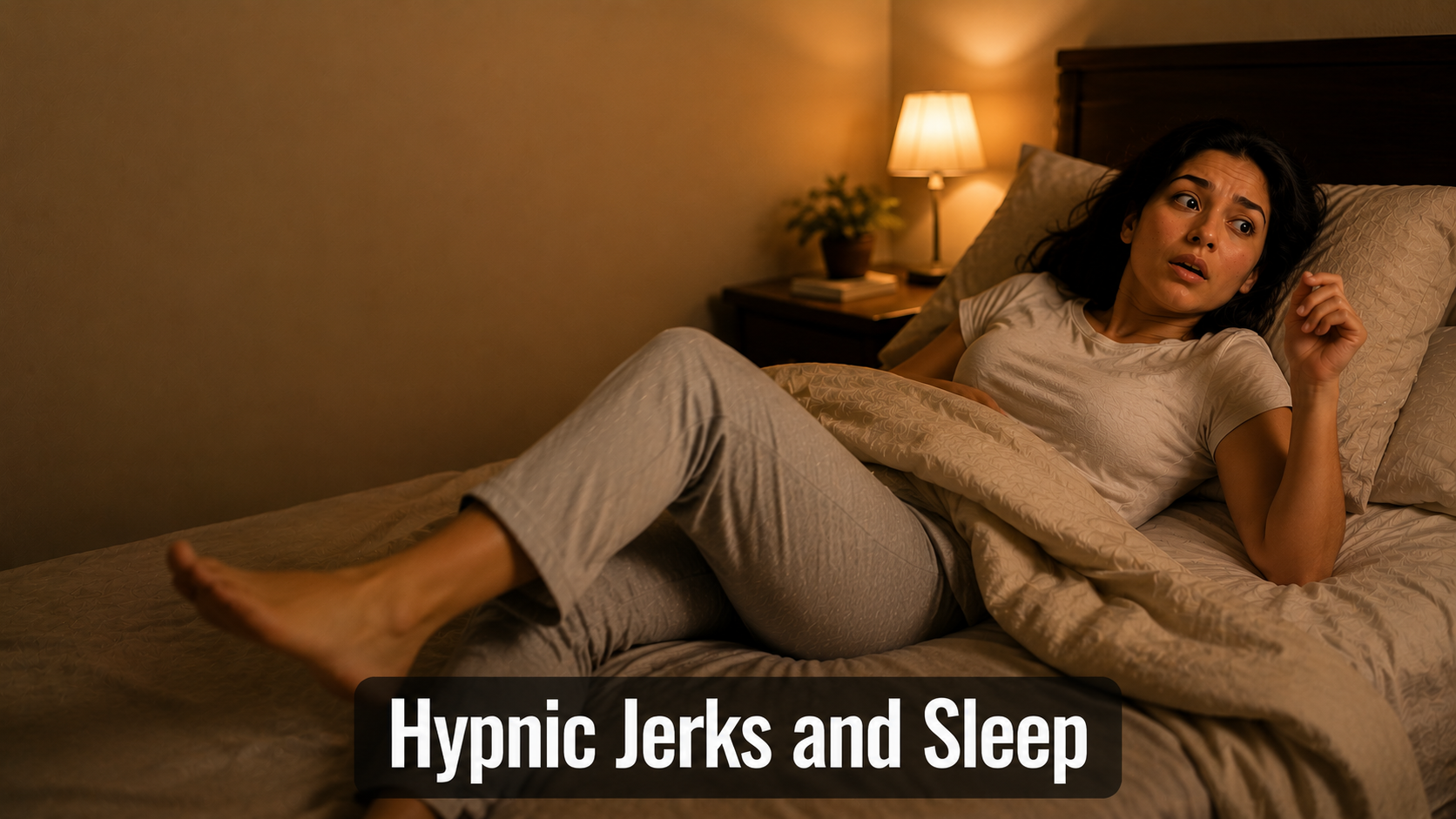
Why Do My Legs Twitch Right Before I Fall Asleep? A Doctor Explains Hypnic Jerks
Hypnic jerks, the sudden leg twitches that hit just as you are drifting off, are more common than most people realize, and Dr. Avinesh Bhar, Board-Certified Sleep Physician at SLIIIP.com, explains what they are and when they are worth a closer look.
That startling little jump as you fall asleep is usually harmless, and knowing why it happens can help you relax about it and spot the rare times it is worth mentioning to your care team.
SLIIIP’s board-certified sleep physicians can do sleep evaluations for sleep apnea. Virtual consultations in all 50 states. Home sleep tests shipped to your door.
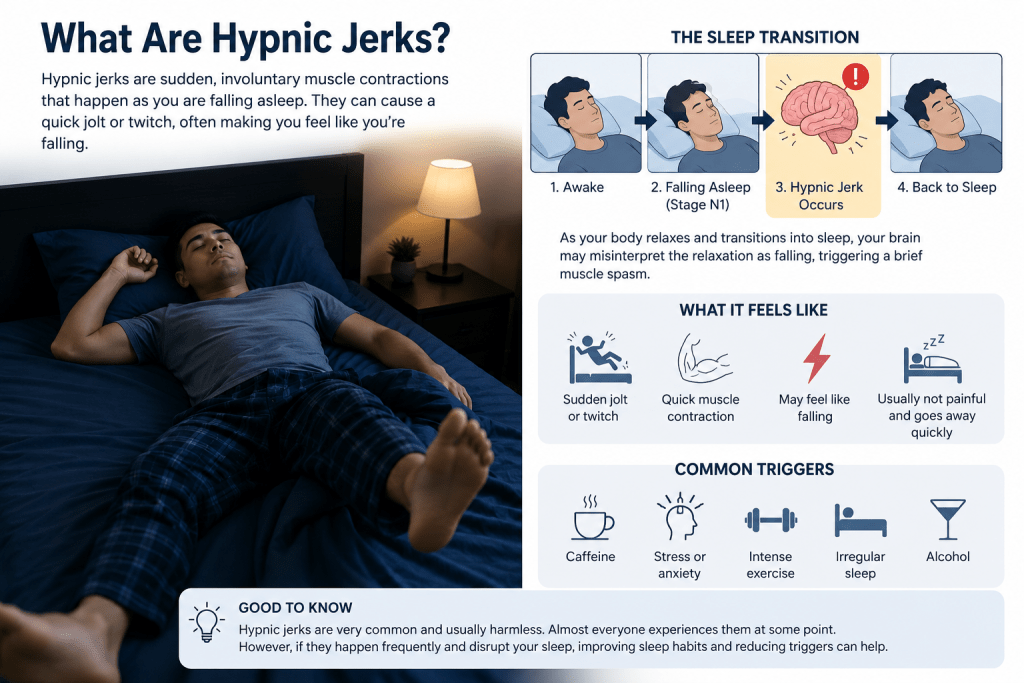
What Are Hypnic Jerks?
A hypnic jerk is a quick, involuntary muscle twitch that happens as you move from being awake into sleep. Many people feel it in the legs, though it can happen in the arms or the whole body. It often comes with a sudden sense of falling, a flash of a dream image, or a small gasp. Then it is over in an instant.
These sleep starts are very common. A large share of people feel them at least now and then, and for most they are nothing more than a normal quirk of the sleeping brain. The twitch can be so small you barely notice it, or strong enough to wake you for a moment. Either way, it is a familiar part of how many bodies settle into rest. If leg sensations at night are a bigger theme for you, our page on when your legs feel restless is a helpful read.
CHECK YOUR SLEEP SYMPTOMS: TAKE THE 2 MINUTE QUIZ
TAKE THE QUIZ
Why Do Hypnic Jerks Happen?
The honest answer is that science is still filling in the details. One leading idea is that as your body relaxes into sleep, your muscles let go quickly, and the brain sometimes reads that sudden relaxation as a signal that you are falling. In response, it sends a quick burst of activity to the muscles, which produces the twitch. That falling feeling many people describe fits this theory well.
The brain is moving through a busy handoff at sleep onset. Wake systems are powering down while sleep systems take over, and small crossed signals during that switch can trigger a jerk. This is a normal part of the transition for many people. It does not mean your brain is malfunctioning. It means the shift into sleep is a complex process, and a brief twitch is one of its harmless side effects. Our guide on how to fall asleep faster covers ways to make that transition smoother.
Common Triggers That May Increase Them
While these twitches are normal, a few everyday factors seem to make them more frequent or more intense for some people. Noticing your own patterns can help you feel more in control. This is about awareness, not strict rules.
Caffeine and other stimulants later in the day can keep the nervous system revved up, which may add to the twitches. Vigorous exercise close to bedtime can do the same. Stress and a racing mind often play a role, since a tense, alert body has a harder time easing into rest. Being very short on sleep can also make sleep starts more noticeable, as your body rushes the transition. If a busy mind keeps you wired at night, our article on when you cannot shut your brain off offers gentle ideas.
Hypnic Jerks Compared With Restless Legs and Other Movements
It helps to know that not every nighttime leg movement is the same. A sleep start is a single, quick twitch right as you drift off. That is different from other patterns that a doctor may want to review, and telling them apart matters.
Restless legs describe an uncomfortable urge to move the legs, often in the evening while you are still awake and resting. Periodic limb movements are repeated leg movements that happen during sleep, sometimes without the person knowing. These are not the same as a brief sleep onset twitch, and they can affect rest differently. If your legs feel restless or move a lot through the night, our overview of restless legs explains the difference and why a professional review can help. When movements happen all night, our guide on how to stop waking up multiple times is also worth a look.
Are These Twitches Something to Worry About?
For the vast majority of people, sleep starts are harmless. They are not a disease, and they usually need no treatment at all. Understanding this is often enough to take the worry out of them. The twitch is simply part of how the body powers down. The National Heart, Lung, and Blood Institute points to steady, sufficient sleep as a foundation for feeling rested.
That said, there are times when leg movements at night deserve a professional look. If the movements are frequent and disturb your sleep, if you feel an uncomfortable urge to move your legs in the evening, or if a partner notices repeated kicking through the night, those patterns are worth a conversation. Ongoing daytime tiredness despite enough time in bed is another reason to check in. Dr. Avinesh Bhar encourages people to bring these details to a care team, since sleep quality matters and a clear review can offer peace of mind.
Gentle Habits That May Calm the Body Before Sleep
Because stress, stimulants, and rushed sleep can add to the twitches, calming habits often help. These are wellness steps, not cures, and they tend to work best when repeated steadily over time. The aim is to help your body ease into rest rather than lurch into it. The Centers for Disease Control and Prevention frames a steady routine as part of healthy sleep.
Try to cut caffeine off earlier in the day and keep intense workouts away from bedtime. Give yourself a wind down window with dim light and calm activity. Slow breathing, a warm shower, or a short guided meditation for sleep can help the nervous system settle. Keeping a steady sleep schedule and getting enough total rest also matters, since being overtired can make sleep starts stronger. If restless nights leave you drained, our piece on why you feel exhausted no matter how much you sleep may help you find the pattern.
Watch: Dr. Wells explains the top 3 sleep disorders
When to Talk to a Doctor
Most people never need to see anyone about a simple twitch as they fall asleep. Still, a professional visit is a wise step when nighttime movements start to affect your rest or your days. You do not have to figure it out alone or wait until it feels serious.
Consider reaching out if leg movements are frequent and disruptive, if you have an uncomfortable urge to move your legs at rest, if a partner reports repeated kicking, or if daytime tiredness lingers despite enough sleep. A doctor can review your history, ask the right questions, and help you understand what is going on. This is about clarity and comfort, not alarm.
How SLIIIP Can Help
SLIIIP was built to make getting answers simple. If nighttime leg movements have you curious or concerned, you can meet a board-certified sleep physician through a virtual visit and talk through what you notice as you fall asleep and during the night. There is no waiting room and no long drive. If a sleep evaluation makes sense, a home sleep test can be shipped straight to your door, so any testing happens in your own bed. Coverage runs across all 50 states, which means support is within reach wherever you live.
The goal is to turn a small mystery into clear understanding. You describe your nights, a physician listens, and together you decide on gentle next steps and any testing that fits your situation. That kind of guidance can settle the mind on a night that feels jumpy.
At Sliiip, we accept the following insurances:

SLIIIP’s board-certified sleep physicians can do sleep evaluations for sleep apnea. Virtual consultations in all 50 states. Home sleep tests shipped to your door.
Frequently Asked Questions
What are hypnic jerks?
They are quick, involuntary muscle twitches that happen as you move from being awake into sleep. Many people feel them in the legs, and they are very common.
Why do my legs twitch right before I fall asleep?
As your muscles relax at sleep onset, the brain may briefly read that relaxation as a signal, then send a quick burst of activity that causes the twitch.
Are these twitches normal?
For most people, yes. Sleep starts are a common and harmless part of drifting off, and they usually need no treatment at all.
What causes the falling feeling with the twitch?
The sudden muscle activity and the busy switch into sleep can create a brief sense of falling. It is a normal part of the transition for many people.
Can caffeine make the twitches worse?
It can for some people. Caffeine and other stimulants keep the nervous system alert, which may make sleep starts more frequent or stronger.
Does stress increase them?
Often, yes. A tense, racing mind can make it harder to ease into sleep, which may add to the twitches. Calming habits before bed can help.
Can exercise before bed trigger them?
Vigorous exercise close to bedtime can keep the body revved up, which may increase sleep starts for some people. Earlier workouts may feel better.
Are these the same as restless legs syndrome?
No. Restless legs describe an urge to move the legs while resting and awake. A sleep start is a single quick twitch at the moment you drift off.
Do the twitches mean something is wrong?
Usually not. They are a normal quirk of falling asleep. If movements are frequent and disturb your rest, that is worth discussing with a doctor.
Can lack of sleep increase them?
Being very short on sleep can make sleep starts more noticeable, as the body rushes the transition into rest. Steady, sufficient sleep may help.
Can a twitch wake me up fully?
Sometimes. A strong one can pull you awake for a moment. Most people settle back quickly, especially with a calm bedtime routine.
How can I reduce them naturally?
Cutting late caffeine, avoiding intense late workouts, managing stress, and keeping a steady sleep schedule are gentle habits that may help.
Do they happen to everyone?
Many people feel them at least occasionally. Some notice them often, while others rarely do. This range is completely normal.
Can low magnesium or dehydration play a role?
Some people wonder about this. If you have concerns about your diet or hydration, your primary care team can offer personalized guidance.
Are these twitches linked to a sleep disorder?
Simple sleep starts are not a disorder. Frequent or disruptive leg movements, though, may be worth a professional review to rule other patterns out.
When should I see a doctor about leg movements at night?
Reach out if movements are frequent and disruptive, if you feel an urge to move your legs at rest, or if daytime tiredness lingers despite enough sleep.
Can a sleep evaluation help with nighttime movements?
It can. An evaluation can review your sleep patterns and help clarify whether the movements point to something worth exploring further.
Can a virtual consultation help me understand this?
Yes. A virtual visit lets a board-certified physician hear your history and guide next steps, with home testing arranged if it makes sense.
Should I track when the twitches happen?
A simple log can help. Noting caffeine, exercise, stress, and sleep timing may reveal patterns you can share with your doctor.
How do I get started with SLIIIP?
You can book a virtual consultation with a board-certified sleep physician, and a home test can be shipped to your door if an evaluation makes sense.
A quick twitch as you fall asleep is one of the most common and harmless things your body does. By understanding why it happens, easing off common triggers, and reaching out when movements truly disrupt your rest, you can settle into sleep with far less worry.
SLIIIP’s board-certified sleep physicians can do sleep evaluations for sleep apnea. Virtual consultations in all 50 states. Home sleep tests shipped to your door.
Latest posts
-
Why Can’t I Wake Up Even After Getting Enough Sleep?
Last updated: October 2, 2026. Medically reviewed by Dr. Avinesh Bhar, Board-Certified Sleep Physician, SLIIIP.com. If you can’t wake up after enough sleep, the cause is usually not the number…
-
Why Does My Heart Rate Drop So Low While I Sleep?
Last updated: October 2, 2026. Medically reviewed by Dr. Avinesh Bhar, Board-Certified Sleep Physician, SLIIIP.com. Your heart rate drops low while sleeping mainly because your body needs less work from…
-
Why Are My Naps Never Refreshing?
Last updated: October 2, 2026. Medically reviewed by Dr. Avinesh Bhar, Board-Certified Sleep Physician, SLIIIP.com. Naps that leave you groggy usually come down to how long you sleep, when you…
Get updates
Spam-free subscription, we guarantee. This is just a friendly ping when new content is out.

