👉 Register for Free. How to Diagnose Sleep Apnea Faster in Primary Care – FREE Webinar by Dr. Audrey Wells. – Friday, April 24 at 12 PM ET

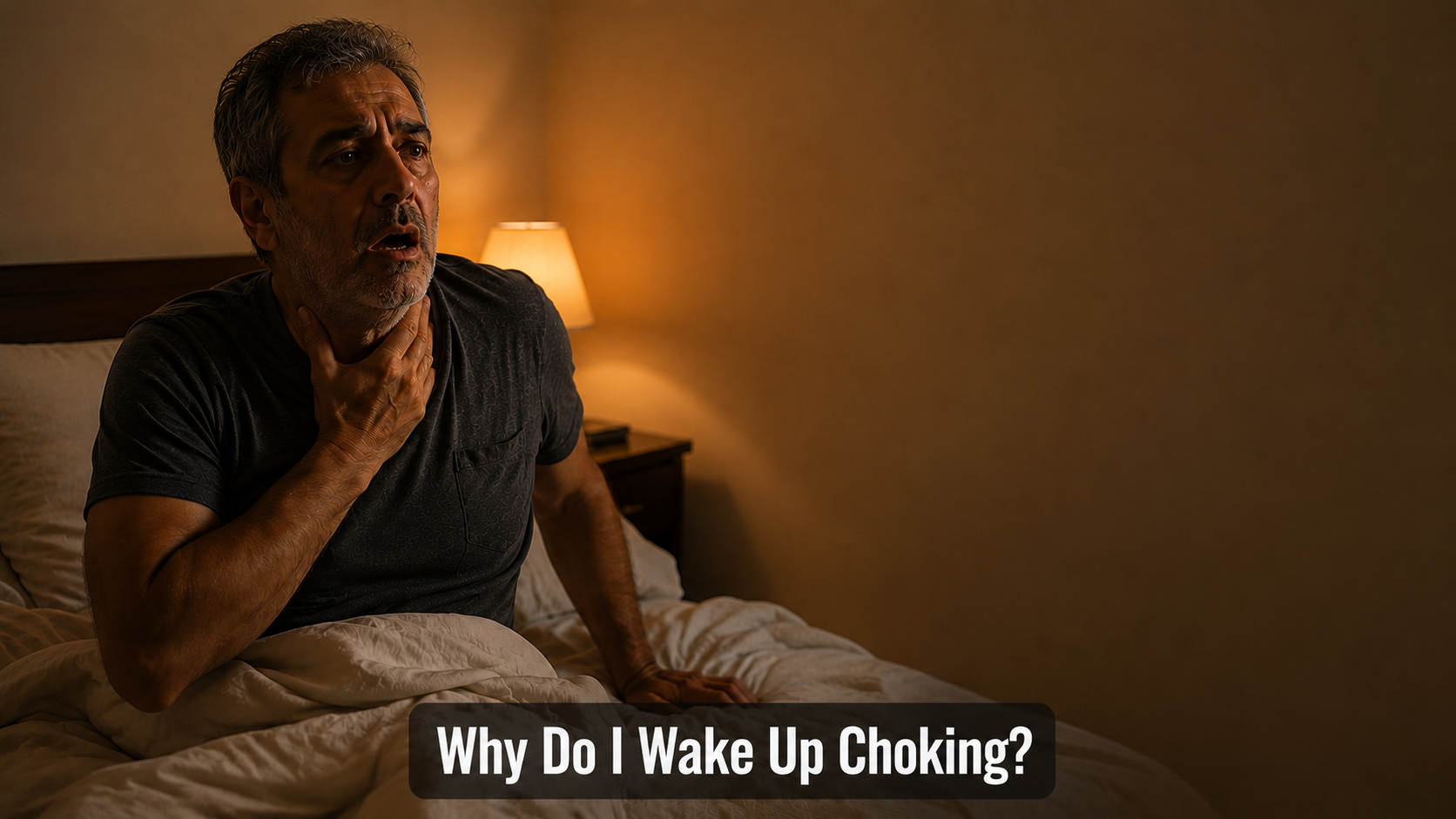
Why Do I Wake Up Choking? A Doctor Explains Nighttime Acid Reflux
Nighttime acid reflux can jolt you awake with a frightening choking feeling, and Dr. Avinesh Bhar, Board-Certified Sleep Physician at SLIIIP.com, explains why it tends to strike after you lie down and when the pattern is worth a closer look.
Waking up choking is scary, yet it usually has a clear reason, and understanding what happens in your body while you sleep can help you talk with your care team and take calmer, informed steps.
SLIIIP’s board-certified sleep physicians can do sleep evaluations for sleep apnea. Virtual consultations in all 50 states. Home sleep tests shipped to your door.

What Happens When You Wake Up Choking
Waking up gasping or choking is one of the more alarming ways sleep can be interrupted. In many cases, it happens when stomach contents rise up the food pipe while you are lying down. When a small amount reaches the back of the throat, the body reacts fast to protect the airway. That reflex can pull you out of sleep with a cough, a gasp, or a tight feeling in the throat.
This is a protective response, not a sign that your body is broken. The throat is simply doing its job of guarding your airway. Still, the experience is unsettling, and it can leave your heart pounding as you catch your breath. If this has happened to you, our article on choking while sleeping offers a plain look at the topic. It is also worth knowing that waking up gasping for air can have more than one cause.
CHECK YOUR SLEEP SYMPTOMS: TAKE THE 2 MINUTE QUIZ
TAKE THE QUIZ
Why Nighttime Acid Reflux Feels Worse When You Lie Down
Gravity is a big part of the story. During the day, standing and sitting help keep stomach contents where they belong. When you lie flat at night, that helpful pull disappears, so it becomes easier for contents to move upward. This is why nighttime acid reflux can feel stronger than the daytime kind, even when your habits are the same.
Timing matters too. If you eat a large meal close to bedtime, your stomach is still busy when you lie down, which can add pressure. Nighttime acid reflux often shows up a few hours after you fall asleep, once you are deep in rest and less able to swallow or shift position to clear the throat. That mix of gravity and timing is why symptoms can feel more intense in the dark. Adjusting your sleep setup, such as trying a wedge pillow, is one gentle change some people explore with their doctor.
The Link Between Nighttime Reflux and Sleep Breathing
Researchers have long studied a connection between reflux at night and breathing patterns during sleep. Studies report an association between reflux and sleep apnea, a condition where breathing pauses briefly during the night. This is an association seen in research, not proof that one always causes the other. The two can appear together and may each make the other feel worse. The National Heart, Lung, and Blood Institute describes sleep apnea and how it affects breathing at night.
Because of this overlap, waking up choking is sometimes worth a broader sleep review. If your nights also include loud snoring, gasping, or witnessed pauses in breathing, those are clues worth sharing with a physician. Our overview of signs of sleep apnea can help you spot patterns, and our piece on sleep apnea without snoring explains why the signs are not always obvious. A sleep evaluation is one calm way to sort out what is going on.
Common Triggers Worth Noticing
Certain habits and foods can make nighttime reflux more likely. Everyone is different, so it helps to notice your own patterns rather than assume. Keeping a simple log for a week or two can reveal what tends to set off symptoms for you.
Common triggers include large or late meals, spicy or fatty foods, citrus, tomato, chocolate, coffee, carbonated drinks, and alcohol before bed. Alcohol is a double factor, since it can relax the muscles that normally keep stomach contents down and can also disturb sleep. Being aware of these triggers gives you useful information to bring to your care team. It is not about strict rules. It is about learning what your body responds to.
Gentle Habits That May Ease Nighttime Symptoms
Small, steady changes are the friendliest place to start, and the Centers for Disease Control and Prevention frames steady sleep habits as part of overall wellness. These are wellness and lifestyle habits, not cures, and they work best with patience and guidance from your own doctor. Many people find that a few adjustments make their evenings calmer.
Try to finish eating a few hours before bed so your stomach has time to settle. Keep portions moderate at dinner. Raising the head of the bed slightly, or using a wedge, can help gravity work in your favor. Some people find that sleeping on the left side feels easier, and our guide on the best sleeping position explores how position affects rest. Cutting back on late alcohol and known trigger foods can help too. If extra weight is part of the picture, gradual, healthy changes discussed with your doctor may ease pressure on the stomach.
None of these steps replace medical advice. They are simple habits many people try while they work with a professional to understand the bigger picture.
Watch: Choking while Sleeping – SLIIIP.COM
When to Talk to a Doctor
Waking up choking now and then may not be an emergency, but a pattern deserves attention. If it happens often, disturbs your sleep, or comes with other symptoms, a conversation with a doctor is a wise and healthy move. You do not need to tough it out or guess on your own.
Reach out sooner if you notice frequent choking, trouble swallowing, chest discomfort, a chronic cough, a hoarse voice, or ongoing daytime tiredness. These are signals worth a professional review. Dr. Avinesh Bhar encourages people to bring nighttime symptoms to a care team, since sleep, breathing, and digestion all connect, and a clear evaluation can replace worry with a plan. If you ever have severe or sudden trouble breathing, treat it as urgent and seek immediate care.
How SLIIIP Can Help
SLIIIP was built to make getting answers simple. If waking up choking has you concerned, you can meet a board-certified sleep physician through a virtual visit and talk through what you are experiencing at night. There is no waiting room and no long drive. If a sleep evaluation makes sense, a home sleep test can be shipped straight to your door, so any testing happens in your own bed. Coverage runs across all 50 states, which means support is within reach wherever you live.
The goal is to turn a frightening experience into a clear next step. You describe your nights, a physician listens, and together you decide on gentle actions and any testing that fits your situation. That kind of guidance can bring real peace of mind.
At Sliiip, we accept the following insurances:

SLIIIP’s board-certified sleep physicians can do sleep evaluations for sleep apnea. Virtual consultations in all 50 states. Home sleep tests shipped to your door.
Frequently Asked Questions
Why do I wake up choking at night?
It often happens when stomach contents rise while you lie flat and reach the throat, triggering a protective cough or gasp. Other causes are possible, so a doctor can help sort it out.
What is nighttime acid reflux?
It is reflux that happens or feels worse while you sleep. Lying flat removes the help of gravity, so contents can move upward more easily.
Why does reflux get worse when I lie down?
Standing and sitting help keep stomach contents in place. When you lie flat, that pull disappears, making it easier for contents to rise toward the throat.
Can reflux wake me up gasping for air?
Yes. When contents reach the airway, the body reacts quickly to protect it, which can pull you out of sleep with a gasp or cough.
Is waking up choking the same as sleep apnea?
Not exactly, though they can feel similar and can occur together. A sleep evaluation can help tell them apart and clarify what is happening.
Can nighttime reflux and sleep apnea happen together?
Research reports an association between the two. They can appear together and may each make the other feel worse, which is why a broader review can help.
What foods can trigger nighttime reflux?
Common triggers include large or late meals, spicy or fatty foods, citrus, tomato, chocolate, coffee, fizzy drinks, and alcohol. Triggers vary by person.
Does eating late at night make reflux worse?
It can. A full stomach at bedtime adds pressure while you lie down, so finishing meals a few hours before bed may help.
Can sleeping position affect acid reflux?
Yes. Some people find that sleeping on the left side or raising the head of the bed eases symptoms. It is worth trying with your doctor’s input.
Does raising the head of the bed help?
For many people, a slight elevation lets gravity keep contents down. A wedge or an adjustable base are common ways to do this.
Can alcohol before bed trigger reflux at night?
Alcohol can relax the muscles that keep stomach contents down and can disturb sleep, so it may make nighttime symptoms more likely.
Why do I wake up with a sour taste in my mouth?
A sour or bitter taste can be a sign that stomach contents reached the back of the throat overnight. Mention this pattern to your doctor.
Can nighttime reflux cause a cough or hoarse voice?
It can contribute to a lingering cough or hoarseness for some people. Ongoing throat symptoms are worth a professional review.
Is it dangerous to wake up choking?
An occasional episode is often not an emergency, but a frequent pattern deserves attention. Severe or sudden trouble breathing should be treated as urgent.
Can stress make nighttime reflux worse?
Stress can affect digestion and sleep for some people, which may add to nighttime symptoms. Calming evening habits may help.
Can being overweight affect nighttime reflux?
Extra weight can add pressure on the stomach for some people. Gradual, healthy changes discussed with a doctor may ease that pressure.
Should I see a doctor about choking when waking up?
Yes, especially if it happens often or comes with other symptoms. A doctor can review your history and guide the right next steps.
Can a sleep evaluation help if I wake up choking?
It can. An evaluation can check for breathing patterns during sleep and help clarify whether more testing is useful.
Can a virtual consultation help with this?
Yes. A virtual visit lets a board-certified physician hear your symptoms and guide next steps, with home testing arranged if needed.
How do I get started with SLIIIP?
You can book a virtual consultation with a board-certified sleep physician, and a home test can be shipped to your door if an evaluation makes sense.
Waking up choking is frightening, but it is also a signal you can act on. By noticing your triggers, trying gentle habits, and reaching out to a doctor when the pattern continues, you can move from worry toward a calmer, clearer plan for your nights.
SLIIIP’s board-certified sleep physicians can do sleep evaluations for sleep apnea. Virtual consultations in all 50 states. Home sleep tests shipped to your door.
Latest posts
-
Ballistocardiography Sleep Sensors: How Under-Mattress Tracking Works
Last updated: September 14, 2026. Medically reviewed by Dr. Avinesh Bhar, Board-Certified Sleep Physician, SLIIIP.com. Ballistocardiography sleep sensors sit under your mattress and detect the tiny mechanical vibrations your body…
-
RingConn vs Oura: Which Smart Ring Tracks Sleep Better?
Last updated: September 10, 2026. Medically reviewed by Dr. Avinesh Bhar, Board-Certified Sleep Physician, SLIIIP.com. RingConn and Oura both track sleep through a finger-worn ring, but they differ most in…
Get updates
Spam-free subscription, we guarantee. This is just a friendly ping when new content is out.

