👉 Register for Free. How to Diagnose Sleep Apnea Faster in Primary Care – FREE Webinar by Dr. Audrey Wells. – Friday, April 24 at 12 PM ET


Top Ways to Address Insomnia Without Sleeping Pills
Insomnia without sleeping pills often produces stronger and longer lasting results than most people expect, according to Dr. Avinesh Bhar, Board-Certified Sleep Physician at SLIIIP.com, and the right plan rebuilds sleep at its source instead of forcing it from a bottle.
Sleeping pills can knock you out for a few nights, but they rarely solve the brain and body patterns that keep insomnia going. They can also lead to next day grogginess, rebound insomnia, and a slow loss of natural sleep drive.
SLIIIP’s board-certified sleep physicians can do sleep evaluations for sleep apnea. Virtual consultations in all 50 states. Home sleep tests shipped to your door.
Why Sleeping Pills Are Not the Real Fix
Most sleeping pills target one chemical pathway in the brain. They do not retrain the thoughts, habits, and timing cues that keep insomnia going night after night. Many people feel they need a higher dose over time, which is a warning sign rather than a sign of progress.
Sleeping pills can also blunt deep sleep and REM sleep, which is why people often wake up unrefreshed. Removing the underlying drivers of insomnia produces better sleep quality, sharper mornings, and steady mood across the day.
For more on this topic, see the sleeping pill scam and why CBT for insomnia works when medications do not.
CHECK YOUR SLEEP SYMPTOMS: TAKE THE 2 MINUTE QUIZ
TAKE THE QUIZ
A Quick Look at What Insomnia Really Is
Insomnia is trouble falling asleep, staying asleep, or waking up too early, paired with daytime symptoms like fatigue, brain fog, or low mood. According to the National Heart, Lung, and Blood Institute, insomnia can be short term, often tied to stress, or chronic, when it shows up at least three nights a week for three months or longer.
There are different patterns of insomnia, and the fix often depends on which one fits you. See types of insomnia and the guide to do I have insomnia or something else.
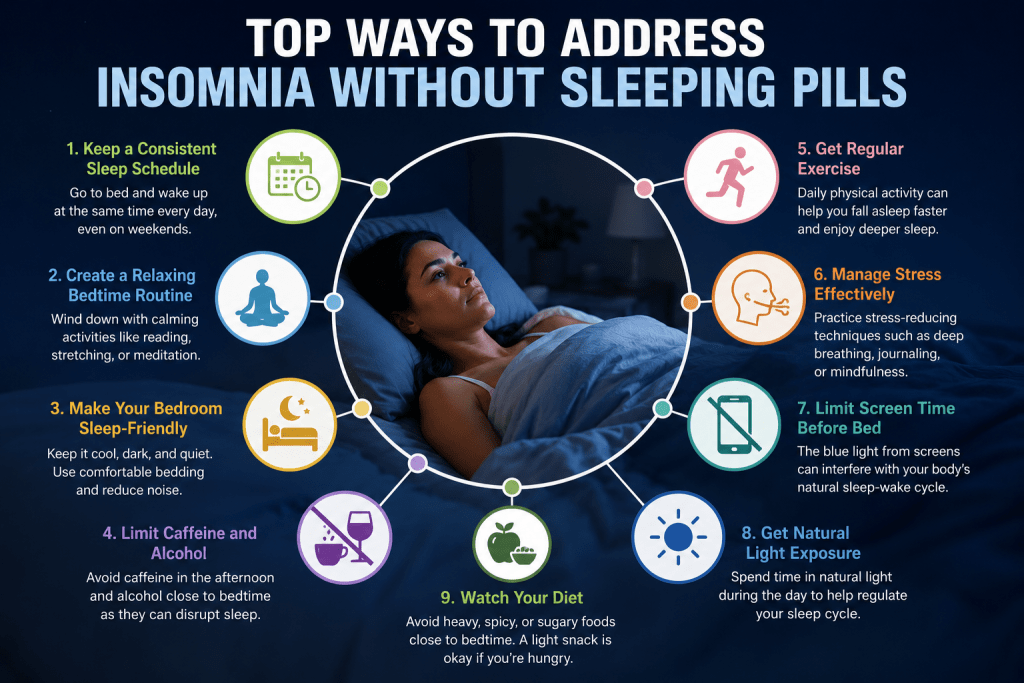
Top Ways to Address Insomnia Without Sleeping Pills
There are many evidence based options that treat the root cause of insomnia. The right mix depends on your history, your schedule, and the way your brain handles stress. A real plan to address insomnia without sleeping pills usually combines two or three steps that reinforce each other.
1. Start with Cognitive Behavioral Therapy for Insomnia
CBT for insomnia is the first line therapy recommended by sleep experts. It retrains the brain to associate the bed with sleep, resets your sleep window, and reduces the worry that keeps you awake. Most people see steady gains over four to eight weeks. See CBT for insomnia for sleep disorders and what CBT for insomnia feels like week by week.
2. Set a Consistent Sleep Window
Going to bed and waking up at the same time every day, including weekends, locks in a stronger sleep drive. This builds natural sleepiness at night without any medication. See how do I fix my circadian rhythm and your ultimate sleep routine guide.
3. Get Morning Light Within an Hour of Waking
Bright light in the morning resets the body clock and raises evening melatonin at the right time. Ten to thirty minutes outside, or near a window, is often enough.
4. Cut Caffeine After Early Afternoon
Caffeine has a long half life and can stay active for eight hours or more. Stopping intake by early afternoon lowers nighttime arousal and supports deeper sleep.
5. Build a Wind Down Routine
A simple thirty to sixty minute wind down before bed signals the brain to shift gears. Soft light, a warm shower, slow stretching, or a calming book all help. See how do I fall asleep fast.
6. Quiet the Racing Brain
Worry, planning, and rumination are major drivers of insomnia. Journaling, structured worry time earlier in the evening, and breathing exercises all calm the nervous system. See can’t shut brain off at night and how do I stop overthinking at night.
7. Limit Alcohol Before Bed
Alcohol may make you fall asleep faster but it fragments the second half of the night. Lowering or removing alcohol often improves sleep continuity within a few nights.
8. Move Your Body Most Days
Daytime movement boosts deep sleep at night. Even thirty minutes of walking is enough. Heavy exercise too close to bedtime can backfire, so finish higher intensity sessions a few hours before lights out.
9. Rule Out Underlying Sleep Disorders
Sleep apnea, restless legs, and circadian rhythm disorders can look like insomnia. A sleep evaluation can confirm what is really driving your nights. See do I need a sleep study and home sleep apnea testing.
10. Address Hormones, Stress, and Mood
Hormonal shifts, anxiety, and depression often show up as insomnia first. Treating the root issue helps sleep recover. See hormonal insomnia and why do I feel anxious at night.
Lifestyle Habits That Make Every Other Step Work Better
Daily habits set the foundation for nightly sleep. Steady meal timing, regular hydration, daylight exposure, and reduced screen time in the last hour before bed all support stronger sleep architecture. These habits help the brain produce melatonin at the right moment and lower stress chemicals through the night.
The Centers for Disease Control and Prevention lists short sleep as a public health concern tied to mood, weight, and cardiovascular risk. Choosing to address insomnia without sleeping pills supports all of these areas at the same time.
For more, see how to fix insomnia naturally and insomnia treatment methods.
What Dr. Avinesh Bhar Recommends as a Starting Point
Dr. Avinesh Bhar suggests three simple steps for most people. First, set a consistent wake time and stick to it for two weeks, even on weekends. Second, start the basics of CBT for insomnia, including stimulus control and a steady wind down. Third, screen for hidden sleep disorders like sleep apnea, which often hide behind classic insomnia symptoms.
This stepwise plan helps you address insomnia without sleeping pills in a way that is sustainable, science backed, and matched to your real life.
Watch: Tired of Sleep Aids?
When to See a Sleep Doctor
You should see a sleep doctor if insomnia lasts more than three weeks, comes back after each round of self help, or shows up with snoring, gasping, leg discomfort, mood changes, or daytime exhaustion. Other red flags include needing sleeping pills to function or using alcohol to fall asleep. See is it worth getting tested for sleep apnea and insomnia treatment.
At Sliiip, we accept the following insurances:

SLIIIP’s board-certified sleep physicians can do sleep evaluations for sleep apnea. Virtual consultations in all 50 states. Home sleep tests shipped to your door.
Frequently Asked Questions
1. Can I really treat insomnia without sleeping pills?
Yes. CBT for insomnia is more effective than sleeping pills over the long term and is recommended as the first line approach by sleep experts.
2. What is the most proven drug free option for insomnia?
CBT for insomnia has the strongest evidence base. See is CBT for insomnia better than sleep meds.
3. Are sleeping pills harmful?
Sleeping pills can cause next day grogginess, dependence, rebound insomnia, and a slow loss of natural sleep drive. Many also blunt deep and REM sleep.
4. How long does it take to fix insomnia without pills?
Most people notice gains within two to four weeks. Full benefits often arrive at six to eight weeks.
5. Does melatonin actually help?
Melatonin can help with sleep timing, especially for jet lag and shift work, but it is not a cure for chronic insomnia. See melatonin and sleep.
6. Why do I keep waking up at 2 or 3 a.m.?
Middle of the night waking is often tied to stress, alcohol, hormones, or untreated sleep apnea. See waking up at 2 a.m. and how to stop waking up multiple times at night.
7. Is insomnia without sleeping pills a realistic long term plan?
Yes. Evidence based plans rely on behavior change, sleep timing, and stress reduction, not on sedatives.
8. Does exercise really help insomnia?
Yes. Regular daytime exercise improves deep sleep and lowers nighttime anxiety. Finish higher intensity workouts a few hours before bed.
9. What about screens at night?
Bright screens in the last hour delay melatonin and increase alertness. Dimming devices and limiting use before bed both help.
10. Can I just drink chamomile tea?
Calming teas may support a wind down ritual but rarely fix insomnia alone. They work best inside a broader plan.
11. Should I take naps if I have insomnia?
Long late day naps can hurt nighttime sleep. A short twenty minute nap before mid afternoon is usually fine.
12. How is CBT for insomnia different from regular therapy?
CBT for insomnia is a structured program focused on sleep timing, stimulus control, and thought patterns about sleep. It is not general talk therapy.
13. Can sleep apnea look like insomnia?
Yes. Many people with sleep apnea wake up often and feel they cannot stay asleep. A home sleep test can rule it out.
14. Is insomnia hormonal?
Hormonal shifts during perimenopause, menopause, pregnancy, and high stress can all trigger insomnia. See hormonal insomnia.
15. Does alcohol help me sleep?
Alcohol can shorten the time to fall asleep but it fragments the second half of the night and lowers deep sleep.
16. Should I stay in bed if I cannot sleep?
No. Most experts suggest leaving the bed after about twenty minutes, doing something calm and quiet, then returning when sleepy.
17. How do I stop overthinking at night?
Use structured worry time earlier in the evening, write a quick plan for the next day, and use slow breathing. See why do I overthink before bed.
18. Can supplements replace a real plan?
Supplements may support some habits but do not replace CBT for insomnia or a real diagnosis. Talk with a sleep doctor before starting any.
19. Does SLIIIP cover all 50 states?
Yes. SLIIIP offers virtual consultations in all 50 states with home sleep tests shipped to your door.
20. How do I start with SLIIIP?
Book a virtual sleep evaluation and verify your insurance benefits online. The team handles testing, results, and the follow up plan.
Ready to Address Insomnia Without Sleeping Pills
SLIIIP’s board-certified sleep physicians can do sleep evaluations for sleep apnea. Virtual consultations in all 50 states. Home sleep tests shipped to your door.
Latest posts
-
Why Are My Naps Never Refreshing?
Last updated: October 2, 2026. Medically reviewed by Dr. Avinesh Bhar, Board-Certified Sleep Physician, SLIIIP.com. Naps that leave you groggy usually come down to how long you sleep, when you…
-
Is Sleeping Too Much a Sleep Disorder?
Last updated: October 2, 2026. Medically reviewed by Dr. Avinesh Bhar, Board-Certified Sleep Physician, SLIIIP.com. Sleeping too much is not always a sleep disorder, but it can be a sign…
-
Why Does My Insomnia Get Worse After Stopping Sleep Medication?
Last updated: October 2, 2026. Medically reviewed by Dr. Avinesh Bhar, Board-Certified Sleep Physician, SLIIIP.com. Insomnia can get worse after stopping sleep medication for three main reasons. They are rebound…
Get updates
Spam-free subscription, we guarantee. This is just a friendly ping when new content is out.

