👉 Register for Free. How to Diagnose Sleep Apnea Faster in Primary Care – FREE Webinar by Dr. Audrey Wells. – Friday, April 24 at 12 PM ET

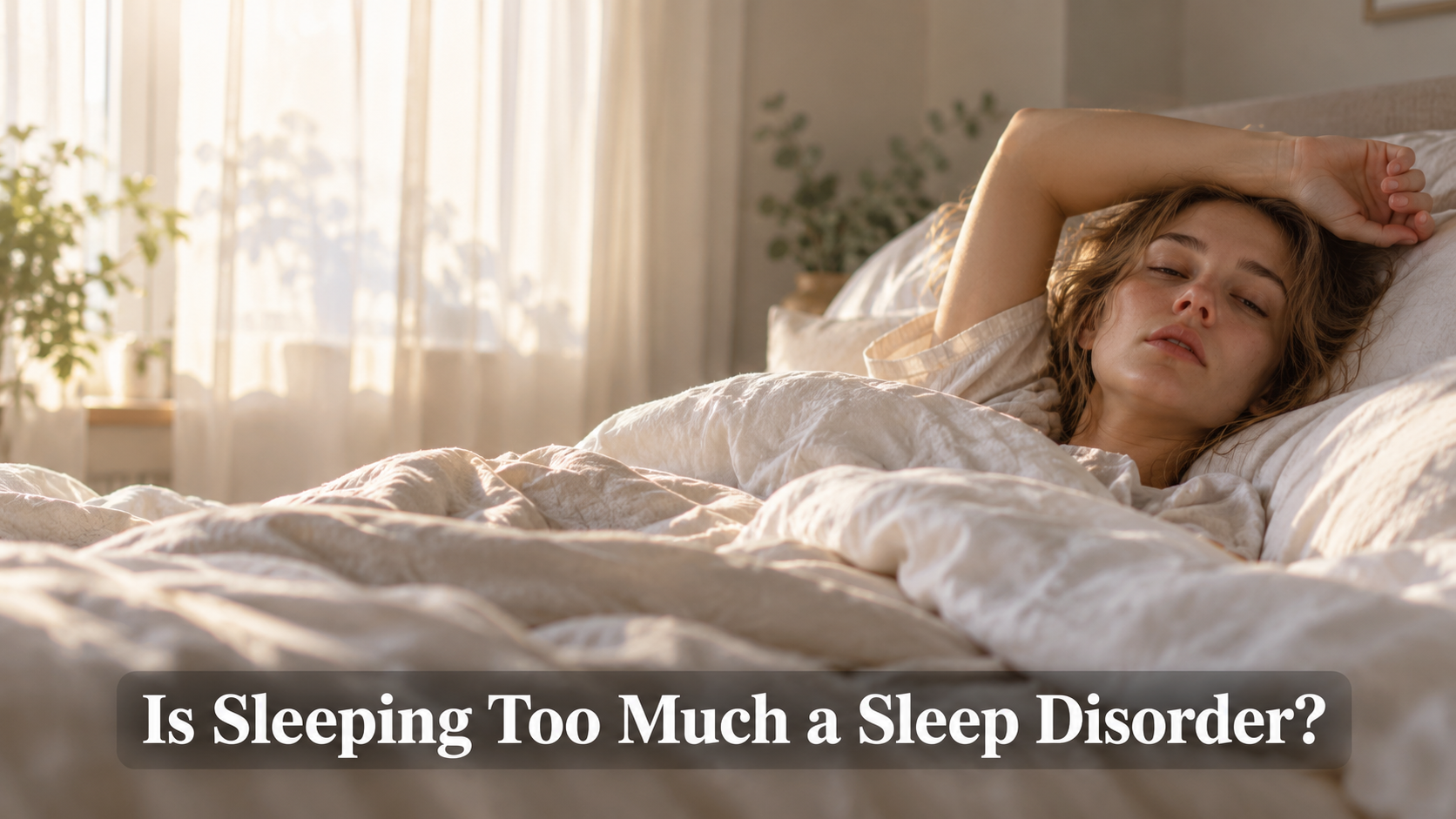
Is Sleeping Too Much a Sleep Disorder?
Last updated: October 2, 2026. Medically reviewed by Dr. Avinesh Bhar, Board-Certified Sleep Physician, SLIIIP.com.
Sleeping too much is not always a sleep disorder, but it can be a sign of one. Some adults simply need more sleep than average and wake up feeling fine. Others sleep long hours and still fight to stay awake, which points to a problem worth checking.
So is sleeping too much a sleep disorder? Dr. Avinesh Bhar, Board-Certified Sleep Physician at SLIIIP.com, separates the two by asking one question first: do you feel rested when you wake up? Long sleep that leaves you refreshed is usually a trait, while long sleep that leaves you sleepy is a symptom. Daytime sleepiness that lasts for weeks, even after a full night in bed, deserves a medical look.
SLIIIP’s board-certified sleep physicians can do sleep evaluations for sleep apnea. Virtual consultations in all 50 states. Home sleep tests shipped to your door.
How Much Sleep Is “Too Much” for an Adult?
There is no single cutoff for how much sleep is too much. According to the CDC, adults ages 18 to 60 need 7 or more hours of sleep each night. Adults 61 to 64 need 7 to 9 hours. Adults 65 and older need 7 to 8 hours.
Sleeping a bit past these ranges now and then is normal. You might sleep longer after a hard week, a late night, or an illness. That is your body paying back sleep debt.
The pattern matters more than any one night. Sleep doctors pay attention when long sleep becomes the norm and does not fix daytime tiredness. They also look closely when you need much more sleep than you used to.
Is Sleeping Too Much a Symptom or a Disorder?
Sleeping too much can be either one. It is a symptom when another problem drives it, like poor sleep quality, illness, or a medication. It is a disorder when the brain itself has trouble staying awake, as in idiopathic hypersomnia or narcolepsy.
Doctors use the word “hypersomnia” to describe excessive sleepiness or excessive sleep. Hypersomnia is a description of what you feel, not a final diagnosis. The next step is finding out what is behind it.
Common drivers of long sleep and daytime sleepiness include:
- Not enough sleep during the week, followed by long catch-up nights
- Poor sleep quality from obstructive sleep apnea or other breathing problems
- Mood conditions such as depression
- Medications that cause drowsiness
- Other health problems, like recovery from an illness
- Central disorders of hypersomnia, such as idiopathic hypersomnia and narcolepsy
Did low mood and oversleeping show up together? Our guide on whether depression can make you sleep too much covers that link.
Hypersomnia vs. Being a Long Sleeper
A long sleeper is a healthy person who naturally needs more sleep than most people. They may sleep 9 or 10 hours a night. When they get that sleep, they wake up clear-headed and stay alert all day.
Hypersomnia looks different. A person with hypersomnia stays sleepy during the day, even after a long night of sleep. They may nod off while reading, watching TV, or sitting in meetings. Naps may not help much.
Here are a few questions that help tell the two apart:
- Do you feel alert all day once you get your usual amount of sleep?
- Has your sleep need stayed about the same for years?
- Can you get through a long drive or a quiet afternoon without fighting sleep?
If you answered yes to all three, you may simply be a long sleeper. If you answered no to any of them, your sleep need deserves a closer look.
What Is Idiopathic Hypersomnia?
Idiopathic hypersomnia is a sleep disorder that causes extreme daytime sleepiness without a clear cause. “Idiopathic” means the cause is not known. It shares some features with narcolepsy, but it has its own pattern.
According to MedlinePlus, people with idiopathic hypersomnia may sleep up to 14 to 18 hours a day. They also report daytime naps that do not relieve their drowsiness. Many have trouble waking from long sleep and may feel confused or disoriented.
Waking up foggy and confused after a long night is one of the hallmarks doctors look for in idiopathic hypersomnia. This heavy, slow waking is sometimes called “sleep drunkenness.” People with this pattern often set many alarms and still struggle to get up.
MedlinePlus also notes that idiopathic hypersomnia usually lacks the sudden sleep episodes and loss of muscle control seen in narcolepsy. Other symptoms can include low energy, irritability, and trouble thinking clearly.
How Is Narcolepsy Different From Oversleeping?
Narcolepsy is a long-term brain disorder that affects how the body controls sleep and wake cycles. People with narcolepsy often do not sleep extra-long hours at night. Instead, they feel strong waves of sleepiness during the day.
These waves can come on fast and feel hard to resist. Some people with narcolepsy also have cataplexy. That is sudden muscle weakness, often set off by strong emotions like laughter or surprise.
In narcolepsy, a short nap often brings back alertness for a while, which is the reverse of what many people with idiopathic hypersomnia report. This contrast is one of the clues a sleep doctor weighs.
To learn more about testing, see our guide on how to test for narcolepsy. For care options after diagnosis, read about effective treatment for narcolepsy.
Can Sleep Apnea Make You Sleep Too Much?
Yes, obstructive sleep apnea is linked to long sleep and heavy daytime sleepiness. Breathing pauses break up sleep many times a night, so hours in bed may not translate into real rest.
Many people with sleep apnea do not know they stop breathing at night. They may only notice that they feel tired, nap often, or sleep in on weekends. A bed partner may hear loud snoring, gasping, or choking sounds.
Long sleep that never feels restful can be a sign that sleep quality, not sleep quantity, is the real problem. This is why sleep apnea is one of the first things a sleep doctor checks. It is common, and it can mimic other causes of sleepiness.
What Does a Sleep Evaluation Look At?
A sleep evaluation looks at your sleep habits, symptoms, health history, and daytime alertness. The goal is to find out whether your sleep need is normal or a sign of a sleep disorder.
During a visit, a sleep physician may ask about:
- Your usual bedtime, wake time, and total sleep on workdays and days off
- How you feel when you wake up and during the afternoon
- Naps, and whether they leave you refreshed or groggy
- Snoring, gasping, or pauses in breathing that others have noticed
- Medications, mood, and recent health changes
- Muscle weakness with emotion, vivid dreams at sleep onset, or sleep paralysis
Many doctors also ask you to keep a sleep diary for one to two weeks. A diary shows patterns that are hard to recall in one visit.
Testing depends on what the doctor suspects. A home sleep test can screen for obstructive sleep apnea. When narcolepsy or idiopathic hypersomnia is suspected, MedlinePlus notes that a multiple sleep latency test may be used. That test is done in a sleep lab. Still drained after a normal home test? Read about a normal home sleep test when you are still tired for common next steps.
Watch: Dr. Wells explains what is excessive daytime sleepiness
When to See a Doctor
See a doctor if long sleep comes with ongoing daytime sleepiness that does not improve with rest. Pay close attention to these red flags:
- You sleep 10 hours or more and still feel sleepy most days
- You doze off while driving, at work, or during conversations
- Naps leave you just as tired, or more tired, than before
- You wake up confused and struggle to get out of bed most mornings
- Someone has heard you snore loudly, gasp, or stop breathing during sleep
- You have sudden muscle weakness when you laugh or feel strong emotions
- Your sleep need has gone up sharply over a few weeks or months
If you ever fall asleep while driving, stop driving until you have been checked. Drowsy driving puts you and others at risk.
Dr. Avinesh Bhar, Board-Certified Sleep Physician at SLIIIP.com, recommends tracking your sleep for two weeks before your visit. Write down when you sleep, when you wake, each nap, and how alert you feel. A two-week sleep log gives your doctor a clearer picture than memory alone. SLIIIP evaluates the sleep side of your symptoms and works alongside your primary care doctor and any other specialists you see.
Insurance Accepted at SLIIIP
SLIIIP works with most major insurance plans, including Medicare, TRICARE (Humana Military), Aetna, Cigna, Humana, UnitedHealthcare, Blue Cross Blue Shield, Kaiser Permanente, Ambetter, MultiPlan, Beech Street, Allied, Alliant, NovaNet, Secure Health, Coventry Health Care, and Clover Health.

SLIIIP’s board-certified sleep physicians can do sleep evaluations for sleep apnea. Virtual consultations in all 50 states. Home sleep tests shipped to your door.
Frequently Asked Questions
Is sleeping too much a sleep disorder?
Not always. It can be a normal trait, or it can be a symptom of a sleep disorder such as sleep apnea, idiopathic hypersomnia, or narcolepsy.
How many hours of sleep is too much for an adult?
There is no exact cutoff. The CDC recommends 7 or more hours for adults 18 to 60, and doctors look closer when long sleep does not fix daytime sleepiness.
What is hypersomnia?
Hypersomnia means excessive sleepiness or excessive sleep. It describes a symptom, and a doctor works to find what causes it.
What is a long sleeper?
A long sleeper is a healthy person who needs more sleep than average. They feel alert all day once they get that sleep.
How can I tell if I am a long sleeper or have hypersomnia?
Long sleepers feel refreshed after enough sleep. People with hypersomnia stay sleepy during the day, even after long nights.
What is idiopathic hypersomnia?
It is a sleep disorder that causes extreme daytime sleepiness without a known cause. Naps often do not relieve the sleepiness.
What is sleep drunkenness?
It is a heavy, confused feeling when waking from sleep. It is a common feature of idiopathic hypersomnia.
Is idiopathic hypersomnia the same as narcolepsy?
No. Both cause strong daytime sleepiness, but idiopathic hypersomnia usually lacks sudden sleep attacks and emotion-triggered muscle weakness.
Do naps help people with narcolepsy?
Short naps often help people with narcolepsy feel alert for a while. People with idiopathic hypersomnia often report that naps do not help.
Can sleep apnea make you sleep too much?
Yes, obstructive sleep apnea is linked to long sleep and daytime sleepiness. Broken sleep makes long hours in bed feel less restful.
Can depression cause oversleeping?
Yes, depression is associated with sleeping more than usual. A doctor can help sort out whether mood or a sleep disorder is the main driver.
Can medications make me sleep more?
Some medications cause drowsiness. Do not stop or change a prescribed medication on your own; talk to your prescriber first.
Is it bad to sleep in on weekends?
Occasional catch-up sleep is common. Needing long catch-up sleep every weekend may mean you are not getting enough sleep during the week.
What tests check for excessive sleepiness?
A home sleep test can screen for obstructive sleep apnea. A multiple sleep latency test in a sleep lab may be used when narcolepsy or idiopathic hypersomnia is suspected.
What is a multiple sleep latency test?
It is a daytime test in a sleep lab that measures how fast you fall asleep during several short nap periods. It helps doctors assess daytime sleepiness.
Should I keep a sleep diary before seeing a doctor?
Yes. Logging your sleep, naps, and alertness for one to two weeks helps your doctor spot patterns.
Can I just sleep more to fix daytime sleepiness?
If long sleep does not fix your sleepiness, more sleep is unlikely to help. That pattern is worth a medical evaluation.
Is it safe to drive if I feel sleepy all day?
Drowsy driving is risky. If you fall asleep or nearly fall asleep while driving, stop driving and see a doctor.
Can SLIIIP help if I sleep too much?
SLIIIP’s board-certified sleep physicians evaluate adults for sleep disorders through virtual visits. They work alongside your other doctors.
When should I see a doctor about sleeping too much?
See a doctor if you stay sleepy despite long sleep, doze off at risky times, or notice snoring, gasping, or sudden muscle weakness.
SLIIIP’s board-certified sleep physicians can do sleep evaluations for sleep apnea. Virtual consultations in all 50 states. Home sleep tests shipped to your door.
Latest posts
-
Why Are My Naps Never Refreshing?
Last updated: October 2, 2026. Medically reviewed by Dr. Avinesh Bhar, Board-Certified Sleep Physician, SLIIIP.com. Naps that leave you groggy usually come down to how long you sleep, when you…
-
Is Sleeping Too Much a Sleep Disorder?
Last updated: October 2, 2026. Medically reviewed by Dr. Avinesh Bhar, Board-Certified Sleep Physician, SLIIIP.com. Sleeping too much is not always a sleep disorder, but it can be a sign…
-
Why Does My Insomnia Get Worse After Stopping Sleep Medication?
Last updated: October 2, 2026. Medically reviewed by Dr. Avinesh Bhar, Board-Certified Sleep Physician, SLIIIP.com. Insomnia can get worse after stopping sleep medication for three main reasons. They are rebound…
Get updates
Spam-free subscription, we guarantee. This is just a friendly ping when new content is out.

