👉 Register for Free. How to Diagnose Sleep Apnea Faster in Primary Care – FREE Webinar by Dr. Audrey Wells. – Friday, April 24 at 12 PM ET

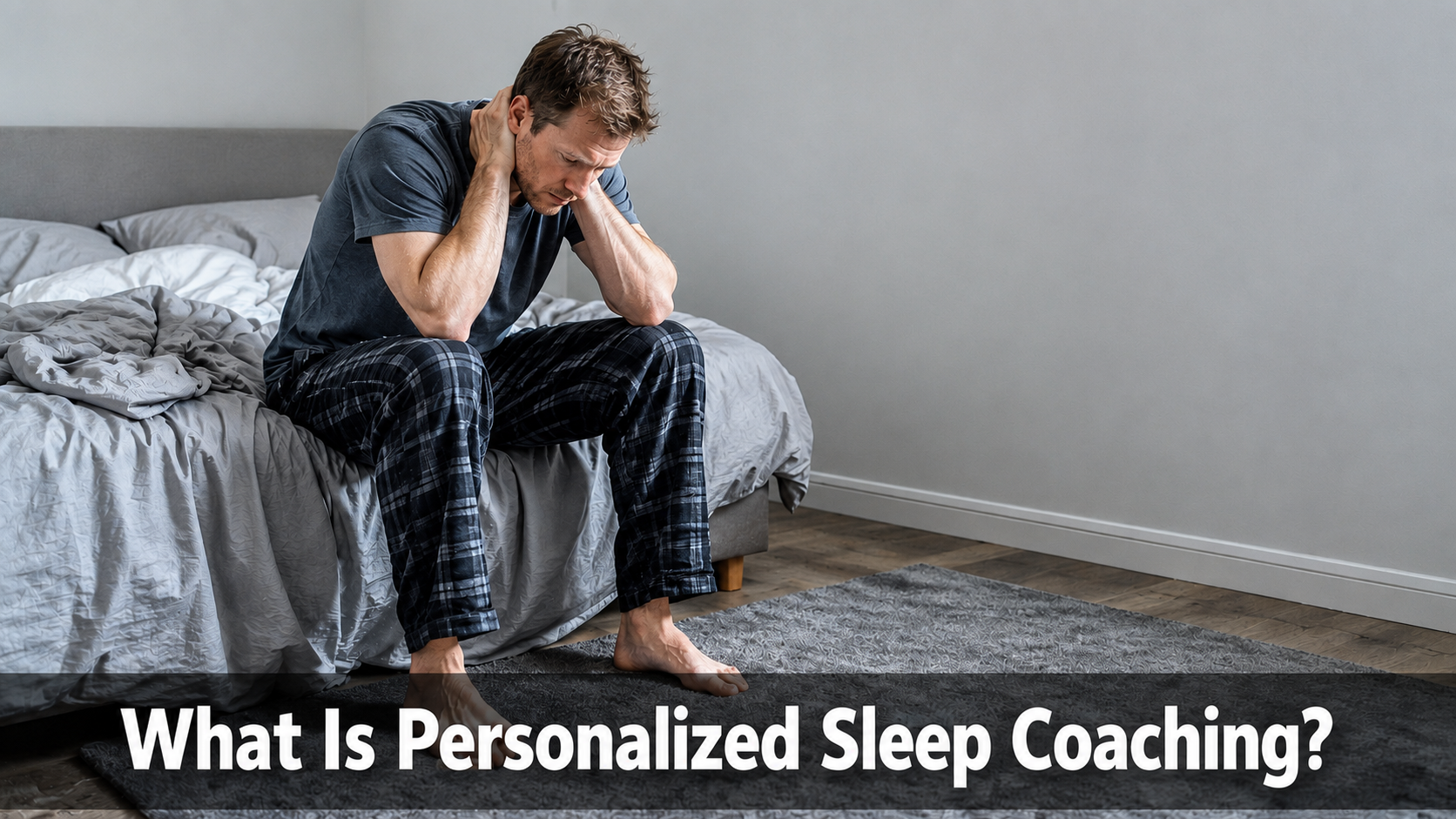
What Is Personalized Sleep Coaching and How Does It Help?
Personalized sleep coaching is structured behavioral support built around one person’s schedule, habits, and constraints rather than a generic list of sleep tips, explains Dr. Avinesh Bhar, Board-Certified Sleep Physician at SLIIIP.com. The value is not new information. Most people already know they should keep a steady wake time and cut caffeine earlier. The value is accountability and a plan that fits a real life, including night shifts, young children, and travel. Coaching is education and behavior change support. It is not a diagnosis, and it is not a treatment. That distinction shapes everything below, and it is the single most useful thing to understand before spending money on it.
SLIIIP’s board-certified sleep physicians can do sleep evaluations for sleep apnea. Virtual consultations in all 50 states. Home sleep tests shipped to your door.

What Personalized Sleep Coaching Actually Involves
A coaching relationship usually starts with data collection. You track your sleep for one to two weeks using a diary, and sometimes a wearable, recording bedtime, wake time, night wakings, caffeine, alcohol, exercise, and how you felt the next day.
From there, a coach looks for patterns you cannot easily see yourself. Someone who believes they have insomnia may in fact have a wake time that varies by three hours across the week. Someone who feels wired at midnight may be getting no morning light at all.
The plan that follows is negotiated rather than prescribed. A coach works within what you are willing and able to change, which is why the same advice can succeed after it previously failed.
Sessions are typically weekly or biweekly, run for four to eight weeks, and happen by video or phone. Between sessions you keep tracking and the plan gets adjusted.
CHECK YOUR SLEEP SYMPTOMS: TAKE THE 2 MINUTE QUIZ
TAKE THE QUIZ
Coaching Compared With Clinical Care
This is where people get confused, and where money gets wasted.
Cognitive behavioral therapy for insomnia is a structured clinical treatment with strong evidence behind it, delivered by trained clinicians. It is recommended as the first line approach for chronic insomnia. It uses specific techniques including sleep restriction and stimulus control that require clinical judgment to apply safely.
Sleep coaching borrows ideas from that framework but is not the same thing. Our overview of cognitive behavioral therapy for sleep disorders explains the clinical method, and our week by week walkthrough of what CBT-I feels like shows what the real protocol involves.
The other difference is regulation. Physicians, psychologists, and nurse practitioners hold licenses. Sleep coach is not a protected title in most places, which means credentials vary enormously and anyone can use the term. That does not make coaching worthless. It means you have to check who you are hiring.
How Personalized Sleep Coaching Helps in Practice
The mechanism is straightforward: consistency, applied to the right variable, sustained long enough to work.
Anchoring your wake time. A fixed morning is the most powerful single lever in sleep health, and it is also the one people abandon fastest on weekends. Our guide to fixing your sleep schedule covers the mechanics.
Fixing light timing. Morning light strengthens the signal your body uses at night. Coaches build this into an existing routine rather than adding a new task.
Reducing time in bed. Many people with poor sleep spend nine or ten hours in bed to catch seven. Compressing that window usually consolidates sleep, though this technique needs care and should not be attempted without guidance if you drive professionally or have a seizure history.
Solving the specific obstacle. A rotating shift worker, a parent of a toddler, and a frequent traveler each need a different plan. Generic advice fails all three.
Accountability. Knowing someone will review your diary changes behavior more than intention does.
Who Tends to Benefit Most
Personalized sleep coaching suits people whose sleep problem is behavioral and whose medical picture is already clear.
- Chronically inconsistent schedules with no other symptoms
- Shift workers adapting to a rotating roster
- People who sleep adequately but at the wrong hours
- Those who have completed treatment and want help maintaining gains
- People rebuilding routines after a life change such as a new baby or a move
The Centers for Disease Control and Prevention notes that adults need seven or more hours of sleep on a regular basis, and for many people the gap is scheduling rather than an inability to sleep.
When an Evaluation Should Come First
According to Dr. Avinesh Bhar, the most common problem he sees is not bad coaching. It is good coaching applied to a medical problem it cannot solve, while months pass.
Talk to a physician before starting coaching if you notice any of the following:
- Loud snoring, gasping, or breathing pauses observed by a partner
- Waking with a dry mouth, sore throat, or morning headache
- Sleepiness that persists despite adequate time in bed
- Falling asleep unintentionally while reading, in meetings, or driving
- Uncomfortable leg sensations at night that improve with movement
- Acting out dreams or unusual movements during sleep
- Insomnia that has lasted more than three months
These patterns are associated with conditions that behavior change alone does not address, and they warrant a clinical assessment. The National Heart, Lung, and Blood Institute publishes a plain language overview of sleep deprivation and deficiency that is a useful background. If insomnia has become chronic, see our page on when chronic insomnia needs a sleep test.
A sleep evaluation is one part of a broader clinical picture. Concerns involving the heart, mood, or an existing diagnosis belong with the physician managing that care. Never change or stop prescribed therapy, including CPAP settings, on a coach’s advice.
How to Judge a Coach Before You Pay
Ask direct questions. A good coach welcomes them.
What is your training? Look for a clinical background, a recognized behavioral sleep medicine credential, or supervised experience. Vague wellness certifications earned over a weekend are a warning sign.
What happens if I have symptoms of a sleep disorder? The correct answer is a referral to a physician. A coach who offers to work around apnea symptoms should be declined.
What does the plan look like? It should involve tracking, measurable targets, and review, not a fixed program sold to everyone.
What are you not able to do? Anyone who says they can cure insomnia, fix apnea, or replace medical care is overselling. Coaching does not diagnose conditions, order testing, interpret results, or manage medication.
Cost and format vary widely, and coaching is generally not covered by insurance, unlike a clinical evaluation. Our page on the SLIIIP sleep experts explains who is involved in clinical care, and digital therapeutics covers software based programs that sit between self help and clinical treatment.
Using Trackers Alongside a Plan
Wearables are useful in coaching because they make trends visible, but they estimate rather than measure sleep stages and should not be treated as diagnostic. Our guide to the wearable sleep tracker explains where the numbers hold up and where they do not.
A sensible rule during coaching is to review data weekly with your coach rather than checking a score every morning, since daily monitoring can itself increase sleep anxiety.
Watch: The Importance of Sleep Behaviors session by Dr. Avinesh Bhar (SLIIIP) and Nick Lambe (Sleep Coach)
When to Talk to a Sleep Physician
Consider an evaluation if poor sleep has lasted more than a month, if a partner has observed breathing pauses, if daytime sleepiness affects your driving or work, or if coaching has run its course without meaningful change.
At Sliiip, we accept the following insurances:

SLIIIP’s board-certified sleep physicians can do sleep evaluations for sleep apnea. Virtual consultations in all 50 states. Home sleep tests shipped to your door.
Frequently Asked Questions
What is personalized sleep coaching?
It is structured behavioral support built around your specific schedule, habits, and constraints, delivered over several weeks with tracking and regular review.
Is a sleep coach a medical professional?
Not necessarily. The title is unregulated in most places, so credentials range from licensed clinicians to people with brief online certifications.
Is coaching the same as CBT-I?
No. Cognitive behavioral therapy for insomnia is a clinical treatment delivered by trained clinicians. Coaching borrows some concepts but is not equivalent.
How long does coaching usually last?
Most programs run four to eight weeks, with weekly or biweekly sessions and tracking in between.
Does insurance cover sleep coaching?
Usually not. Clinical evaluations and testing are more commonly covered, which is worth checking before you compare costs.
Can a coach diagnose sleep apnea?
No. Diagnosis requires clinical testing interpreted by a physician. A coach should refer you if symptoms appear.
What should I bring to the first session?
One to two weeks of a sleep diary, a list of medications, your typical schedule, and a clear sense of what you want to change.
Will I have to give up naps?
Not always. Short early afternoon naps are often fine. Long or late naps usually get adjusted first.
Does coaching work for shift workers?
This is one of its strongest uses, because rotating schedules require an individual plan that generic advice cannot provide.
Can coaching help my child sleep?
Pediatric sleep is a separate field with its own approaches. Any concern about a child’s breathing during sleep should go to a physician.
What if coaching does not work?
That itself is information. Failure to improve after a consistent effort is a reasonable trigger for a clinical evaluation.
Is online coaching as good as in person?
For behavioral work, video sessions are generally comparable, and they make consistent scheduling easier for most people.
Do I need a tracker to participate?
No. A written sleep diary is sufficient and is what many clinicians prefer for accuracy of the details that matter.
Can coaching replace sleep medication?
Medication decisions belong to your prescribing physician. Never adjust or stop a prescription based on coaching advice.
How quickly do people see change?
Many notice improvement in two to three weeks once wake time and light exposure become consistent, though results vary.
Is sleep restriction safe?
It is effective but requires guidance. It temporarily increases daytime sleepiness, which matters if you drive or operate equipment.
What if I have insomnia and apnea together?
Both need attention, and the medical condition is usually addressed first. This combination is common and worth discussing with a physician.
Does coaching help with jet lag?
Yes, planning light exposure and meal timing around travel is a practical use of an individualized plan.
How do I find a qualified coach?
Ask about training, referral practices, and limits. A behavioral sleep medicine credential or clinical license is the strongest signal.
Should I get tested before starting coaching?
If you have any symptoms on the warning list above, yes. If your issue is purely scheduling and you feel well otherwise, coaching is a reasonable first step.
Ready to Rule Out a Medical Cause First
Coaching works best when you know what you are working with. A sleep evaluation answers that question.
SLIIIP’s board-certified sleep physicians can do sleep evaluations for sleep apnea. Virtual consultations in all 50 states. Home sleep tests shipped to your door.
Latest posts
-
RingConn vs Oura: Which Smart Ring Tracks Sleep Better?
Last updated: September 10, 2026. Medically reviewed by Dr. Avinesh Bhar, Board-Certified Sleep Physician, SLIIIP.com. RingConn and Oura both track sleep through a finger-worn ring, but they differ most in…
-
Withings ScanWatch Sleep Tracking Accuracy: What It Can and Cannot Tell You
Last updated: September 10, 2026. Medically reviewed by Dr. Avinesh Bhar, Board-Certified Sleep Physician, SLIIIP.com. Withings ScanWatch is a hybrid analog watch that tracks sleep stages and can flag nighttime…
-
Are Cheap Fitness Trackers Accurate for Sleep?
September 10, 2026. Medically reviewed by Dr. Avinesh Bhar, Board-Certified Sleep Physician, SLIIIP.com. Cheap fitness trackers can be reasonably accurate at telling you when you fell asleep and woke up,…
Get updates
Spam-free subscription, we guarantee. This is just a friendly ping when new content is out.

