👉 Register for Free. How to Diagnose Sleep Apnea Faster in Primary Care – FREE Webinar by Dr. Audrey Wells. – Friday, April 24 at 12 PM ET


Sleep Apnea and Asthma: The Dangerous “Overlap Syndrome” Explained
Sleep apnea and asthma can feed into each other at night, with trouble in one making the other harder to keep under control, says Dr. Avinesh Bhar, Board-Certified Sleep Physician at SLIIIP.com, which is why doctors look closely when both show up in the same person.
When two breathing problems share the same body, the nights can get rough. Each condition has its own triggers and its own care plan, but together they can pull on the same airway and the same sleep. Understanding how they interact helps you and your doctors build a plan that treats the whole picture.
SLIIIP’s board-certified sleep physicians can do sleep evaluations for sleep apnea. Virtual consultations in all 50 states. Home sleep tests shipped to your door.
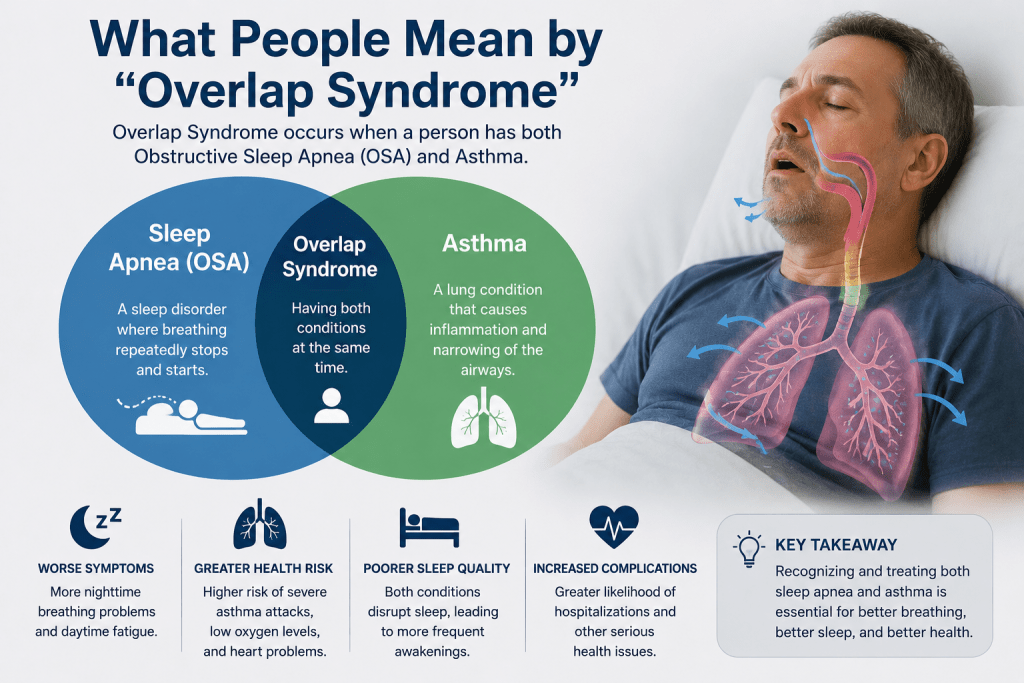
What People Mean by “Overlap Syndrome”
You may have seen the term overlap syndrome and wondered what it covers. In its classic medical use, overlap syndrome describes a person who has both obstructive sleep apnea and chronic obstructive pulmonary disease, or COPD, at the same time. Our guide on COPD and sleep covers that pairing in more detail.
More recently, doctors have used similar overlap language for people who carry both asthma and obstructive sleep apnea. The two are not the same disease, but they overlap in real ways. Each one affects breathing, each one disturbs sleep, and each one can make the other feel worse.
So when people talk about sleep apnea and asthma as an overlap, they mean two breathing conditions sharing one airway and one set of nights. The label matters less than the idea behind it. Two problems together often need more careful attention than either problem alone.
CHECK YOUR SLEEP SYMPTOMS: TAKE THE 2 MINUTE QUIZ
TAKE THE QUIZ
A Quick Refresher on Each Condition
Before looking at how they connect, it helps to recall what each one does.
Asthma is a condition of the lower airways, the tubes that carry air deep into your lungs. In asthma, those tubes can tighten, swell, and fill with mucus, which makes breathing harder. Triggers include allergens, cold air, exercise, and infections.
Obstructive sleep apnea is different. It happens in the upper airway, at the back of the throat. During sleep, the soft tissue there relaxes and blocks airflow, so breathing pauses again and again through the night. Our overview of what sleep apnea is explains the basics.
So asthma narrows the lower airways while sleep apnea blocks the upper airway. Two different spots, two different mechanisms, but both end with you fighting for air.
How Sleep Apnea and Asthma Affect Each Other
Here is where the overlap gets interesting. Research suggests the two conditions can push on each other in both directions.
Asthma May Raise Apnea Risk
People with asthma seem to have a higher chance of developing sleep apnea over time. Several reasons may play a part. Airway swelling, nasal congestion, and the effect of some long term asthma medicines on weight and tissue can all make the upper airway more likely to collapse at night.
Apnea May Worsen Asthma Control
The relationship runs the other way too. Untreated sleep apnea can stir up inflammation and acid reflux, both of which can make asthma harder to control. Many people with hard to manage nighttime asthma turn out to have undiagnosed sleep apnea sitting underneath.
Shared Triggers Stack Up
Some triggers feed both. Excess weight, nasal allergies, and reflux can each worsen asthma and raise apnea risk. When the same trigger pulls on two conditions, the nighttime effect can be larger than either condition alone would cause.
Why the Combination Deserves Attention
The reason this overlap gets called dangerous is simple. Two breathing conditions together can disturb sleep more deeply and strain the body more than one condition by itself.
Poor sleep makes it harder to manage any chronic illness. Repeated drops in oxygen overnight add stress to the heart and blood vessels. You can read more about that link in our article on sleep and heart disease. When asthma flares are layered on top, the nights can become a cycle of waking, coughing, and gasping.
This does not mean every person with both conditions is in danger. It means the pair deserves a closer look than a single condition might, so that nothing important slips through the cracks.
Signs Worth Noticing
Because the symptoms can blur together, it helps to know what points toward sleep apnea even when asthma is already in the picture.
Loud snoring most nights.
Waking up gasping or choking, covered in our guide to waking up gasping for air.
Morning headaches and a dry mouth.
Daytime sleepiness even after a full night in bed.
Nighttime asthma symptoms that stay hard to control despite good treatment.
A partner who notices you stop breathing in your sleep.
None of these confirm anything on their own. Our list of obstructive sleep apnea warning signs gives a fuller picture. If several rings are true, it is worth a conversation with a sleep physician.
How Doctors Sort It Out
An important point to be clear about. A sleep apnea evaluation does not treat your asthma, and it is not a replacement for your asthma care. Your asthma stays in the hands of your own asthma specialist or pulmonologist, who manages your inhalers and your action plan.
What a sleep evaluation does is answer a separate question. It looks at whether your breathing pauses during sleep, how often, and how much your oxygen dips. A home sleep test can capture this data, and a sleep physician reads it. Our guide on how to get a home sleep test walks through the process.
When both conditions are present, the two care teams work in parallel. The asthma plan handles the lower airways. The sleep plan handles the upper airway and nighttime breathing. To map out the sleep side, Dr. Avinesh Bhar and the SLIIIP team review your test results and your history, then explain what they mean for you.
Watch: Dr. Wells explains the process for falling asleep
Everyday Habits That Support Easier Breathing
Daily habits will not replace medical care from your asthma and sleep teams. They simply give your airways a calmer baseline. Always follow your own physicians’ guidance first.
Keep nasal allergies and congestion managed during the day, since a clear nose helps both conditions.
Aim for a healthy weight when you can, as extra tissue around the airway affects asthma and apnea alike.
Watch evening reflux triggers like late heavy meals, which can stir up both coughing and breathing pauses.
Keep a steady sleep schedule so your body gets the deep rest that recovery needs.
Stay current with your asthma action plan and your sleep follow ups, and learn more in our guide to better sleep through improved breathing.
For trusted background on sleep health, the Centers for Disease Control and Prevention and the National Heart, Lung, and Blood Institute both offer clear public guides.
At Sliiip, we accept the following insurances:

SLIIIP’s board-certified sleep physicians can do sleep evaluations for sleep apnea. Virtual consultations in all 50 states. Home sleep tests shipped to your door.
Frequently Asked Questions
What is the link between sleep apnea and asthma?
The two breathing conditions can affect each other. Asthma may raise the risk of developing sleep apnea, and untreated apnea can make asthma harder to control. Doctors look closely when both appear together.
What is overlap syndrome?
In its classic medical use, overlap syndrome means having both obstructive sleep apnea and COPD at the same time. Doctors now use similar overlap language for people who have both asthma and sleep apnea.
Can asthma cause sleep apnea?
Asthma does not directly cause apnea, but people with asthma have a higher chance of developing it. Airway swelling, congestion, and other factors may make the upper airway more likely to collapse at night.
Can sleep apnea make asthma worse?
It can. Untreated apnea may add inflammation and reflux, which can make asthma harder to manage. Some people with stubborn nighttime asthma have undiagnosed apnea underneath.
Why is this combination called dangerous?
Because two breathing conditions together can disturb sleep more deeply and add more strain on the body than one alone. The pair deserves closer attention so nothing important is missed.
How do I know if I have both?
Watch for loud snoring, gasping awake, morning headaches, daytime sleepiness, and nighttime asthma that stays hard to control. A sleep physician can order testing to check the apnea side.
Does treating sleep apnea help my asthma?
A sleep evaluation treats the sleep breathing problem, not the asthma. Some people find their overall nighttime breathing feels steadier, but your asthma care still belongs with your asthma specialist.
Will a home sleep test work if I have asthma?
A home sleep test records your breathing and oxygen overnight, which a physician reviews. Your provider can tell you whether home testing fits your situation.
Should I stop my asthma inhaler if I start sleep apnea care?
No. Never stop a prescribed asthma medicine on your own. Your asthma plan and your sleep plan work side by side, each handled by the right team.
Can losing weight help both conditions?
It can. Extra weight affects both asthma and apnea, so reaching a healthy weight may ease both. This works alongside medical care, not instead of it.
Does acid reflux connect to both?
Yes. Reflux can trigger coughing and worsen asthma, and it is also linked with disturbed nighttime breathing. Managing reflux may help calm both at night.
Why do I cough and wake up at night?
Nighttime coughing and waking can come from asthma, from apnea, or from both. Tracking when it happens helps your doctors find the cause.
Is nighttime asthma a sign of sleep apnea?
Not always, but asthma that stays hard to control at night is one reason doctors check for apnea. It is worth raising with both of your care teams.
Can children have both asthma and sleep apnea?
Children can have both, and the combination is recognized in pediatric care. A child’s evaluation should be guided by their own pediatrician and specialists.
Does CPAP affect asthma?
CPAP treats the apnea side by keeping the upper airway open. Any questions about how it fits with your asthma should go to both your sleep physician and your asthma specialist.
How are the two conditions different?
Asthma narrows the lower airways deep in the lungs, while sleep apnea blocks the upper airway at the throat during sleep. Different spots, different mechanisms, but both make breathing harder.
Can allergies make both worse?
Yes. Nasal allergies can worsen asthma and also congest the upper airway, which can raise apnea risk. Managing allergies often helps both.
How often should I be checked if I have both?
Stay in regular contact with both care teams, and revisit your sleep plan if your weight, symptoms, or asthma control change. Regular follow up keeps your plan current.
Where do I start if I suspect overlap?
Note your nighttime symptoms and how your asthma is behaving, then book a virtual visit with a sleep physician while keeping your asthma specialist in the loop. The two work together on your plan.
Can sleep apnea and asthma be managed at the same time?
Yes. The two conditions are handled in parallel, with your asthma specialist managing the asthma and a sleep physician managing the apnea side. The teams coordinate so both get proper attention.
SLIIIP’s board-certified sleep physicians can do sleep evaluations for sleep apnea. Virtual consultations in all 50 states. Home sleep tests shipped to your door.
Latest posts
-
Why Do I Feel Drunk or Confused When I Wake Up?
Last updated: October 2, 2026. Medically reviewed by Dr. Avinesh Bhar, Board-Certified Sleep Physician, SLIIIP.com. If you often feel drunk when you wake up, you may have sleep drunkenness. It…
-
Why Do I Sleep Through Multiple Alarms?
Last updated: October 2, 2026. Medically reviewed by Dr. Avinesh Bhar, Board-Certified Sleep Physician, SLIIIP.com. Most people who sleep through alarms are either deep in slow-wave sleep, short on sleep,…
-
Why Can’t I Wake Up Even After Getting Enough Sleep?
Last updated: October 2, 2026. Medically reviewed by Dr. Avinesh Bhar, Board-Certified Sleep Physician, SLIIIP.com. If you can’t wake up after enough sleep, the cause is usually not the number…
Get updates
Spam-free subscription, we guarantee. This is just a friendly ping when new content is out.

