👉 Register for Free. How to Diagnose Sleep Apnea Faster in Primary Care – FREE Webinar by Dr. Audrey Wells. – Friday, April 24 at 12 PM ET

Terminal Insomnia: Why You Keep Waking Up at 4 AM and Can’t Get Back to Sleep
Terminal insomnia is the name for waking in the small hours and not being able to drift back off, says Dr. Avinesh Bhar, Board-Certified Sleep Physician at SLIIIP.com, and the 4 AM version is one of the most common patterns people bring to a sleep visit.
Falling asleep is not always the problem. For many people, staying asleep is the real struggle. You drop off fine, then your eyes snap open before dawn and your mind starts racing while the rest of the house sleeps. If that sounds familiar, you are far from alone, and there are real reasons behind it.
SLIIIP’s board-certified sleep physicians can do sleep evaluations for sleep apnea. Virtual consultations in all 50 states. Home sleep tests shipped to your door.
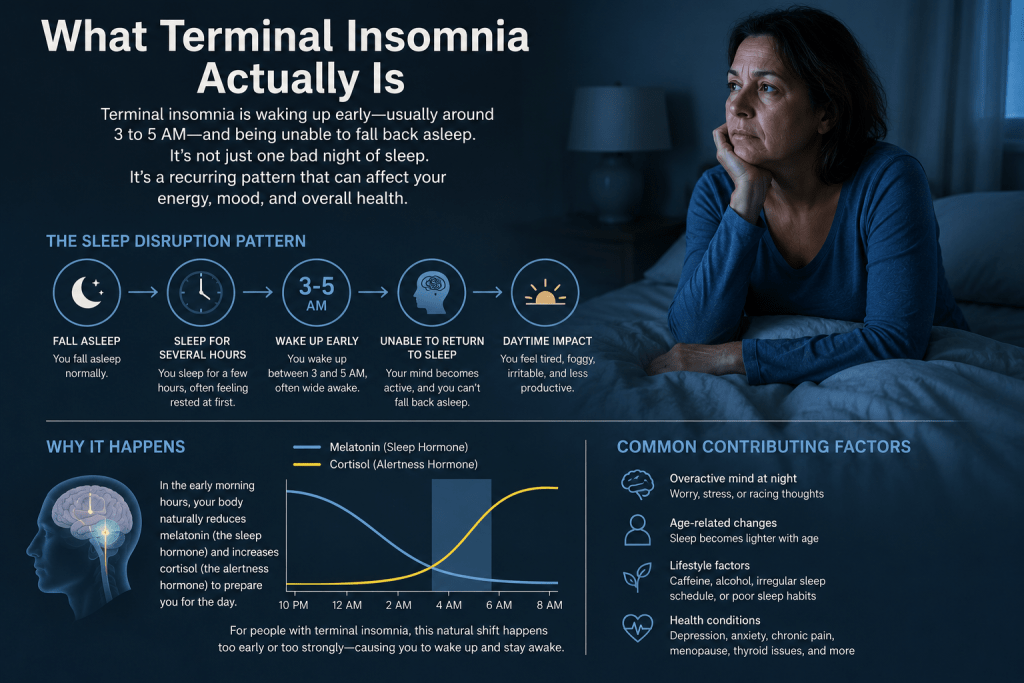
What Terminal Insomnia Actually Is
Sleep doctors group insomnia by when it strikes. Trouble falling asleep at the start of the night is called sleep onset insomnia. Waking up over and over through the night is sleep maintenance insomnia. Terminal insomnia is the third kind. It means waking up too early and being unable to fall back asleep, even though you still feel tired.
The word terminal here simply means end. It points to the end of the sleep period, not anything more serious. Our guide to the types of insomnia lays out how the three patterns differ.
A 4 AM wake up is the classic example. You may have gone to bed at a reasonable hour and slept soundly for a stretch, then found yourself wide awake with hours still left before your alarm. Lying there frustrated, the clock feels like an enemy.
CHECK YOUR SLEEP SYMPTOMS: TAKE THE 2 MINUTE QUIZ
TAKE THE QUIZ
Why 4 AM Is Such a Common Wake Up Time
There is a reason so many people name the same hour. A few natural rhythms line up in the early morning.
Your body temperature reaches its lowest point in the pre-dawn hours and then starts to rise. That rise is a signal that the night is ending.
Your sleep also gets lighter as the night goes on. The deep sleep that fills the first half of the night gives way to lighter stages and more dreaming sleep toward morning. Lighter sleep is easier to break, so a small disturbance at 4 AM wakes you when the same noise at midnight would not.
On top of that, a stress hormone called cortisol begins to climb in the early morning to prepare you for the day. For someone already on edge, that natural climb can tip them fully awake.
Common Causes Behind Terminal Insomnia
Early waking can come from many directions. Here are the ones doctors see most often.
Stress and a Busy Mind
Worry has a way of waiting until the house is quiet. When you wake briefly at 4 AM, an anxious mind grabs the moment and starts spinning. Our pieces on why you wake up anxious and not being able to shut your brain off at night cover this loop.
Mood and Emotional Health
Early morning waking has a well known link with low mood and depression. If your early waking comes with sadness, loss of interest, or a heavy feeling that lingers through the day, it is worth speaking with a mental health professional alongside a sleep physician. Our article on whether depression might be a sleep problem explores the connection. You do not have to sort this out alone, and support is available.
Alcohol in the Evening
A nightcap may help you fall asleep, but it backfires later. As your body clears the alcohol, sleep grows lighter and choppier in the second half of the night, which often lands you awake before dawn.
Age and Shifting Rhythms
As people get older, the body clock tends to drift earlier. Many older adults feel sleepy sooner in the evening and naturally wake earlier. This is common and not a sign that anything is wrong.
Light, Noise, and a Full Bladder
Early sunlight through thin curtains, a partner stirring, a pet, or the need to use the bathroom can all break that fragile early morning sleep. Small fixes here sometimes make a real difference.
An Underlying Sleep Condition
Sometimes early waking is a clue to something else, such as sleep apnea. If you also snore, wake gasping, or feel unrefreshed despite hours in bed, a sleep evaluation can check for it. Our guide on how to stop waking up multiple times at night covers related patterns.
What To Do When You Wake at 4 AM
The way you handle the wake up itself can either calm things down or make early waking worse. A few steady habits help.
Do not stare at the clock. Watching the minutes tick by raises stress and makes sleep less likely. Turn the clock away.
If you are still awake after about twenty minutes, get up. Go to another room and do something quiet and dull in dim light until you feel sleepy, then return to bed. This keeps your brain from learning to treat the bed as a place for frustration.
Keep the lights low. Bright light tells your body clock that morning has arrived, which makes falling back asleep harder.
Skip your phone. The screen and the content both wake the brain at the worst moment.
If a racing mind is the issue, our tips on falling asleep faster can help you settle back down.
Watch: Why Do I Have Insomnia?
When To See a Sleep Physician
A rough night here and there is normal. A steady pattern is worth a closer look. If early waking happens most nights for a few weeks or more, and it is wearing on your days, it is time to talk to a professional.
A sleep physician can sort out whether your early waking is tied to stress, mood, alcohol, your body clock, or an underlying condition. The most studied long term approach for ongoing insomnia is a structured program called cognitive behavioral therapy for insomnia, explained in our CBT-I guide. It works on the habits and thoughts that keep early waking going.
When the pattern needs a closer look, Dr. Avinesh Bhar and the SLIIIP team review your sleep history and, when useful, your home sleep test data, then explain what fits your case.
Everyday Habits That Support Sleeping Through
Habits will not erase a medical cause, but they give your nights a calmer base. None of these replace a physician’s guidance.
Keep a steady wake time every day, even on weekends, so your body clock stays anchored.
Get bright light in the morning and dim the lights in the evening to keep your rhythm on track.
Limit alcohol and heavy meals close to bedtime, since both disturb the second half of the night.
Keep the bedroom dark, cool, and quiet, with blackout curtains if early light is a problem.
Build a wind down routine so your mind has time to settle before sleep.
For trusted background on sleep health, the Centers for Disease Control and Prevention and the National Heart, Lung, and Blood Institute both offer clear public guides.
At Sliiip, we accept the following insurances:

SLIIIP’s board-certified sleep physicians can do sleep evaluations for sleep apnea. Virtual consultations in all 50 states. Home sleep tests shipped to your door.
Frequently Asked Questions
What is terminal insomnia and why does it cause 4 AM waking?
Terminal insomnia means waking too early and being unable to fall back asleep. The 4 AM pattern is common because sleep is lighter, body temperature is rising, and cortisol is climbing in the pre-dawn hours, all of which make waking easier.
Is early morning waking serious?
The word terminal here just means the end of the sleep period, not anything dangerous. Still, a steady pattern that wears on your days is worth reviewing with a professional, since it can point to stress, mood, or an underlying condition.
Why do I always wake up at the same time each night?
Your body clock runs on a steady rhythm, so light sleep, temperature, and hormones can line up at the same hour each night. A small disturbance at that point tends to wake you when it would not earlier in the night.
Does early morning waking mean depression?
Not always, but early waking has a known link with low mood and depression. If it comes with sadness or loss of interest, speaking with a mental health professional alongside a sleep physician is a good step.
Can anxiety cause me to wake at 4 AM?
Yes. A brief wake up gives an anxious mind room to start spinning, which can keep you awake. Calming the wake up itself and addressing daytime stress both help.
Should I get out of bed if I wake too early?
If you are still awake after about twenty minutes, getting up and doing something quiet in dim light often helps. It keeps your brain from linking the bed with frustration.
Why does alcohol make me wake up early?
Alcohol may help you fall asleep, but as your body clears it, sleep grows lighter in the second half of the night. That often leads to waking before dawn.
Is waking up early just part of getting older?
Often, yes. The body clock tends to shift earlier with age, so many older adults feel sleepy sooner and wake earlier. This is common and usually not a problem.
Can sleep apnea cause early morning waking?
It can. Apnea breaks up sleep and can leave you waking unrefreshed. If you also snore or wake gasping, a sleep evaluation can check for it.
Will looking at my phone make it worse?
Yes. The light and the content both wake the brain at the worst moment. Keeping the phone away during a night waking gives you a better chance of falling back asleep.
How long is too long to be awake before I should worry?
A few rough nights are normal. If early waking happens most nights for several weeks and affects your days, it is time to talk to a professional.
What is CBT-I and can it help early waking?
CBT-I is a structured program that targets the habits and thoughts keeping insomnia going. It is the most studied long term approach for ongoing insomnia, including early waking.
Does looking at the clock make insomnia worse?
It often does. Watching the time raises stress and makes sleep less likely. Turning the clock away removes that pressure.
Can cortisol cause me to wake up early?
Cortisol naturally rises in the early morning to prepare you for the day. For someone already on edge, that climb can tip a light moment into full wakefulness.
Why do I wake before my alarm every day?
Your body may be anticipating the alarm and your clock may be set a little early. A steady wake time and good light habits can help reset the timing.
Can melatonin help with early waking?
Melatonin questions, including dose and timing, are best answered by a physician or pharmacist, since the right approach depends on your situation. A sleep physician can advise what fits you.
Does a dark room help me sleep later?
It can. Early sunlight signals your body that morning has come. Blackout curtains keep that signal out and may help you sleep longer.
Is it bad to nap if I wake up too early?
A short early afternoon nap is usually fine, but long or late naps can reduce your sleep drive at night and feed the cycle. Keep naps brief if you use them.
How do I talk to a doctor about waking up at 4 AM?
Keep a simple log of when you wake, how you feel, and what you tried, then book a virtual visit. A sleep physician can read the pattern and suggest a clear next step.
Can stress from work cause this pattern?
Yes. Ongoing stress keeps the nervous system on alert, which makes early morning sleep fragile. Addressing daytime stress often improves the nights.
SLIIIP’s board-certified sleep physicians can do sleep evaluations for sleep apnea. Virtual consultations in all 50 states. Home sleep tests shipped to your door.
Latest posts
-
Why Does My Body Ache and I Feel Tired With No Fever?
Last updated: October 13, 2026. Medically reviewed by Dr. Avinesh Bhar, Board-Certified Sleep Physician, SLIIIP.com. If your body aches and you feel tired with no fever, the cause is often…
-
COVID and Sleep: Why Sleep Problems Can Linger After Infection
Last updated: October 13, 2026. Medically reviewed by Dr. Avinesh Bhar, Board-Certified Sleep Physician, SLIIIP.com. The link between COVID and sleep often shows up after the test turns negative. Sleep…
-
Why Do I Feel Drunk or Confused When I Wake Up?
Last updated: October 2, 2026. Medically reviewed by Dr. Avinesh Bhar, Board-Certified Sleep Physician, SLIIIP.com. If you often feel drunk when you wake up, you may have sleep drunkenness. It…
Get updates
Spam-free subscription, we guarantee. This is just a friendly ping when new content is out.

