👉 Register for Free. How to Diagnose Sleep Apnea Faster in Primary Care – FREE Webinar by Dr. Audrey Wells. – Friday, April 24 at 12 PM ET


Can Sleep Apnea Cause Dry Mouth?
Sleep apnea causes dry mouth symptoms in many adults because unstable breathing during sleep often forces the body to rely on mouth breathing. Dr. Avinesh Bhar at SLIIIP.com provides virtual consultations and home sleep testing options nationwide for patients experiencing snoring, fatigue, dry mouth, and fragmented sleep.
SLIIIP’s board-certified sleep physicians can do sleep evaluations for sleep apnea. Virtual consultations in all 50 states. Home sleep tests shipped to your door.
Why Dry Mouth Happens During Sleep
Waking up with severe mouth dryness every morning can feel frustrating and exhausting. Many people assume the problem is caused only by dehydration or medications, but chronic dryness may also be linked to sleep apnea symptoms.
During healthy sleep, the body normally breathes through the nose. The nose helps humidify and filter incoming air before it reaches the lungs.
When airflow becomes unstable during sleep, many people begin breathing through the mouth instead. Mouth breathing dries the tissues inside the mouth and throat much faster.
Over time, repeated mouth breathing may contribute to sore throat symptoms, bad breath, irritation, and repeated nighttime awakenings.
CHECK YOUR SLEEP SYMPTOMS: TAKE THE 2 MINUTE QUIZ
TAKE THE QUIZ
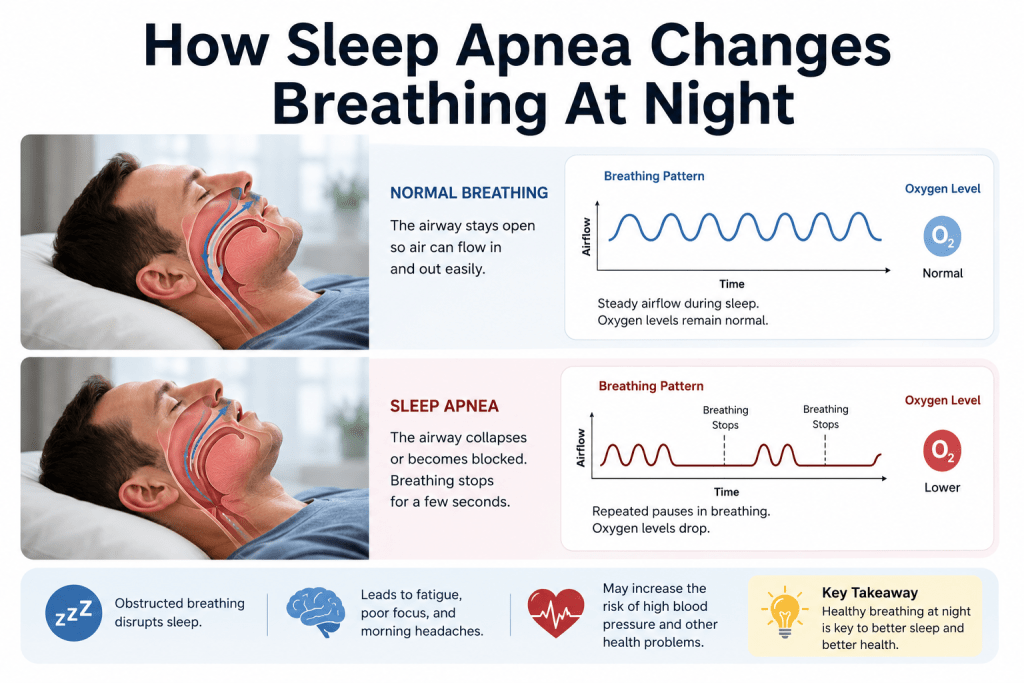
How Sleep Apnea Changes Breathing At Night
Sleep apnea involves repeated pauses or reductions in breathing while sleeping. These breathing interruptions may happen dozens or even hundreds of times throughout the night.
Every time airflow becomes restricted, oxygen levels may drop and the nervous system becomes activated. The brain briefly pulls the body toward lighter sleep in order to reopen the airway.
This repeated cycle prevents stable restorative sleep and often increases mouth breathing during the night.
Many patients with untreated sleep apnea also experience loud snoring, headaches, exhaustion, and brain fog.
Why Snoring And Dry Mouth Often Overlap
Snoring and dry mouth frequently happen together because both are connected to unstable airflow inside the airway.
When tissues inside the airway partially collapse, airflow becomes turbulent and noisy. This vibration contributes to snoring while also encouraging mouth breathing.
Patients who snore heavily often wake up feeling exhausted despite spending enough hours in bed.
Some adults also notice dry throat symptoms together with headaches, poor concentration, irritability, and morning fatigue.
The Nervous System And Dry Mouth
Repeated breathing disruptions place stress on the nervous system throughout the night. Each breathing pause activates a small stress response inside the body.
As adrenaline and stress hormones rise, sleep becomes lighter and more fragmented.
Many people with untreated sleep apnea also wake up anxious, restless, sweaty, or with episodes of heart racing at night.
This chronic nighttime stress may worsen mouth breathing and increase sensitivity to dry mouth symptoms.
Signs Your Dry Mouth Could Be Sleep Related
Occasional dryness is common, especially during allergy season or after dehydration. But chronic dry mouth may point toward an underlying sleep breathing issue.
Warning signs may include snoring, gasping for air, waking repeatedly during the night, headaches, and severe daytime exhaustion.
Some patients mainly notice trouble concentrating, memory problems, low motivation, or symptoms resembling depression and anxiety.
Others feel like they never achieve deep restorative sleep no matter how long they remain in bed.
How Poor Sleep Affects The Entire Body
Sleep affects much more than energy levels. Deep sleep and REM sleep help regulate hormones, mood, memory, cardiovascular health, and immune function..
Repeated awakenings reduce the amount of time spent in these restorative sleep stages.
Over time, poor sleep quality may contribute to high blood pressure, anxiety, poor focus, and metabolic problems.
This is one reason why untreated sleep apnea is associated with long term physical and emotional health consequences.
Can CPAP Therapy Cause Dry Mouth Too?
Some patients experience dry mouth before starting treatment, while others notice it temporarily after beginning CPAP therapy.
Air leaks, mouth breathing, incorrect humidity settings, or mask discomfort may all contribute to continued dryness.
Fortunately, many people improve these symptoms after adjusting humidity levels or discussing alternative options with a sleep physician..
Despite occasional dryness, stabilizing nighttime breathing often improves overall sleep quality significantly.
Nasal Congestion And Airway Problems
Nasal congestion may also contribute to dry mouth because restricted nasal airflow forces the body toward mouth breathing.
Some patients experience allergies, inflammation, or structural airway issues that worsen breathing instability during sleep.
Others notice congestion mainly at night together with snoring, repeated awakenings, and poor sleep quality.
When airway problems and sleep apnea overlap, nighttime dryness may become even more severe.
Home Sleep Tests Can Help
Many adults avoid sleep evaluations because they believe testing always requires spending the night in a laboratory.
Today, many patients qualify for convenient home sleep testing that evaluates breathing patterns, oxygen levels, and airflow disruptions from home.
These tests are reviewed by board-certified sleep physicians who evaluate whether breathing disruptions are affecting sleep quality.
For patients experiencing chronic dry mouth alongside fatigue and snoring, identifying the real cause of sleep disruption can be life changing.
Lifestyle Habits That May Help
Simple lifestyle habits may help reduce mouth dryness while patients evaluate potential sleep breathing problems.
Helpful strategies may include improving hydration, reducing alcohol before bed, limiting late caffeine intake, and supporting nasal breathing.
Maintaining a consistent sleep schedule may also improve overall sleep quality and reduce nighttime awakenings.
However, persistent symptoms should not be ignored when snoring, exhaustion, and fragmented sleep continue together.
When To Talk To A Sleep Physician
If you consistently wake up with severe dry mouth together with fatigue, headaches, snoring, or anxiety, it may be time for a professional sleep evaluation.
Many adults live with untreated sleep apnea for years because symptoms initially appear unrelated or mild.
The good news is that identifying unstable breathing patterns may improve sleep quality, energy levels, concentration, and overall wellness.
SLIIIP.com provides virtual consultations and nationwide home sleep testing options for patients across the United States.
At Sliiip, we accept the following insurances:

SLIIIP’s board-certified sleep physicians can do sleep evaluations for sleep apnea. Virtual consultations in all 50 states. Home sleep tests shipped to your door.
Frequently Asked Questions
Can sleep apnea really cause dry mouth? Yes. Many patients with untreated sleep apnea rely on mouth breathing during sleep, which may dry the mouth and throat overnight.
Why is my mouth dry every morning even when I drink water? Hydration is important, but chronic dryness may also be connected to mouth breathing, snoring, or fragmented sleep.
Does snoring make dry mouth worse? Yes. Snoring often increases airflow turbulence and mouth breathing, both of which may contribute to dryness.
Can CPAP therapy improve dry mouth? Many patients notice better breathing stability and improved sleep quality after treatment, although mask adjustments may sometimes be needed.
SLIIIP’s board-certified sleep physicians can do sleep evaluations for sleep apnea. Virtual consultations in all 50 states. Home sleep tests shipped to your door.
Latest posts
-
Why Can’t I Wake Up Even After Getting Enough Sleep?
Last updated: October 2, 2026. Medically reviewed by Dr. Avinesh Bhar, Board-Certified Sleep Physician, SLIIIP.com. If you can’t wake up after enough sleep, the cause is usually not the number…
-
Why Does My Heart Rate Drop So Low While I Sleep?
Last updated: October 2, 2026. Medically reviewed by Dr. Avinesh Bhar, Board-Certified Sleep Physician, SLIIIP.com. Your heart rate drops low while sleeping mainly because your body needs less work from…
-
Why Are My Naps Never Refreshing?
Last updated: October 2, 2026. Medically reviewed by Dr. Avinesh Bhar, Board-Certified Sleep Physician, SLIIIP.com. Naps that leave you groggy usually come down to how long you sleep, when you…
Get updates
Spam-free subscription, we guarantee. This is just a friendly ping when new content is out.

