👉 Register for Free. How to Diagnose Sleep Apnea Faster in Primary Care – FREE Webinar by Dr. Audrey Wells. – Friday, April 24 at 12 PM ET


Sleep Apnea During Pregnancy: Signs to Watch For
Sleep apnea during pregnancy is a pattern of pausing or shallow breathing in sleep that, as Dr. Avinesh Bhar, Board-Certified Sleep Physician at SLIIIP.com, explains, can show up as new snoring or restless nights as a pregnancy progresses. Many expecting parents chalk these changes up to a growing belly and a busy mind. Some of those broken nights, though, may point to breathing changes worth a closer look. This article is for general education and does not diagnose, treat, or replace care from your own doctor. Any concern about your pregnancy or your sleep should go to your obstetrician or physician, who knows your full history. Below we look at what the signs can look like, why pregnancy can shift breathing at night, and when a professional conversation makes sense.
SLIIIP’s board-certified sleep physicians can do sleep evaluations for sleep apnea. Virtual consultations in all 50 states. Home sleep tests shipped to your door.
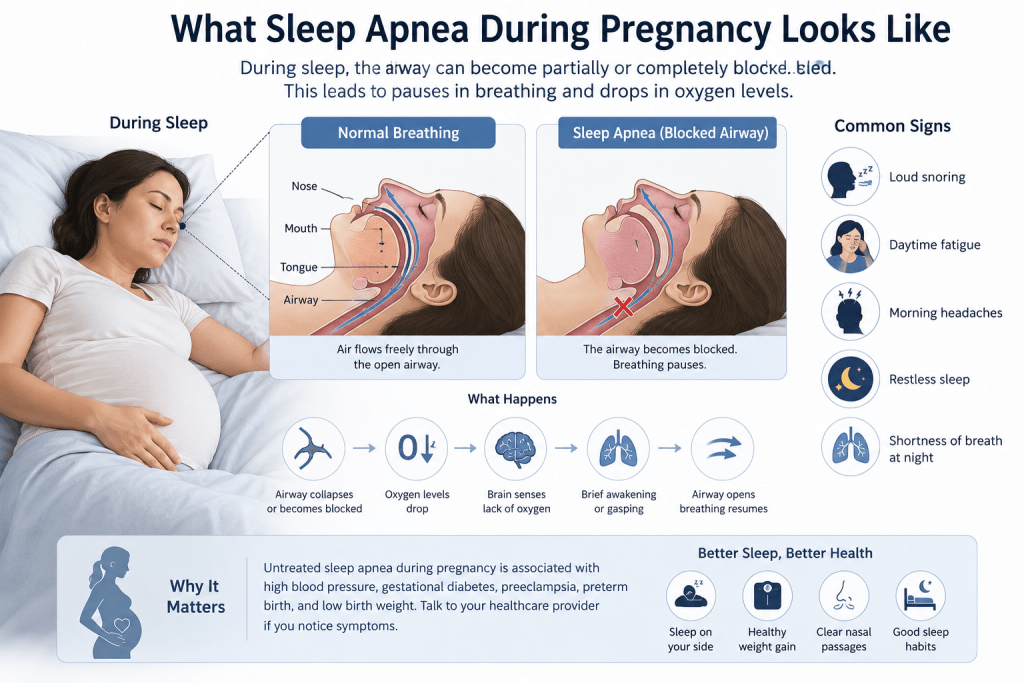
What Sleep Apnea During Pregnancy Looks Like
Sleep apnea during pregnancy refers to repeated pauses or drops in breathing while asleep that surface or worsen across the months of pregnancy. The most common form is obstructive, where the airway narrows and airflow dips even though the body keeps trying to breathe.
The tricky part is that many early signs overlap with normal pregnancy tiredness. Feeling wiped out, waking often, and snoring more can all seem like ordinary parts of expecting a baby. That overlap is exactly why the pattern can slip by unnoticed. Paying attention to how the signs cluster together, rather than to any single symptom, gives you a clearer sense of when something is worth raising with your care team.
You can learn the basics of the condition in our overview of what sleep apnea is. Understanding the general picture makes the pregnancy specific signs easier to spot.
CHECK YOUR SLEEP SYMPTOMS: TAKE THE 2 MINUTE QUIZ
TAKE THE QUIZ
Why Pregnancy Can Shift Breathing at Night
Several normal changes in pregnancy can affect the airway. Rising hormone levels can cause tissues in the nose and throat to swell, which may narrow the space air moves through. This is why some people who never snored begin to snore during pregnancy.
Weight gain and a growing uterus also play a role. As the baby grows, the diaphragm has less room to move, and lying flat can make breathing feel more labored. These shifts are a normal part of pregnancy, yet they can nudge some people toward disrupted breathing at night.
Fluid retention, common in later pregnancy, can add to nighttime congestion as well. You can read more about the roots of the condition in our guide on what causes sleep apnea. None of these changes means a problem is certain, only that the setup can change.
Signs to Watch For
The signs of sleep apnea during pregnancy often look like everyday fatigue, so knowing the specific clues helps. Loud or new snoring, especially with pauses or gasping, is one of the more telling signals. A partner may notice these pauses before you do, since they happen while you are asleep. Asking the person who shares your bed what they hear at night can add a valuable perspective that a tracker alone cannot provide.
Other signs worth noting include:
Waking with a dry mouth or a headache in the morning. Feeling unrefreshed even after a full night in bed. Daytime sleepiness that goes beyond the usual pregnancy tiredness. Restless nights with frequent waking or a choking sensation.
If you often wake short of breath, our article on waking up gasping for air describes what that can feel like. Because women can experience sleep apnea differently, our page on sleep apnea symptoms in women is a helpful companion read.
A single rough night is not a red flag on its own. It is a lasting pattern of these signs, night after night, that suggests a conversation with a professional is worthwhile.
Why the Signs Are Worth Taking Seriously
Research has associated disrupted sleep breathing during pregnancy with higher blood pressure and less restful sleep. These are associations reported in studies, not certainties, and they cannot predict what will happen in any single pregnancy. They simply help explain why the signs deserve attention rather than dismissal.
Rest matters a great deal during pregnancy, and steady, restorative sleep supports overall wellbeing. When breathing keeps interrupting that sleep, the body gets less of the recovery it is working hard to provide. This is one reason a professional look can be reassuring, whatever the outcome. As Dr. Avinesh Bhar often notes, an evaluation is as much about peace of mind as it is about finding an answer, and many people leave a visit reassured that their sleep is on track.
Sleep apnea during pregnancy is not something to diagnose from an app or a checklist, and it is not a reason to panic. It is simply a pattern that, when present, is best reviewed by qualified clinicians alongside your obstetric care. Your own doctor remains the right person to guide any decisions about your pregnancy.
The National Heart, Lung, and Blood Institute describes sleep apnea as a common condition that benefits from professional evaluation. That guidance holds during pregnancy as much as any other time.
Watch: Sleep Apnea in Women: Why It’s Often Missed – SLIIIP
What You Can Do and When to Talk to a Professional
Simple comfort habits can support easier breathing at night. Sleeping on your side rather than your back is often more comfortable in pregnancy and can help keep the airway open. Our guide on the best sleeping position covers this in more detail.
Keeping the head slightly elevated, easing nasal congestion with a doctor approved approach, and staying with a calming bedtime routine can also help. These are general wellness steps, not treatments, and they do not replace medical care. It also helps to keep a short note of what you notice at night, such as how often you wake, whether you snore, and how rested you feel in the morning. Sharing that simple record with your clinician gives them a clearer starting point and can make your visit more useful.
The clearest next step, if the signs persist, is a professional evaluation. According to the Centers for Disease Control and Prevention, sleep that stays disrupted despite good habits is worth discussing with a clinician. A home based check can make that easy to arrange.
At Sliiip, we accept the following insurances:

SLIIIP’s board-certified sleep physicians can do sleep evaluations for sleep apnea. Virtual consultations in all 50 states. Home sleep tests shipped to your door.
Frequently Asked Questions
What is sleep apnea during pregnancy?
It is a pattern of paused or shallow breathing in sleep that appears or worsens during pregnancy. The most common type is obstructive, where the airway narrows at night.
Is snoring during pregnancy normal?
Some new snoring is common because of hormone and tissue changes. Loud snoring with pauses or gasping is worth mentioning to your doctor.
Why did I start snoring only after I got pregnant?
Pregnancy hormones can swell nasal and throat tissues, narrowing the airway. This can cause snoring in people who have never snored before.
What are the main signs to watch for?
Loud snoring with pauses, morning headaches, a dry mouth, and heavy daytime sleepiness are common clues. Frequent waking or a choking feeling can also occur.
How is this different from normal pregnancy tiredness?
Ordinary tiredness usually eases with rest, while disrupted breathing keeps interrupting sleep. Sleepiness that persists after a full night is a signal worth checking.
Can sleep apnea during pregnancy affect the baby?
Research links disrupted sleep breathing with less restful sleep and higher blood pressure. These are associations, not certainties, so your doctor is the best source for your situation.
Does sleep apnea in pregnancy go away after birth?
For some people, pregnancy related changes ease after delivery. Others may have an ongoing pattern, which is why follow up can be helpful.
Which trimester is sleep apnea most likely to appear?
Signs often become more noticeable in the later trimesters. This is when weight gain and a growing uterus affect breathing most.
Should I be worried if my partner notices I stop breathing?
Pauses in breathing that a partner observes are worth reporting to your doctor. It does not mean something is wrong, but it deserves a professional look.
Can my sleeping position help?
Sleeping on your side is often more comfortable and can help keep the airway open. Many find the left side especially comfortable in pregnancy.
Is it safe to get a sleep test while pregnant?
A home sleep test is a simple, at home check that many find convenient. Your own doctor can confirm it is a good fit for you.
Can I use a CPAP machine during pregnancy?
Any therapy decision should be made with your doctor based on your evaluation. This article does not recommend or prescribe any specific treatment.
Does weight gain cause sleep apnea in pregnancy?
Weight gain is one of several normal changes that can affect breathing at night. It is a contributing factor, not a guaranteed cause.
How much sleep should I get while pregnant?
Most adults do well with steady, restorative sleep each night. Quality and consistency matter as much as the total hours.
Can nasal congestion in pregnancy cause breathing problems at night?
Fluid retention and swollen tissues can add to nighttime congestion. Easing congestion with a doctor approved approach may help comfort.
Will treating my sleep help my energy during the day?
Better, less interrupted sleep generally supports daytime energy. Any specific plan should come from your own clinician.
Is a home sleep test as good as a lab test?
A home sleep test is a widely used option that many people find practical. Your doctor can advise which approach suits your needs.
Do I need a referral to get a sleep evaluation?
Requirements vary, and a telemedicine visit can often help you get started. SLIIIP.com can walk you through the process.
What should I tell my obstetrician about my sleep?
Share any snoring, pauses, gasping, headaches, or heavy daytime sleepiness. Your obstetrician can coordinate care and guide next steps.
When should I seek a professional evaluation?
If snoring with pauses, gasping, or lasting daytime sleepiness continues, a professional visit makes sense. A sleep evaluation can clarify what is happening.
SLIIIP’s board-certified sleep physicians can do sleep evaluations for sleep apnea. Virtual consultations in all 50 states. Home sleep tests shipped to your door.
Latest posts
-
Why Can’t I Wake Up Even After Getting Enough Sleep?
Last updated: October 2, 2026. Medically reviewed by Dr. Avinesh Bhar, Board-Certified Sleep Physician, SLIIIP.com. If you can’t wake up after enough sleep, the cause is usually not the number…
-
Why Does My Heart Rate Drop So Low While I Sleep?
Last updated: October 2, 2026. Medically reviewed by Dr. Avinesh Bhar, Board-Certified Sleep Physician, SLIIIP.com. Your heart rate drops low while sleeping mainly because your body needs less work from…
-
Why Are My Naps Never Refreshing?
Last updated: October 2, 2026. Medically reviewed by Dr. Avinesh Bhar, Board-Certified Sleep Physician, SLIIIP.com. Naps that leave you groggy usually come down to how long you sleep, when you…
Get updates
Spam-free subscription, we guarantee. This is just a friendly ping when new content is out.

