👉 Register for Free. How to Diagnose Sleep Apnea Faster in Primary Care – FREE Webinar by Dr. Audrey Wells. – Friday, April 24 at 12 PM ET

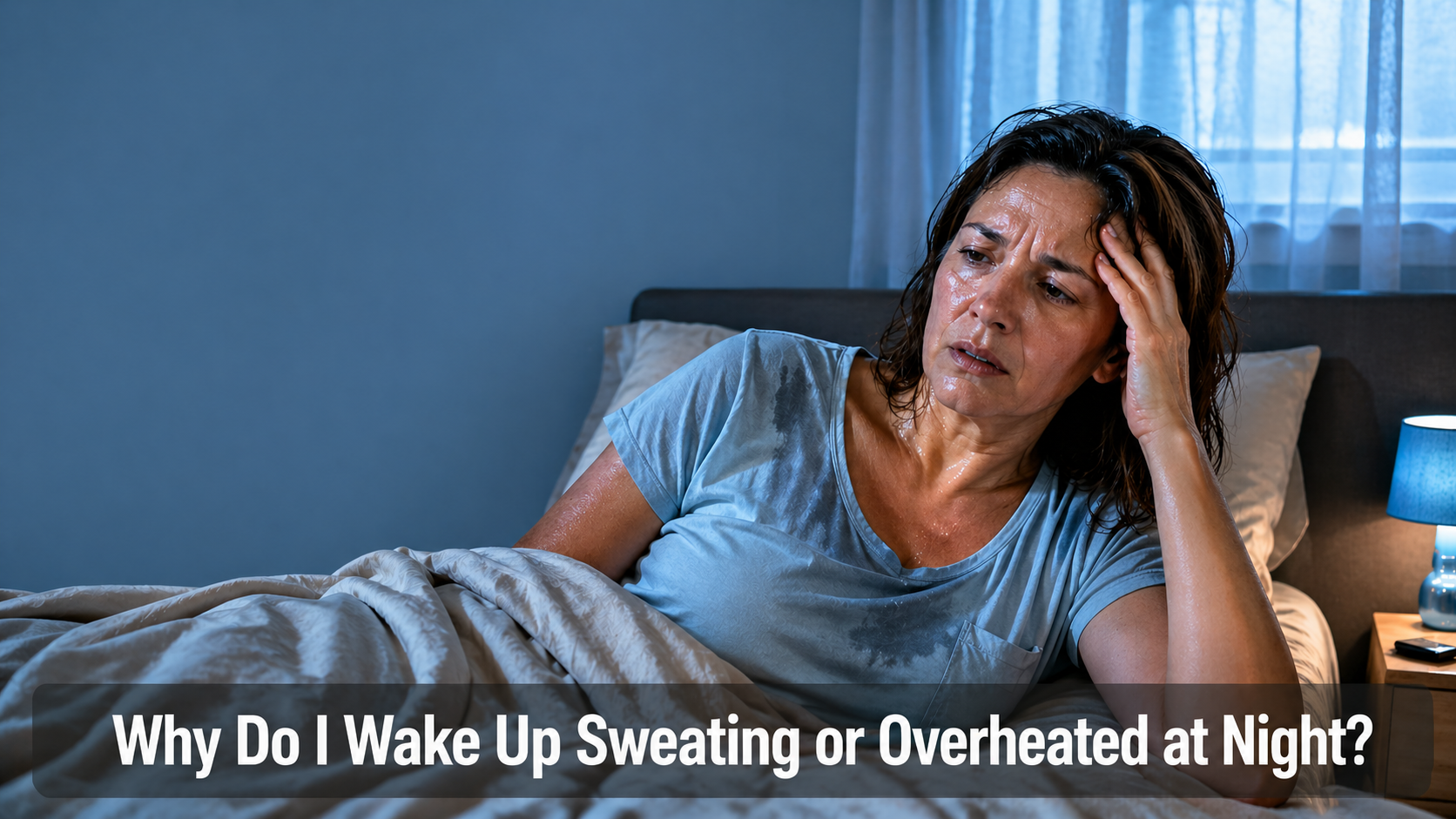
Why Do I Wake Up Sweating or Overheated at Night?
Reviewed by Dr. Avinesh Bhar, Board-Certified Sleep Physician at SLIIIP
If you wake up at 2 or 3 a.m. with damp pajamas, soaked sheets, or that uncomfortable, overheated feeling that forces you to throw the covers off, you are not alone. True night sweats affect a significant share of adults, and they are far more common than most people realize. According to a review published in American Family Physician, the prevalence of night sweats in primary care patients ranges from 10% to 41%, with the highest rates between ages 41 and 55.
The hard part is figuring out why it is happening to you. Sometimes the answer is a warm bedroom or heavy bedding. Other times, sweating at night is your body sending a clear signal that something deeper is going on, including an underlying sleep disorder.
This guide walks through the most common causes, explains the strong link between night sweats and obstructive sleep apnea, and helps you decide when it is time to talk to a sleep physician.
SLIIIP.com was built to make that answer easy to find, with virtual consultations in all 50 states, home sleep tests shipped to your door, and nationwide coverage.
SLIIIP’s board-certified sleep physicians can do sleep evaluations for sleep apnea. Virtual consultations in all 50 states. Home sleep tests shipped to your door.
Hot Room or True Night Sweats? Know the Difference
Sweating is a normal way the body regulates core temperature. A warm room, a heavy duvet, flannel sheets, or a partner who runs hot will all make you sweat at night. That is environmental sweating, not a medical concern.
True night sweats are different. Clinicians describe them as severe, repeated episodes of sweating heavy enough to soak your sleepwear or bedding, often forcing you to change clothes or sheets in the middle of the night. They happen even when the room is cool. They tend to recur on a regular basis, sometimes for months.
A simple test: if turning the thermostat down a few degrees, swapping a heavy comforter for a lighter blanket, and choosing breathable cotton sleepwear does not solve the problem within a week or two, you are likely dealing with something beyond room temperature.
CHECK YOUR SLEEP SYMPTOMS: TAKE THE 2 MINUTE QUIZ
TAKE THE QUIZ
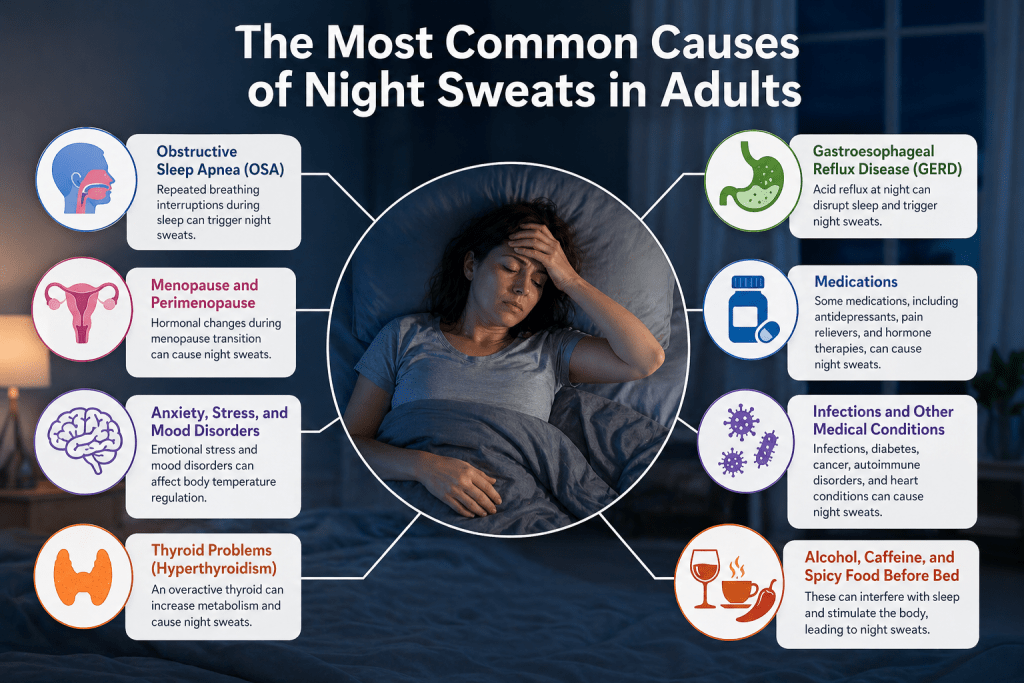
The Most Common Causes of Night Sweats in Adults
1. Obstructive Sleep Apnea (OSA)
This is the cause many people miss. Research consistently shows that adults with obstructive sleep apnea are about three times more likely to experience frequent nocturnal sweating than the general population. In the well-known Icelandic Sleep Apnea Cohort study, 31% of untreated OSA patients reported frequent night sweats, compared with 11% of matched controls. After successful treatment with positive airway pressure (PAP) therapy, that figure dropped to 11.5%, essentially matching the general population.
The mechanism makes sense once you understand what is happening to your body during an apnea event. When the airway collapses, oxygen levels fall, carbon dioxide rises, and the body responds by releasing stress hormones such as cortisol and adrenaline. Heart rate climbs, blood pressure spikes, and core temperature rises. Multiply that by dozens or hundreds of events per night, and the result is the soaked pajamas you wake up in. A 2022 study published in Sleep and Breathing and summarized by AJMC found that night sweats were independently associated with a higher hypoxemic burden, meaning the more time you spend with low blood oxygen, the more likely you are to sweat at night.
If you also notice loud snoring, witnessed pauses in breathing, morning headaches, waking unrefreshed, or daytime fatigue, sleep apnea should be on your list. Read more in our guide on sleep apnea symptoms and obstructive sleep apnea warning signs.
2. Menopause and Perimenopause
Hot flashes and night sweats are the hallmark vasomotor symptoms of the menopausal transition. Up to 80% of women experience them, and they can persist for years. What many women do not realize is that severe hot flashes and night sweats during midlife are also linked to an increased risk of obstructive sleep apnea. Mayo Clinic researchers found that women reporting severe vasomotor symptoms had an intermediate to high risk of OSA, and two years later, 65% of that group still had not been diagnosed.
If you are in perimenopause or menopause and your night sweats are paired with snoring, daytime fatigue, or non-restorative sleep, ask about a sleep evaluation. Hormone changes alone do not always explain the full picture.
3. Anxiety, Stress, and Mood Disorders
The body’s stress response is one of the most common, and most underrecognized, drivers of night sweats. Anxiety disorders, panic attacks during sleep, and depression all activate the sympathetic nervous system, which controls sweating. Patients often notice their night sweats worsen during high-stress periods at work or after major life events. Mood disorders are listed by primary care guidelines as one of the most common conditions associated with persistent night sweats.
4. Thyroid Problems (Hyperthyroidism)
An overactive thyroid speeds up metabolism, raises core body temperature, and increases sweating both day and night. Other clues include unexplained weight loss, a racing heartbeat, hand tremor, anxiety, and heat intolerance. A simple blood test (TSH) ordered by your physician can rule this in or out.
5. Gastroesophageal Reflux Disease (GERD)
Reflux that happens while you are lying flat can trigger an autonomic response that includes sweating. If your night sweats come with heartburn, sour taste in the mouth, or chronic morning cough, GERD may be playing a role. Notably, untreated sleep apnea and GERD often coexist, and treating one frequently improves the other.
6. Medications
A long list of common prescriptions can produce night sweats as a side effect, including SSRIs and SNRIs (used for depression and anxiety), tricyclic antidepressants, certain blood pressure medications, hormone therapies (including those used to treat breast and prostate cancer), and steroids. Over-the-counter products such as fever reducers can do the same. If your night sweats began within weeks of starting a new medication, mention it to your prescriber. Do not stop any prescription on your own.
7. Infections and Other Medical Conditions
Less commonly, persistent night sweats can be a symptom of infections (such as tuberculosis or HIV), certain cancers (lymphoma in particular), low blood sugar in people with diabetes, or autoimmune conditions. These causes are far rarer than the ones above, but they are why your physician should evaluate any persistent, unexplained pattern of night sweats, especially if you also have unexplained weight loss, fevers, chronic cough, or swollen lymph nodes.
8. Alcohol, Caffeine, and Spicy Food Before Bed
Alcohol disrupts thermoregulation and is a frequent contributor to night sweats, particularly when consumed within a few hours of bedtime. It also worsens obstructive sleep apnea by relaxing the airway muscles. Caffeine and heavy, spicy meals close to sleep can have a similar effect.
Watch: Perimenopause and Sleep
The Sleep Apnea and Night Sweats Connection: A Closer Look
Sleep apnea deserves a separate spotlight because it is so often the missed cause of nocturnal sweating, particularly in adults under 50 who do not fit the stereotype of the “loud snorer.”
Three findings drive this point home:
- About one-third of patients with obstructive sleep apnea report frequent night sweats, roughly three times the rate seen in the general population.
- The severity of nighttime oxygen drops correlates directly with the likelihood of sweating. The lower your oxygen goes, the more likely you are to wake up drenched.
- Treatment works. In the Icelandic cohort, full PAP therapy reduced night sweats from 33% to 11.5%, returning patients to baseline population rates.
Sleep apnea also presents differently in women. Many women never snore loudly, do not look “typical,” and are told their fatigue or sweats are hormonal. The condition is dramatically underdiagnosed in this population. If your night sweats come alongside fatigue that does not improve with more sleep, frequent nighttime urination, morning headaches, or insomnia, a sleep evaluation is warranted. Our article on how to tell if you have sleep apnea without a sleep study covers the full list of clues.

When Should You See a Doctor?
Schedule a medical evaluation if any of the following apply:
- Your night sweats happen on a regular basis (more than once or twice a week) and a cooler bedroom does not fix the problem
- You wake up with soaked pajamas or sheets
- Your sweats come with snoring, choking, gasping, or witnessed pauses in breathing
- You feel exhausted during the day no matter how long you sleep
- You have unexplained weight loss, fevers, persistent cough, or swollen lymph nodes
- The night sweats started after beginning a new medication
- You are in perimenopause or menopause and your symptoms are interfering with sleep, mood, or daily function
Persistent night sweats should not be dismissed. They are often the first symptom that points to a treatable underlying condition.
How a Sleep Physician Evaluates Night Sweats
A board-certified sleep specialist will start with a detailed history, asking about sleep patterns, snoring, witnessed apneas, daytime fatigue, mood, medications, and recent weight changes. From there, the next step is usually a sleep study.
For most patients, a home sleep apnea test is an accurate, comfortable first step. The device is shipped to your door, you wear it for one night in your own bed, and it measures airflow, breathing effort, oxygen levels, heart rate, and body position. The result is an Apnea-Hypopnea Index (AHI), which tells your physician how often your breathing is disrupted per hour of sleep. Learn more about how to interpret these results in our guide on mild vs severe sleep apnea.
If sleep apnea is confirmed, treatment options include CPAP, oral appliance therapy, positional therapy, and lifestyle modifications. The right path depends on the type and severity of your condition. Our overview of sleep apnea treatment options explains each one in detail.
If sleep apnea is ruled out, your physician will look at other contributors such as hormones, thyroid function, medications, GERD, anxiety, or alcohol use, and refer you to the right specialist if needed.
At Sliiip, we accept the following insurances:

SLIIIP’s board-certified sleep physicians can do sleep evaluations for sleep apnea. Virtual consultations in all 50 states. Home sleep tests shipped to your door.
What You Can Do Tonight
While you wait for an evaluation, a few practical steps can reduce the severity of nighttime sweating:
- Set the bedroom temperature between 60 and 67°F (15.5 to 19.4°C)
- Choose breathable, moisture-wicking sleepwear and cotton or bamboo sheets
- Avoid alcohol within three hours of bedtime
- Avoid heavy or spicy meals close to sleep
- Limit caffeine after early afternoon
- Sleep on your side rather than your back if you suspect snoring or apnea
- Keep a sleep journal: track when sweats occur, what you ate, how much alcohol you had, and any other symptoms. Bring it to your appointment.
These steps will not fix an underlying sleep disorder, but they will help separate environmental sweating from medical night sweats, which is useful information for your physician.
Talk to a SLIIIP Sleep Specialist
If your night sweats are recurring, soaking your bedding, or coming alongside fatigue, snoring, or witnessed pauses in breathing, do not wait. Obstructive sleep apnea is highly treatable, and treating it often resolves night sweats completely.
SLIIIP’s board-certified sleep physicians can do sleep evaluations for sleep apnea. Virtual consultations in all 50 states. Home sleep tests shipped to your door.
Thank you for reading this article.
This article is for educational purposes and does not replace medical advice. If you are experiencing persistent or severe night sweats, consult a board-certified physician.
Latest posts
-
Why Are My Naps Never Refreshing?
Last updated: October 2, 2026. Medically reviewed by Dr. Avinesh Bhar, Board-Certified Sleep Physician, SLIIIP.com. Naps that leave you groggy usually come down to how long you sleep, when you…
-
Is Sleeping Too Much a Sleep Disorder?
Last updated: October 2, 2026. Medically reviewed by Dr. Avinesh Bhar, Board-Certified Sleep Physician, SLIIIP.com. Sleeping too much is not always a sleep disorder, but it can be a sign…
-
Why Does My Insomnia Get Worse After Stopping Sleep Medication?
Last updated: October 2, 2026. Medically reviewed by Dr. Avinesh Bhar, Board-Certified Sleep Physician, SLIIIP.com. Insomnia can get worse after stopping sleep medication for three main reasons. They are rebound…
Get updates
Spam-free subscription, we guarantee. This is just a friendly ping when new content is out.

