👉 Register for Free. How to Diagnose Sleep Apnea Faster in Primary Care – FREE Webinar by Dr. Audrey Wells. – Friday, April 24 at 12 PM ET

How Does Sleep Apnea Affect The Brain And Memory Over Time? A Sleep Physician’s Guide
Sleep apnea quietly changes how the brain works, according to Dr. Avinesh Bhar, Board-Certified Sleep Physician at SLIIIP.com, many individuals experience symptoms without clear awareness. You forget names, lose your train of thought, reread the same email three times, or feel foggy by mid afternoon. Most people blame age, stress, or screen time. The truth is often different. Sleep apnea is one of the most common and most missed causes of long term brain fog, memory trouble, and poor focus in adults. SLIIIP.com was built for exactly this, with virtual consultations in all 50 states, home sleep tests shipped to your door, and nationwide coverage, so you can find out if your breathing is affecting your brain before more time goes by.
SLIIIP.com was built to make that answer easy to find, with virtual consultations in all 50 states, home sleep tests shipped to your door, and nationwide coverage.
SLIIIP’s board-certified sleep physicians can do sleep evaluations for sleep apnea. Virtual consultations in all 50 states. Home sleep tests shipped to your door.
A Quick Recap Of What Sleep Apnea Is
Sleep apnea is a condition where breathing pauses or becomes very shallow during sleep. These events can happen dozens or even hundreds of times a night. Each event lowers oxygen, raises stress hormones, and pulls the brain out of deep sleep. Over many years, these changes add up.
Obstructive sleep apnea is the most common type and happens when the airway collapses during sleep. Central sleep apnea is less common and happens when the brain does not send the right signal to breathe. For a closer look, see what is sleep apnea and signs of sleep apnea.
CHECK YOUR SLEEP SYMPTOMS: TAKE THE 2 MINUTE QUIZ
TAKE THE QUIZ
Why Sleep Apnea Is A Brain Problem, Not Just A Breathing Problem
Most people think of sleep apnea as a breathing issue. In reality, the biggest long term cost is to the brain. The brain needs two things that sleep apnea disrupts every night: oxygen and deep sleep.
Each event does three things at once:
- Drops oxygen levels
- Spikes heart rate and blood pressure
- Wakes the brain, even if you do not remember it
Repeat that dozens of times an hour, night after night, year after year, and the brain starts to show it.
What Sleep Apnea Does To The Brain Short Term
In the short term, poor sleep from sleep apnea affects the brain in ways you can feel almost right away.
- Brain fog and slower thinking
- Trouble focusing
- Short term memory slips
- Lower mood and more irritability
- More mental fatigue, especially in the afternoon
- Slower reaction times behind the wheel
- Harder to learn new information
You do not need severe sleep apnea to feel these changes. Even mild, untreated sleep apnea can affect how sharp you feel. For more, see why am I exhausted no matter how much I sleep and why do I wake up tired.
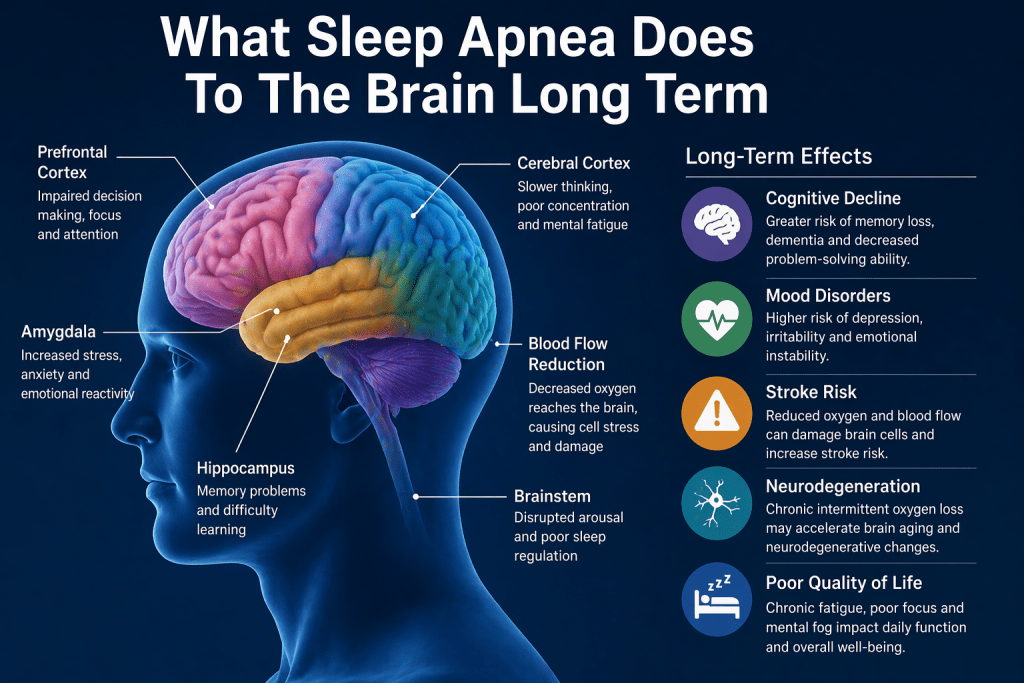
What Sleep Apnea Does To The Brain Long Term
Over years, the same stress on the brain can lead to bigger changes.
Memory. Deep sleep and REM sleep are when the brain files away new information. Sleep apnea blocks both, so memories are harder to form and harder to recall.
Attention and focus. Chronic low oxygen and broken sleep affect the prefrontal cortex, the part of the brain used for planning, focus, and decision making.
Mood. Untreated sleep apnea raises the risk of depression and anxiety, often by years of interrupted recovery at night.
Brain structure. Research has linked long term untreated sleep apnea to changes in brain volume and white matter, especially in areas tied to memory.
Risk of dementia. Large studies have linked untreated obstructive sleep apnea with a higher risk of cognitive decline and dementia in older adults. The National Heart, Lung, and Blood Institute notes that untreated sleep apnea is tied to several serious health conditions that also affect the brain.
The good news is that treating sleep apnea can improve many of these problems, especially when caught early.
Sleep Apnea And Memory: The Real Link
Sleep is when memory gets sorted. During the night, the brain moves information from short term storage into long term storage. Sleep apnea interrupts the exact stages that make this possible.
Common memory patterns in untreated sleep apnea:
- Forgetting names right after hearing them
- Walking into a room and forgetting why
- Losing the thread of a conversation
- Struggling to recall words mid sentence
- Trouble remembering what you read
- Feeling like your memory is slipping by age 40 or 50
If this sounds like you, sleep apnea belongs on the list of possible causes. Reading can cause sleep apnea, memory loss and sleep apnea and dementia.
Sleep Apnea, Brain Fog, And Focus
Brain fog is not a single medical term, but many patients use it to describe the exact mix of symptoms that untreated sleep apnea causes. If your brain feels slow, heavy, or like it is working through molasses, sleep apnea is worth ruling out.
Brain fog from sleep apnea often includes:
- Slow thinking in the morning
- An energy crash at 2 or 3 p.m.
- Reading the same line over and over
- Forgetting what you were about to say
- Trouble with mental math or quick decisions
- Feeling smarter and sharper only on your best sleep nights
See why I feel tired all day even after sleeping and brain fog causes more.
Sleep Apnea And Mood: Why The Brain Feels Flat
Sleep is key to emotional health. When the brain is pulled out of deep and REM sleep every night, emotional recovery suffers. That is why so many people with untreated sleep apnea describe themselves as irritable, short fused, flat, or not themselves.
Common mood patterns:
- Irritable mornings
- Low motivation
- Snappy reactions over small things
- Anxiety that flares at night or on waking
- Depression that does not respond well to medication
- Low libido
For more, see sleep apnea and depression and why do I wake up anxious.
Sleep Apnea And The Aging Brain
Sleep apnea rises sharply with age. So does dementia risk. Research has linked untreated obstructive sleep apnea with faster cognitive decline, smaller hippocampal volume, and a higher risk of mild cognitive impairment in older adults.
That does not mean sleep apnea causes dementia. It means it is one of the modifiable risk factors that you can actually do something about. See sleep apnea in older adults and is snoring a sign of sleep apnea in seniors.
Sleep Apnea And The Brain In Women
For years, sleep apnea was thought of as a male problem. It is not. Women often have sleep apnea that shows up as insomnia, fatigue, anxiety, brain fog, and mood changes, especially during and after perimenopause.
Common signs in women:
- Waking up at the same time every night
- Feeling unrefreshed after 7 to 8 hours
- Memory slips around perimenopause
- More anxiety or low mood
- Morning headaches
- Night sweats not fully explained by menopause
For more, see sleep apnea symptoms in women and is this perimenopause or insomnia.
Watch: Your Brain with Sleep Apnea
Sleep Apnea And The Brain In Men
Men tend to have more classic features: loud snoring, witnessed pauses, and larger neck size. Over time, untreated sleep apnea in men is linked to poor focus, low libido, mood changes, and higher rates of high blood pressure and heart disease, all of which also affect brain health. See can sleep apnea cause high blood pressure and sleep apnea and atrial fibrillation.
Why Memory And Focus Often Improve With Treatment
The encouraging part of this story is that the brain can recover a lot of ground with the right treatment. Studies have shown improvements in memory, attention, mood, and daytime alertness once sleep apnea is treated, especially in younger adults.
Treatment options, depending on the case, can include:
- CPAP therapy, the most proven option
- Oral appliances for mild to moderate cases
- Weight change when appropriate
- Side sleeping instead of back sleeping
- Addressing nasal airway and allergies
- Surgery in selected cases
For more on treatment choices, see sleep apnea treatment options and does CPAP really work.
Warning Signs Your Brain Is Being Affected
You should not wait until memory or focus becomes a real problem. Watch for these early signals:
- New forgetfulness in your 40s or 50s
- Trouble concentrating at work
- Needing more coffee just to function
- Falling asleep in meetings or while driving
- Feeling flat, foggy, or older than you should
- More mistakes than usual
- Trouble learning new systems or tools
If these happen most weeks, it is worth a conversation with a sleep physician.
How To Find Out If Sleep Apnea Is Affecting Your Brain
The only way to confirm sleep apnea is with a sleep study. The simplest option is a home sleep test. A home sleep test can be shipped to your door, worn for one night in your own bed, and returned by mail. It measures breathing, oxygen, and heart rate while you sleep.
From there, a board-certified sleep physician can explain your results and build a plan that matches your case. See home sleep apnea testing and how to get a home sleep test.

How SLIIIP Helps Protect Your Brain
SLIIIP.com was built so that finding answers is simple. You can book a virtual consultation in all 50 states with a board-certified sleep physician from your phone or laptop. If the signs point to sleep apnea, a home sleep test is shipped to your door. Nationwide coverage means help is available no matter where you live.
Dr. Avinesh Bhar and the SLIIIP team look at the full picture: breathing, brain symptoms, mood, blood pressure, and daily life impact. The goal is to catch sleep apnea early, treat it clearly, and protect your brain for the long term.
At Sliiip, we accept the following insurances:

SLIIIP’s board-certified sleep physicians can do sleep evaluations for sleep apnea. Virtual consultations in all 50 states. Home sleep tests shipped to your door.
Frequently Asked Questions
- How does sleep apnea affect the brain over time? It repeatedly lowers oxygen and breaks up deep sleep, which can affect memory, focus, mood, and long term brain health.
- Can sleep apnea cause memory loss? Yes. Untreated sleep apnea is linked to short term memory slips and, over many years, a higher risk of cognitive decline.
- Is brain fog a sign of sleep apnea? It can be. Persistent brain fog with tiredness, snoring, or unrefreshing sleep is worth evaluating for sleep apnea.
- Can sleep apnea cause dementia? Research links untreated obstructive sleep apnea with a higher risk of cognitive decline and dementia in older adults.
- Does treating sleep apnea improve memory? In many people, yes. Studies show improvements in memory, focus, and mood once sleep apnea is treated.
- How long does it take for the brain to recover after treatment? Some people feel sharper within weeks. Other improvements can continue over several months.
- Can sleep apnea cause anxiety or depression? Yes. Broken sleep and low oxygen are linked to higher rates of anxiety and depression that can improve with treatment.
- Why do I feel foggy even after 8 hours of sleep? Time in bed does not equal sleep quality. Sleep apnea and fragmented sleep are common hidden causes.
- Can sleep apnea make you feel older than you are? Yes. Many patients describe feeling “ten years older” and much better after treatment.
- Can women have sleep apnea without snoring? Yes. Many women have sleep apnea that shows up as insomnia, anxiety, brain fog, or fatigue without loud snoring.
- Can children have brain effects from sleep apnea? Yes. In kids, untreated sleep apnea can affect attention, behavior, and school performance. See if my child has a sleep apnea quiz.
- Is occasional forgetfulness a sign of sleep apnea? Not by itself. But frequent forgetfulness with tiredness, snoring, or poor sleep is worth checking.
- Can sleep apnea cause headaches? Yes. Morning headaches are a common symptom and are often linked to low oxygen and poor sleep.
- Can sleep apnea affect driving? Yes. Sleepiness and slow reaction times from untreated sleep apnea are linked to a higher crash risk.
- Does CPAP help the brain? In most cases, yes. CPAP restores oxygen and sleep quality, which supports memory, focus, and mood.
- What if I cannot tolerate CPAP? Other options include oral appliances, positional therapy, weight change when appropriate, and selected surgeries.
- Do I need an in lab sleep study to find out? Often, no. A home sleep test is a simple first step for most adults suspected of sleep apnea.
- Can I see a sleep doctor online? Yes. SLIIIP.com offers virtual consultations in all 50 states with home sleep tests shipped to your door.
- How long does a home sleep test take? One night, worn in your own bed. Setup takes only a few minutes.
- What is the first step if I am worried about my memory and my sleep? Book a virtual consultation with a sleep physician so you can rule sleep apnea in or out with a home sleep test.
Take The Next Step
Memory, focus, and mood are too important to leave to guessing. A short virtual visit with a board-certified sleep physician can find out if sleep apnea is affecting your brain and what to do about it. SLIIIP makes it simple, with virtual consultations in all 50 states, home sleep tests shipped to your door, and nationwide coverage.
SLIIIP’s board-certified sleep physicians can do sleep evaluations for sleep apnea. Virtual consultations in all 50 states. Home sleep tests shipped to your door.
Thank you for reading this article.
Latest posts
-
Circular Ring Sleep Accuracy: What It Gets Right and Wrong
Last updated: September 14, 2026. Medically reviewed by Dr. Avinesh Bhar, Board-Certified Sleep Physician, SLIIIP.com. The Circular Ring estimates sleep stages, heart rate, and recovery using a finger-worn light sensor,…
-
Ballistocardiography Sleep Sensors: How Under-Mattress Tracking Works
Last updated: September 14, 2026. Medically reviewed by Dr. Avinesh Bhar, Board-Certified Sleep Physician, SLIIIP.com. Ballistocardiography sleep sensors sit under your mattress and detect the tiny mechanical vibrations your body…
-
RingConn vs Oura: Which Smart Ring Tracks Sleep Better?
Last updated: September 10, 2026. Medically reviewed by Dr. Avinesh Bhar, Board-Certified Sleep Physician, SLIIIP.com. RingConn and Oura both track sleep through a finger-worn ring, but they differ most in…
Get updates
Spam-free subscription, we guarantee. This is just a friendly ping when new content is out.

