👉 Register for Free. How to Diagnose Sleep Apnea Faster in Primary Care – FREE Webinar by Dr. Audrey Wells. – Friday, April 24 at 12 PM ET

Weight Gain and Sleep Apnea: The Hidden Metabolic Connection
Weight gain and sleep apnea feed off each other in ways that catch a lot of people off guard, and Dr. Avinesh Bhar, Board-Certified Sleep Physician at SLIIIP.com, points out that extra weight and broken sleep can push each other along in a two-way loop.
When poor sleep and weight changes feed each other, breaking the cycle often starts with understanding how the two are connected.
A lot of people try diet after diet and still feel stuck. What they may not realize is that the quality of their sleep can play a quiet role in how their body manages weight.
SLIIIP’s board-certified sleep physicians can do sleep evaluations for sleep apnea. Virtual consultations in all 50 states. Home sleep tests shipped to your door.
What Sleep Apnea Is in Simple Terms
Sleep apnea is a sleep-related breathing pattern where the airway narrows or briefly closes during the night. These pauses can happen many times an hour, often without the person fully waking up. The result is broken, lighter sleep.
Many people with sleep apnea do not know they have it, because the interruptions happen while they are asleep. A bed partner may notice loud snoring, gasping, or pauses in breathing. The person themselves may just feel tired, no matter how long they spent in bed.
If you want a deeper look at the basics, our overview of what sleep apnea is breaks it down step by step. You can also review the common signs of sleep apnea to see if any sound familiar.
CHECK YOUR SLEEP SYMPTOMS: TAKE THE 2 MINUTE QUIZ
TAKE THE QUIZ
How Weight Gain and Sleep Apnea Are Connected
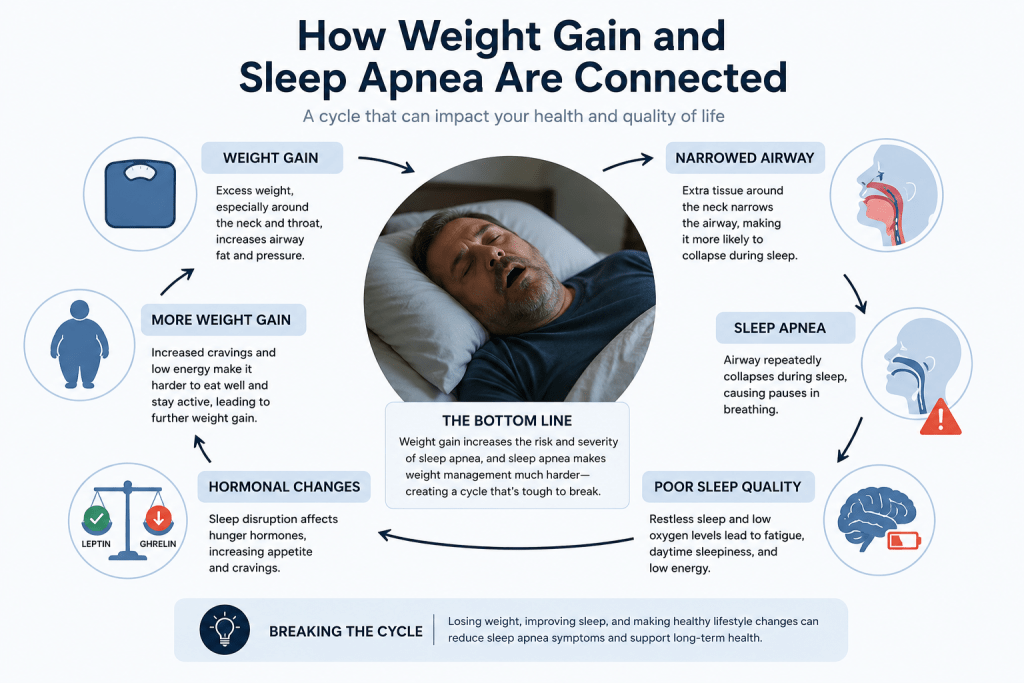
The link between weight gain and sleep apnea works in two directions, which is why it can feel like a loop. Extra weight, especially around the neck and middle, can make the airway more likely to narrow during sleep. That can lead to more breathing pauses at night.
At the same time, poor sleep can make weight harder to manage. When sleep is short or broken, the body’s hunger and fullness signals can shift, which may leave you hungrier the next day. Tired bodies also tend to crave quick energy from sugary or starchy foods.
This back and forth is what makes the connection feel hidden. You may blame willpower when part of the picture is actually your sleep. Our article on whether sleep apnea can cause weight gain explores this two-way street in more detail.
The Metabolic Side of the Story
Metabolism is simply how your body turns food into energy and decides what to store. Sleep is one of the quiet helpers in that process. When rest is steady and deep, the body tends to handle energy and hunger more smoothly.
Broken sleep can nudge the body’s energy and hunger systems off balance, which may make weight changes easier and weight loss harder. This is the metabolic piece that often goes unnoticed. It is not about a single bad night, but about a pattern over weeks and months.
The good news is that this is not a one-way street. Better sleep may support your other healthy habits, and healthy habits may support better sleep. Our piece on sleep and obesity offers a clear, balanced look at how the two relate.
According to the National Heart, Lung, and Blood Institute, sleep plays an important role in many body systems, including how the body manages energy. Protecting your rest is a smart part of any wellness plan.
Why the Cycle Feels So Hard to Break
If you have struggled with both weight and sleep, you are not imagining how tough it can be. Each problem can make the other worse. Poor sleep can lead to lower energy, less exercise, and stronger cravings. Those changes can affect weight, which can then affect sleep again.
Breaking the cycle usually starts with addressing both sides at once, not just one. Focusing only on diet while ignoring poor sleep may leave part of the problem in place. Likewise, fixing sleep without any lifestyle changes may not be enough on its own.
This is where a clear picture helps. If you have felt stuck despite real effort, our article on fixing your sleep issues to support weight loss walks through the link in a practical way. Understanding the full picture can take some of the frustration away.
Healthy Habits That Support Better Sleep and Weight
Below are simple, wellness-based habits that many people find useful. None of these are treatments or cures. They are everyday lifestyle steps you can try while you also get clear answers about your sleep.
Keep a steady sleep schedule. Going to bed and waking at the same time helps your body settle into a rhythm.
Build a wind-down routine. Calm activities before bed, like reading or stretching, can help you drift off more easily.
Move your body during the day. Light, regular activity supports both rest and overall wellness.
Watch late-night eating. Heavy meals close to bedtime can make sleep less comfortable for many people.
Limit evening screens. Bright light at night can delay your natural sleep signal.
Manage stress. Stress can disturb both sleep and eating habits, so simple calming routines can help.
Protect your sleep window. Aim for enough hours so your body has time to recharge fully.
If you have heard about newer weight options and wondered how they fit with rest, our article on whether GLP-1 medications can help your sleep offers a balanced view. And if you are curious whether weight changes can ease breathing at night, our piece on whether losing weight reduces sleep apnea is a helpful read.
Watch: Why can’t I lose weight? 😴
When to Talk With a Sleep Physician
Sometimes habits alone are not enough, and that is okay. If you often wake up tired, snore loudly, gasp during the night, or feel like your weight and sleep are stuck in a loop, it may be time to get a professional look.
A sleep evaluation can help you understand whether sleep apnea is part of your weight and energy picture. You do not have to guess. Dr. Avinesh Bhar and the SLIIIP team can review your sleep history, talk through your symptoms, and arrange a home sleep test if needed.
The process is built around convenience. You can meet a board-certified physician through a virtual visit, and a home sleep test can be shipped right to your door. There is no need to spend a night in a lab or rearrange your week. If you want help getting started, our sleep telemedicine page explains how it works.
For more on the bigger picture, the Centers for Disease Control and Prevention shares plain-language guidance on healthy sleep. And if extra weight is on your mind, our article on whether being overweight can cause sleep apnea rounds out the topic.
At Sliiip, we accept the following insurances:

SLIIIP’s board-certified sleep physicians can do sleep evaluations for sleep apnea. Virtual consultations in all 50 states. Home sleep tests shipped to your door.
Frequently Asked Questions
- What is the connection between weight gain and sleep apnea?
The two are linked in both directions. Extra weight can make the airway more likely to narrow at night, while poor sleep can make weight harder to manage. - Can sleep apnea make it harder to lose weight?
For many people, yes. Broken sleep can shift hunger signals and lower energy, which may make weight loss feel harder. - Can weight changes affect sleep apnea?
Extra weight, especially around the neck and middle, can affect how the airway behaves during sleep. Our articles explore this link in detail. - What is the metabolic connection?
Sleep helps the body manage energy and hunger. When rest is short or broken over time, those systems can fall out of balance. - How do I know if I have sleep apnea?
Common signs include loud snoring, gasping at night, and waking up tired. A sleep evaluation is the clear way to find out. - Why do I crave junk food when I am tired?
Tired bodies often crave quick energy from sugary or starchy foods, which is one way poor sleep can affect eating habits. - Does losing weight always fix sleep apnea?
Weight changes can affect breathing at night for some people, but results vary. A physician can help you understand your own situation. - What is a home sleep test?
It is a sleep study you can do in your own bed. The device is shipped to you, and the results help a physician understand your nights. - Do I have to visit a lab for a sleep evaluation?
No. SLIIIP offers virtual consultations in all 50 states, and home sleep tests can be shipped to your door. - Can poor sleep affect my whole metabolism?
Sleep supports many systems, including how the body manages energy. Steady, quality rest is a helpful part of overall wellness. - Why does the weight and sleep cycle feel so hard to break?
Each problem can make the other worse, so addressing both sleep and lifestyle at once often works better than focusing on just one. - Can stress play a role in this cycle?
Yes. Stress can disturb both sleep and eating habits, so simple calming routines may help with both. - How much sleep should adults aim for?
Most adults benefit from at least seven hours of sleep each night to support overall health and wellness. - Does eating late at night affect sleep?
Heavy meals close to bedtime can make sleep less comfortable for many people, so lighter evening meals may help. - Can a sleep evaluation help with my energy too?
Better understanding of your sleep can help explain ongoing tiredness, which is closely tied to both rest and daily energy. - Are GLP-1 options related to sleep?
There is growing interest in how newer weight options connect to rest. Our balanced article on the topic explains what is known. - Should my bed partner watch for signs?
Yes. A partner may notice snoring, gasping, or pauses in breathing that the sleeper does not feel. - Is sleep apnea common?
It is more common than many people think, and many cases go unnoticed because the interruptions happen during sleep. - Can better habits really make a difference?
Healthy habits like steady sleep, light activity, and stress care can support both rest and weight, alongside a professional evaluation. - How do I get started with SLIIIP?
You can schedule a virtual sleep evaluation online, and a board-certified physician will guide you, including arranging a home sleep test if needed.
Take the Next Step Toward Better Rest
The link between weight and sleep can feel frustrating, but understanding it is the first step toward real change. You do not have to face the cycle alone.
SLIIIP’s board-certified sleep physicians can do sleep evaluations for sleep apnea. Virtual consultations in all 50 states. Home sleep tests shipped to your door.
Latest posts
-
Why Does My Body Ache and I Feel Tired With No Fever?
Last updated: October 13, 2026. Medically reviewed by Dr. Avinesh Bhar, Board-Certified Sleep Physician, SLIIIP.com. If your body aches and you feel tired with no fever, the cause is often…
-
COVID and Sleep: Why Sleep Problems Can Linger After Infection
Last updated: October 13, 2026. Medically reviewed by Dr. Avinesh Bhar, Board-Certified Sleep Physician, SLIIIP.com. The link between COVID and sleep often shows up after the test turns negative. Sleep…
-
Why Do I Feel Drunk or Confused When I Wake Up?
Last updated: October 2, 2026. Medically reviewed by Dr. Avinesh Bhar, Board-Certified Sleep Physician, SLIIIP.com. If you often feel drunk when you wake up, you may have sleep drunkenness. It…
Get updates
Spam-free subscription, we guarantee. This is just a friendly ping when new content is out.

