👉 Register for Free. How to Diagnose Sleep Apnea Faster in Primary Care – FREE Webinar by Dr. Audrey Wells. – Friday, April 24 at 12 PM ET


Aerophagia and CPAP: How to Stop Swallowing Air at Night
Aerophagia and CPAP tend to show up together in quiet ways, and as Dr. Avinesh Bhar, Board-Certified Sleep Physician at SLIIIP.com, points out, many people swallow air all night without realizing the machine is part of the story.
That trapped air can leave you bloated, burping, and gassy the next morning, even when your sleep apnea numbers look great. The good news is that air swallowing on CPAP is common, and small changes often make a real difference.
SLIIIP’s board-certified sleep physicians can do sleep evaluations for sleep apnea. Virtual consultations in all 50 states. Home sleep tests shipped to your door.
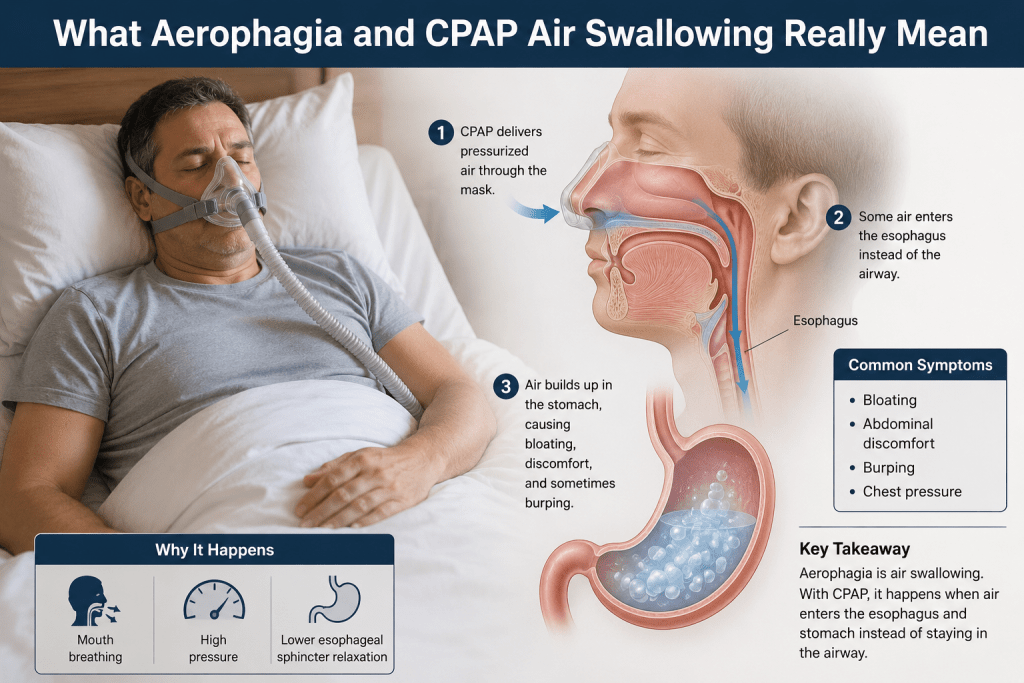
What Aerophagia and CPAP Air Swallowing Really Mean
Aerophagia is the medical word for swallowing air. It comes from two Greek roots that simply mean “air eating.” When it happens with your therapy machine, the air does not go where you want it. Instead of flowing into your lungs, some of it slips down your throat and into your stomach.
CPAP works by sending a steady stream of pressurized air to keep your airway open while you sleep. That same pressure can sometimes find its way into the esophagus, which is the tube that leads to your stomach. Once air builds up down there, it has to come back out as burping, passing gas, or that tight, full feeling in your belly.
This is why aerophagia and CPAP get talked about as a pair. The machine is doing its job for your breathing. The side effect shows up in your gut.
If you want a closer look at the gas and bloating side of this issue, our guide on how to manage bloating and flatulence on CPAP walks through it in plain terms.
CHECK YOUR SLEEP SYMPTOMS: TAKE THE 2 MINUTE QUIZ
TAKE THE QUIZ
Why CPAP Pushes Air Into Your Stomach
Your airway and your food pipe sit very close together at the back of your throat. Most of the time, your body keeps them sorted out. Air goes to the lungs. Food and drink go to the stomach. A small valve at the top of the esophagus stays mostly closed when you are not swallowing.
During sleep, that valve relaxes, and CPAP pressure can nudge air past it. A few things make this more likely.
Pressure Settings That Are Too High
If your pressure is set higher than your airway really needs, the extra force has to go somewhere. Some of it gets pushed toward your stomach. Many people who deal with aerophagia and CPAP find that their pressure was set a bit aggressive for their actual breathing.
Mouth Breathing and Mask Leaks
When air escapes around the mask or out of an open mouth, you may swallow without noticing to try to relieve the pressure. Picking the right CPAP mask and getting a good seal can cut down on this.
Nasal Congestion
A stuffy nose makes you work harder to breathe in air. That extra effort can pull air into the throat and down toward the belly. Allergies, colds, and dry air all play a role.
Anxiety and Fast Breathing
Feeling tense at bedtime can speed up your breathing and lead to more swallowing. A calmer wind down routine helps your body settle before the mask goes on.
Common Signs You Are Swallowing Air at Night
You may not feel air going down while you sleep. The clues usually show up in the morning or during the night. Watch for these everyday signs.
You wake up with a bloated or swollen belly.
You burp a lot soon after you start using the machine.
You pass more gas than usual, especially in the early hours.
You feel stomach cramps or pressure that ease once you burp or pass gas.
You hear or feel air gurgling in your gut.
You wake up needing to release pressure and feel better afterward.
None of these mean you should stop your therapy on your own. They mean it is worth a conversation about your settings and setup. If your mornings already feel rough, our article on why people are not loving CPAP covers more of these early bumps.
How to Stop Swallowing Air at Night
Here is the part most people came for. There is no single switch that fixes air swallowing for everyone, but a steady plan usually works. Start with the steps below, and bring your machine data to a sleep physician who can fine tune the rest.
Ask About Lowering or Adjusting Your Pressure
This is often the biggest lever. A physician can review your data and see if your pressure is higher than you need. Sometimes a small drop is enough to stop the air from heading to your stomach.
Many people do better on a machine that adjusts pressure on its own. An auto adjusting CPAP, or APAP, gives you only as much pressure as the moment calls for, which can lower the average air load on your gut.
Try a Pressure Ramp or EPR Feature
A ramp starts your pressure low and builds it up slowly as you fall asleep. A pressure relief feature, sometimes called EPR, eases the pressure when you breathe out. Both can make therapy feel gentler and reduce swallowing. Your provider can turn these on and set them for you.
Fix Mask Fit and Mouth Leaks
A leaking mask makes you fight the air, and that can lead to more swallowing. If you breathe through your mouth, a full face mask or a chin support may help. Our CPAP mask guide can point you toward options that seal well.
Change Your Sleep Position
Lying flat on your back can make it easier for air to travel down and harder for it to come back up. Sleeping on your side or with your head and chest slightly raised often helps the air pass out instead of building up. A CPAP friendly pillow or a wedge pillow can keep you in a better angle all night. For a wider look at this, see our notes on the best sleeping position.
Clear Up Nasal Congestion
Keeping your nose open lets air flow the right way. Using your machine’s heated humidifier, treating allergies, and keeping your bedroom air clean can all reduce the effort that leads to swallowing.
Slow Down Before Bed
A few minutes of calm breathing before you put the mask on can lower your breathing rate and your swallowing. A short routine that helps you relax sets the stage for smoother therapy.
What Causes Stubborn Aerophagia and CPAP Discomfort
When the simple steps do not fully solve it, a few deeper factors may be at play. A trained sleep physician can sort these out, because guessing on your own can lead you in circles.
Your apnea may have a central component, where the brain’s signals to breathe pause. The fix for that looks different from the fix for the more common obstructive type. You can read more about the difference between central and obstructive sleep apnea.
Reflux can also overlap with air swallowing, since both involve the same valve at the top of the stomach. And in some cases, the pressure that controls your apnea well is simply more than your gut likes, which calls for a careful balance.
This is exactly why your data and your symptoms should be reviewed together. A good plan treats your breathing and your comfort at the same time.
Watch: CPAP Side Effects and Solutions by Dr. Bhar (SLIIIP)
When to Talk With Dr. Avinesh Bhar and the SLIIIP Team
If air swallowing keeps you bloated, wakes you up, or tempts you to quit your machine, it is time to check in with a sleep physician. You should never stop CPAP on your own just to escape the gas, because untreated sleep apnea carries real risks for your heart and your daytime focus.
Dr. Avinesh Bhar and the SLIIIP care team can review your machine data, look at your pressure and mask, and adjust your plan so therapy feels better. Because SLIIIP is built around telemedicine, you can do this from home through a virtual visit. If you have never been tested, you can start with a simple home sleep apnea test and go from there.
For people who struggle with the mask itself, it is also worth knowing there are other paths. Our overview of oral appliances versus CPAP explains an alternative that some patients use when CPAP is a poor fit.
Lifestyle Habits That Support Comfortable Therapy
Beyond settings and masks, your daily habits shape how your body handles the machine. Small lifestyle choices add up over weeks.
Eat your last big meal a few hours before bed so your stomach is not full when therapy starts.
Go easy on carbonated drinks in the evening, since they add gas of their own.
Limit alcohol close to bedtime, because it relaxes the airway and the valve that holds air back.
Keep a steady sleep schedule so your body knows when to wind down.
Stay on top of allergies and congestion during the day, not just at night.
These habits do not replace a physician’s guidance, but they make the medical fixes work better. Healthy sleep is about the whole picture, not one setting on a screen.
For trusted background on sleep health, the Centers for Disease Control and Prevention and the National Heart, Lung, and Blood Institute both offer clear, public guides.
At Sliiip, we accept the following insurances:

SLIIIP’s board-certified sleep physicians can do sleep evaluations for sleep apnea. Virtual consultations in all 50 states. Home sleep tests shipped to your door.
Frequently Asked Questions
What is aerophagia on CPAP?
Aerophagia on CPAP is the swallowing of air that can happen when the machine’s pressure travels down the esophagus into the stomach instead of going only to the lungs. It often shows up as bloating, burping, and gas.
Is swallowing air on CPAP dangerous?
For most people it is uncomfortable rather than dangerous. Still, it should be reviewed by a sleep physician, since the answer often lies in your pressure or setup, and stopping therapy on your own is not the safe fix.
Why do I feel bloated every morning after using CPAP?
Air that builds up in your stomach overnight is the likely cause. The bloating tends to ease as you burp or pass gas through the day. Adjusting your pressure or position usually helps.
Can lowering my CPAP pressure stop air swallowing?
Often, yes. If your pressure is higher than your airway needs, lowering it can keep air from being pushed toward your stomach. Only change pressure with guidance from your provider.
Does an APAP machine help with aerophagia and CPAP problems?
It can. An auto adjusting machine gives you only the pressure each moment needs, which can lower the average air load on your gut compared with one fixed high setting.
Will a ramp setting reduce air swallowing?
A ramp starts pressure low and builds it slowly, which can make therapy gentler at the start of the night and reduce early swallowing for some users.
Can my sleep position cause air swallowing?
Yes. Lying flat on your back can make it easier for air to move down and harder to release. Side sleeping or raising your head and chest can help.
Does mouth breathing make CPAP air swallowing worse?
It can. Mouth breathing and mask leaks may lead you to swallow air without noticing. A better mask seal or a full face mask can reduce this.
Can nasal congestion lead to swallowing air?
Yes. A stuffy nose makes breathing harder, and that extra effort can pull air toward the throat and stomach. Treating congestion often helps.
How long does CPAP air swallowing usually last?
For many people it improves within a few weeks as they adjust settings, masks, and habits. If it lingers, a sleep physician should review your plan.
Should I stop using CPAP if it makes me gassy?
No. Stopping on your own leaves your sleep apnea untreated, which carries real risks. Instead, ask your provider to adjust your therapy so it feels better.
Can eating before bed make aerophagia worse?
A full stomach at bedtime can add to bloating and pressure. Finishing big meals a few hours before sleep may help.
Do carbonated drinks affect CPAP bloating?
They can. Fizzy drinks add gas on their own, so cutting back in the evening may reduce morning bloating.
Is air swallowing the same as acid reflux?
They are different but related, since both involve the valve at the top of the stomach. They can also overlap, which is one reason a physician should review your symptoms.
Can a different mask reduce air swallowing?
Sometimes. A mask that seals well and matches your breathing style can cut down on leaks and the swallowing that comes with them.
What is EPR and can it help?
EPR is a pressure relief feature that eases pressure when you breathe out. It can make therapy more comfortable and may lower swallowing for some users.
Can stress at bedtime cause me to swallow air?
Yes. Tension can speed up breathing and lead to more swallowing. A calm wind down routine before the mask goes on can help.
Will a wedge pillow help with CPAP gas?
It may. Raising your head and chest can make it easier for trapped air to pass out instead of building up overnight.
Do I need a new sleep study to fix air swallowing?
Not always. Often a review of your current machine data and a few adjustments are enough. A physician can tell you if more testing is needed.
Can SLIIIP help me adjust my CPAP from home?
Yes. Through virtual consultations, the SLIIIP team can review your data, check your pressure and mask, and update your plan without an in person visit.
SLIIIP’s board-certified sleep physicians can do sleep evaluations for sleep apnea. Virtual consultations in all 50 states. Home sleep tests shipped to your door.
Latest posts
-
Evie Ring Sleep Tracking Review: Does It Work?
Last updated: September 14, 2026. Medically reviewed by Dr. Avinesh Bhar, Board-Certified Sleep Physician, SLIIIP.com. The Evie Ring tracks sleep using a finger-based light sensor that estimates heart rate, movement,…
-
Do EEG Sleep Headbands Actually Track Sleep Accurately?
Last updated: September 14, 2026. Medically reviewed by Dr. Avinesh Bhar, Board-Certified Sleep Physician, SLIIIP.com. EEG sleep headbands, like the Dreem headband, use dry electrodes to record brain wave activity,…
-
Circular Ring Sleep Accuracy: What It Gets Right and Wrong
Last updated: September 14, 2026. Medically reviewed by Dr. Avinesh Bhar, Board-Certified Sleep Physician, SLIIIP.com. The Circular Ring estimates sleep stages, heart rate, and recovery using a finger-worn light sensor,…
Get updates
Spam-free subscription, we guarantee. This is just a friendly ping when new content is out.

