👉 Register for Free. How to Diagnose Sleep Apnea Faster in Primary Care – FREE Webinar by Dr. Audrey Wells. – Friday, April 24 at 12 PM ET


Is It Burnout or a Sleep Disorder? How to Tell the Difference
When exhaustion drags on for months, telling burnout apart from a sleep disorder gets tricky, and Dr. Avinesh Bhar, Board-Certified Sleep Physician at SLIIIP.com, says the two can look almost identical from the outside.
Both can leave you drained, foggy, and short-tempered, but they come from different places and respond to different things. Learning to spot the clues that set them apart helps you take the right next step instead of pushing through and hoping it passes.
SLIIIP’s board-certified sleep physicians can do sleep evaluations for sleep apnea. Virtual consultations in all 50 states. Home sleep tests shipped to your door.
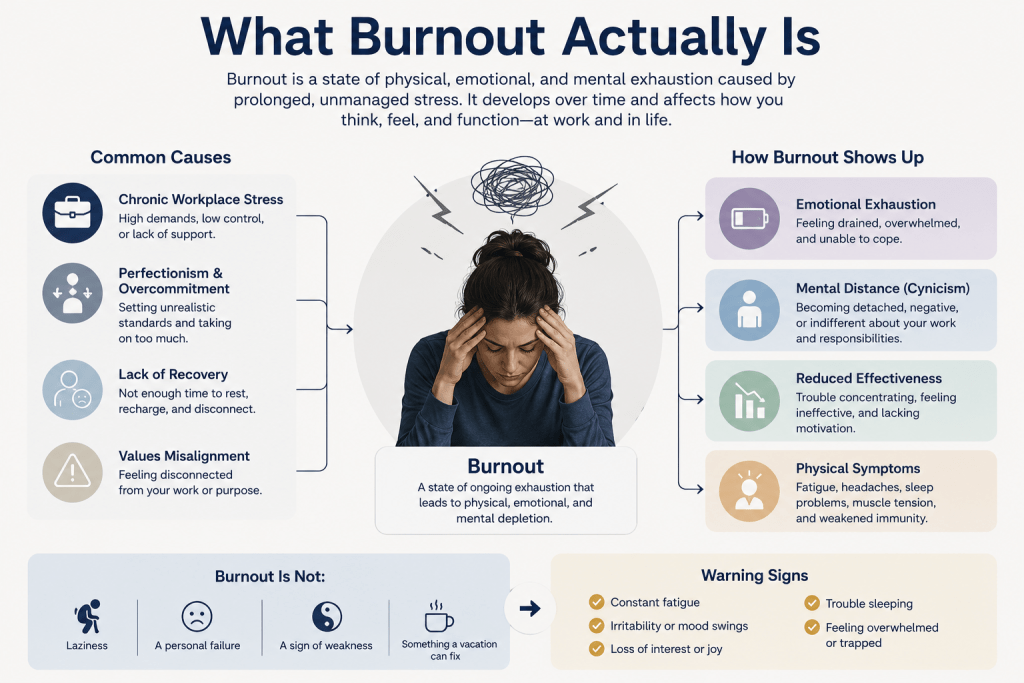
What Burnout Actually Is
Burnout is a state of deep exhaustion that builds up from long-term stress, often from work or caregiving. It is not a medical diagnosis in the strict sense, but it is a very real experience.
The classic signs are emotional exhaustion, a sense of distance or cynicism about your work, and a feeling that you are not getting much done. You might dread tasks you used to enjoy and feel like your battery never fully recharges.
Burnout tends to track with your circumstances. It often eases when the pressure lets up, like during a real vacation or after a heavy season ends. If a few days of true rest leave you feeling noticeably better, that points more toward burnout than something physical.
That said, exhaustion is a symptom, not a self-diagnosis. If your tiredness lingers no matter what you change, it is worth looking deeper. Our piece on whether your fatigue is normal can help you gauge it.
CHECK YOUR SLEEP SYMPTOMS: TAKE THE 2 MINUTE QUIZ
TAKE THE QUIZ
What a Sleep Disorder Looks Like
A sleep disorder is a medical condition that disrupts the quality, timing, or amount of your sleep. Common examples include sleep apnea, insomnia, and restless legs.
The tell-tale clue is that you can spend plenty of hours in bed and still wake up unrefreshed, because the sleep itself is broken. You might sleep eight hours and feel like you barely rested at all.
With sleep apnea, for instance, your breathing is repeatedly interrupted, which fragments your sleep without fully waking you. You may not even know it is happening. A bed partner may notice loud snoring or pauses in your breathing. Our overview of the signs of sleep apnea lists what to watch for.
Unlike burnout, a true sleep condition usually does not fix itself with a vacation. The tiredness follows you because the root cause travels with you wherever you sleep.
Where Burnout and Disrupted Sleep Overlap
This is where it gets confusing. The two share a long list of symptoms, which is why so many people guess wrong.
Both can cause daytime fatigue, brain fog, trouble concentrating, irritability, and low mood. Because the surface symptoms look so similar, you often cannot tell them apart by how you feel alone. That is exactly why guessing is risky.
There is also a two-way street between them. Poor sleep can make stress harder to handle, and chronic stress can wreck your sleep. One can feed the other until they blur together. If low mood is part of your picture, our article on whether your depression is actually a sleep problem is worth a read.
Key Differences That Help You Tell Them Apart
While no checklist replaces a professional, a few patterns can hint at which way to look.
Ask whether rest helps. If a long weekend or a vacation genuinely recharges you, burnout is more likely. If you wake up just as tired after a full night or a week off, a physical cause deserves a look.
Ask about your nights. Loud snoring, gasping awake, frequent bathroom trips, or a partner noticing pauses in your breathing point toward a possible sleep problem rather than stress alone.
Ask about the timeline. Burnout usually maps to a stressful period, while a sleep problem can grind on quietly for years regardless of what is happening at work. If your exhaustion has no clear link to your workload, that is a clue.
If you are exhausted no matter how much you sleep, our guide on why you feel exhausted no matter how much you sleep explores the common culprits.
The Test That Often Reveals a Hidden Sleep Problem
Here is the practical part. You cannot reliably separate burnout from a sleep disorder by willpower or guesswork, but you can get objective data about your sleep.
A home sleep test measures your breathing, oxygen, and heart rate through the night. If a treatable breathing problem is quietly fragmenting your sleep, this kind of test can surface it, even when you assumed the issue was purely stress. That is a common and eye-opening result.
The device ships to your door, you wear it for a night or two, and a physician reviews the data. You can read more in our overview of the home sleep apnea test and what it involves. If you are unsure whether testing is right for you, see our piece on whether you need a sleep study.
When Both Are Happening at the Same Time
It is not always one or the other. Many people have both burnout and a sleep problem, and each makes the other worse.
Sorting out the sleep piece often makes the stress piece easier to manage, because rested people cope better. When your nights improve, your days usually follow, and the burnout becomes more workable.
That is why getting your sleep evaluated is useful even if you are certain stress is part of the story. Treating one cause does not mean ignoring the other. Both can be addressed in parallel with the right support. Our article on sleep solutions for mental health explores that connection.
Watch: A Doctor Explains Is it Burnout or Just Anxiety?
When to Talk With a Professional
Some exhaustion deserves a professional eye, not just more coffee. A few situations make it worth reaching out.
If your tiredness has lasted weeks, does not lift with rest, or comes with snoring, gasping, or pauses in breathing, a sleep evaluation makes sense. Dr. Avinesh Bhar and the SLIIIP team can review your symptoms over a virtual visit and arrange a home test if it fits.
For the emotional side of burnout, or if you are struggling with your mood, a primary care doctor or mental health professional can help you build a plan. You do not have to figure out which one it is on your own, and you do not have to choose just one source of support.
If insomnia is part of the picture, our guide to insomnia treatment outlines the options worth discussing with a clinician.
Simple Habits That Support Better Rest
These habits support general sleep wellness. They are not a treatment for any condition and do not replace a professional evaluation, but they can help you feel steadier while you sort things out.
Keep a consistent bedtime and wake time, even on weekends, so your body finds a rhythm.
Protect a wind-down window before bed with dim light and less screen time. A calmer runway helps you fall asleep.
Set boundaries around work when you can, since unplugging eases the stress that fuels burnout.
Note your symptoms and when they show up. Bringing that record to your visit gives a professional useful context.
This section offers general wellness tips only. It is not a diagnosis or a treatment plan. For ongoing exhaustion, low mood, or any breathing concern, talk with your own physician or a licensed professional.
Trusted Sources on Sleep and Sleep Apnea
To understand how rest shapes your overall health, the CDC sleep resources offer clear, reliable guidance. For a plain-language medical overview of one common sleep condition behind unexplained fatigue, the NHLBI guide to sleep apnea is a trustworthy source.
At Sliiip, we accept the following insurances:

SLIIIP’s board-certified sleep physicians can do sleep evaluations for sleep apnea. Virtual consultations in all 50 states. Home sleep tests shipped to your door.
Frequently Asked Questions
How do I know if it is burnout or a sleep disorder?
Look at whether rest helps and what your nights are like. Burnout often eases with a real break, while a sleep disorder leaves you tired even after a full night. A professional evaluation gives the clearest answer.
Can burnout and a sleep problem happen together?
Yes, and often do. Each can worsen the other, so many people deal with both at once. Addressing the sleep piece frequently makes the stress piece easier to handle.
Why am I still tired after a full night of sleep?
If you sleep enough but wake unrefreshed, the quality of your sleep may be disrupted. A breathing problem or another condition can fragment sleep without fully waking you.
Does burnout cause physical exhaustion?
Yes. Burnout from chronic stress can leave you deeply drained, foggy, and irritable. Those symptoms overlap heavily with poor sleep, which is why the two are easy to confuse.
Will a vacation fix my tiredness?
If a true break leaves you noticeably better, that points more toward burnout. If you return just as exhausted, it is worth checking for a physical cause.
What are common signs of a sleep problem?
Loud snoring, gasping awake, waking often, restless legs, and feeling unrefreshed despite enough hours can all point to a sleep problem worth evaluating.
Can stress cause poor sleep?
Yes. Chronic stress can make it hard to fall or stay asleep, and poor sleep then makes stress harder to manage. The two can feed each other.
Should I see a doctor or just rest more?
If your exhaustion lasts weeks, does not lift with rest, or comes with breathing symptoms, a professional evaluation is wise rather than only resting more.
Can sleep apnea feel like burnout?
Yes. Sleep apnea fragments your sleep and can leave you foggy, drained, and irritable, which can look a lot like burnout from the outside.
How long does burnout last?
It varies and often tracks with your circumstances, easing when the pressure lets up. If your exhaustion never lifts regardless of your workload, look deeper.
Can a home sleep test help me figure this out?
It can reveal whether a breathing problem is quietly disrupting your sleep. That objective data helps separate a physical cause from pure stress.
Why do I feel foggy and irritable all the time?
Both burnout and disrupted sleep can cause brain fog and irritability. Since the symptoms overlap, the cause is hard to pin down without an evaluation.
Is burnout a medical diagnosis?
Not in the strict sense, though it is a very real experience. It describes exhaustion from chronic stress rather than a specific illness, so professional support still helps.
What if rest does not help at all?
Exhaustion that ignores rest is a signal to look for a physical cause. A sleep evaluation can check whether something is disrupting your nights.
Can poor sleep make my mood worse?
Yes. Disrupted sleep is closely linked with low mood and irritability. Improving your sleep often helps your days feel more manageable.
Do I need a referral for a sleep test?
It depends on your situation and plan. SLIIIP physicians can review your symptoms virtually and arrange a home test when it makes sense.
What questions should I bring to my visit?
Note how long you have felt tired, whether rest helps, any snoring or gasping, and your daytime symptoms. That record helps your clinician guide you.
Can both be treated at the same time?
Yes. The sleep side and the stress side can be addressed in parallel with the right support, and progress on one often helps the other.
Will insurance cover a sleep evaluation?
Coverage varies by plan. You can check your specific benefits with SLIIIP before testing so you know what to expect.
Can SLIIIP help me sort out exhaustion online?
Yes. SLIIIP’s board-certified sleep physicians can review your symptoms over a virtual visit and arrange a home test if needed, with care available in all 50 states.
Take the Next Step Toward Real Energy
Chronic exhaustion is a message, not a personal failing. Whether it is burnout, a sleep problem, or both, the path forward starts with understanding the cause instead of pushing through. A clear answer is the first step toward feeling like yourself again.
SLIIIP’s board-certified sleep physicians can do sleep evaluations for sleep apnea. Virtual consultations in all 50 states. Home sleep tests shipped to your door.
Latest posts
-
Why Can’t I Wake Up Even After Getting Enough Sleep?
Last updated: October 2, 2026. Medically reviewed by Dr. Avinesh Bhar, Board-Certified Sleep Physician, SLIIIP.com. If you can’t wake up after enough sleep, the cause is usually not the number…
-
Why Does My Heart Rate Drop So Low While I Sleep?
Last updated: October 2, 2026. Medically reviewed by Dr. Avinesh Bhar, Board-Certified Sleep Physician, SLIIIP.com. Your heart rate drops low while sleeping mainly because your body needs less work from…
-
Why Are My Naps Never Refreshing?
Last updated: October 2, 2026. Medically reviewed by Dr. Avinesh Bhar, Board-Certified Sleep Physician, SLIIIP.com. Naps that leave you groggy usually come down to how long you sleep, when you…
Get updates
Spam-free subscription, we guarantee. This is just a friendly ping when new content is out.

