👉 Register for Free. How to Diagnose Sleep Apnea Faster in Primary Care – FREE Webinar by Dr. Audrey Wells. – Friday, April 24 at 12 PM ET

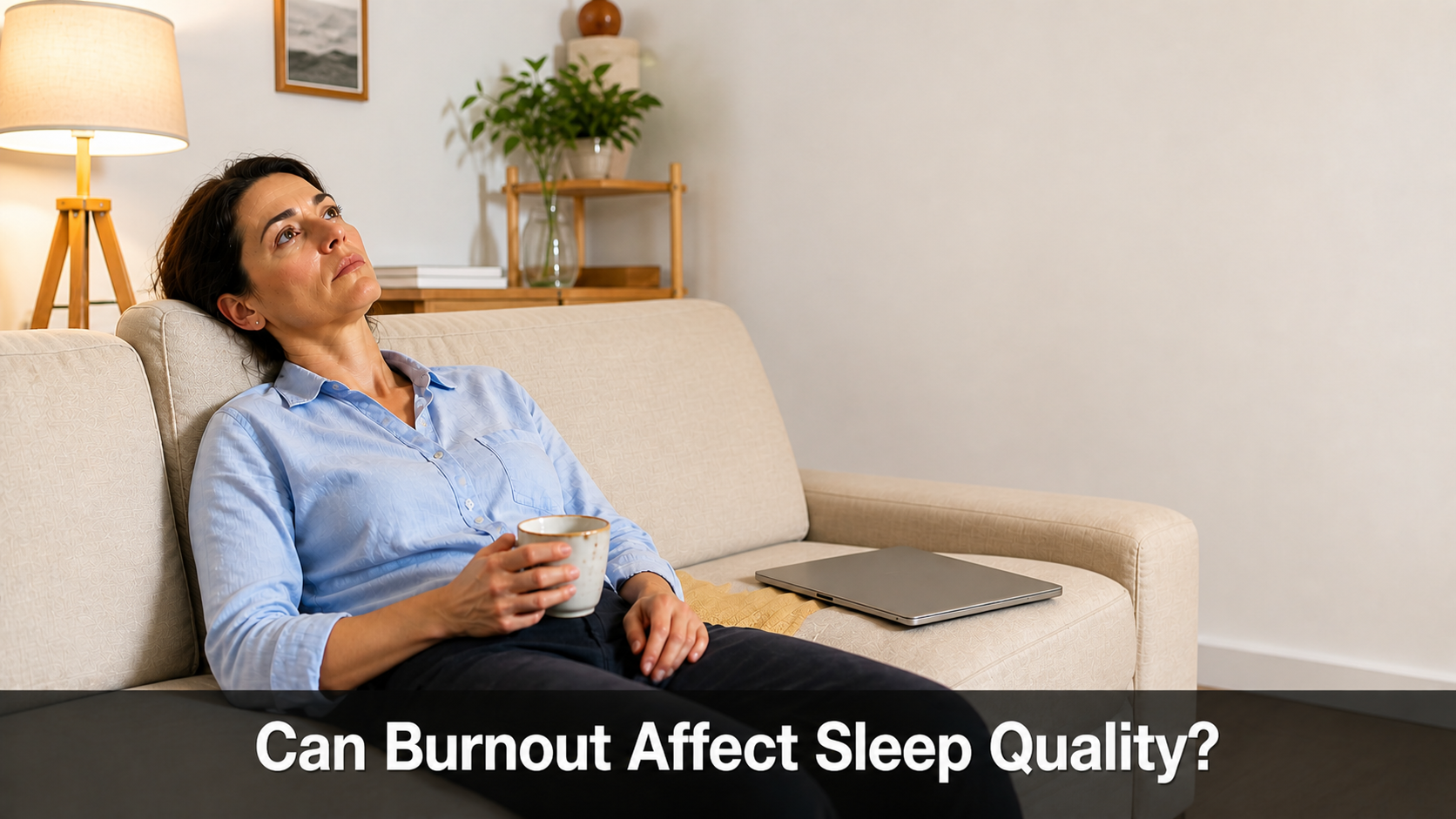
Can Burnout Affect Sleep Quality? How Chronic Stress Wrecks Your Rest
Burnout can affect sleep quality long before most people realize their exhaustion has crossed a line, says Dr. Avinesh Bhar, Board-Certified Sleep Physician at SLIIIP.com.
If you feel wired all day and then crash into shallow, broken sleep at night, your nervous system may be running on fumes. Burnout can affect sleep quality by keeping the body in a stress response long after the workday ends. This pattern is well known in sleep medicine, and it builds quietly over months.
SLIIIP’s board-certified sleep physicians can do sleep evaluations for sleep apnea. Virtual consultations in all 50 states. Home sleep tests shipped to your door.
What It Means When Burnout Affects Sleep Quality
Burnout is a state of deep physical and mental exhaustion caused by long-term stress, often from work, caregiving, or both. It is more than being tired. It is the body running out of the resources needed to recover.
Burnout can affect sleep quality by leaving the brain stuck in a high alert state at night, even when you feel completely drained during the day. This is why so many people in burnout describe themselves as tired but wired. The body wants rest, but the mind cannot release the brake.
In sleep medicine, burnout often shows up as long bedtimes, frequent wake-ups, and early morning waking that no amount of weekend rest can fix. To explore why eight hours often is not enough, see our piece on why am I waking up tired even after 8 hours.
CHECK YOUR SLEEP SYMPTOMS: TAKE THE 2 MINUTE QUIZ
TAKE THE QUIZ
How Burnout and Sleep Loss Feed Each Other
The link between burnout and sleep runs both ways. Burnout can affect sleep quality, and poor sleep can speed up burnout. According to the Centers for Disease Control and Prevention, sleep problems are tied closely to stress, mood, and overall well-being.
Here is how the cycle usually plays out:
- Long-term stress raises cortisol and other alert hormones.
- The body stays in fight or flight mode well into the evening.
- Sleep becomes light, broken, or delayed.
- Daytime fatigue grows, which lowers your ability to handle stress.
- The next day feels harder, which raises stress again.
Once burnout takes hold, the brain often loses the ability to switch fully into rest mode at night. That is why rest no longer feels restorative. Our article on I wake up exhausted no matter what covers this loop in more detail.

Common Signs Burnout Is Hurting Your Sleep
Not every rough patch is burnout, but a few patterns point in that direction. Watch for these signs:
- Lying awake replaying work problems or conversations
- Falling asleep fast from sheer exhaustion, then waking at 3 a.m.
- Early morning waking with a knot in your stomach
- Light, broken sleep with vivid or stressful dreams
- Dread on Sunday nights or before the workweek begins
- Waking up feeling no different than when you went to bed
If you often feel like your brain will not slow down when you finally lie down, our guide on what to do when you cannot shut your brain off at night is a useful place to start. Many readers also relate to why do I overthink before bed.
Why Burnout Keeps the Body From Real Rest
Sleep needs a calm nervous system. Burnout keeps the body in a low grade fight or flight mode, which is the opposite of what deep sleep requires.
During burnout, cortisol stays elevated when it should be falling, heart rate variability drops, and the body loses the natural evening signal to wind down. Even small triggers, like a phone notification, can keep the alert system humming.
Common physical effects include:
- Trouble falling asleep even when very tired
- Waking up between 2 and 4 a.m. with thoughts already racing
- Tense jaw, shoulders, or stomach at night
- Light sleep with little deep or REM sleep
- Heavy fatigue during the day with no clear cause
Over time, the brain may stop releasing the natural calming signals it once did at bedtime. That is why many people in burnout struggle with sleep long after they take a break or change jobs.
How Poor Sleep Speeds Up Burnout
Sleep is the body’s main recovery tool. When sleep quality drops, the system that protects you from stress weakens fast. The National Heart, Lung, and Blood Institute notes that not getting enough quality sleep can affect mood, judgment, and physical health.
When you are short on deep, restorative sleep, the brain becomes more reactive to stress and slower at solving problems. Even one week of poor sleep can raise burnout symptoms like irritability, brain fog, and emotional flatness. This is why so many people feel like they cannot bounce back the way they used to.
This is also why rebuilding sleep is often the first real step out of burnout. Better sleep restores the brain’s natural ability to handle pressure. Read more in our piece on effective sleep solutions for mental health.
Watch: Trouble Going to Sleep
Other Conditions That Can Mimic Burnout
Not every case of fatigue and broken sleep is pure burnout. Several sleep and health conditions look almost identical from the outside, and they often go missed for years.
Conditions that can mimic or worsen burnout include:
- Obstructive sleep apnea, where breathing pauses break sleep all night
- Chronic insomnia, where the bed itself becomes a stress trigger
- Circadian rhythm disorders, where the body clock is off track
- Thyroid issues, anemia, or low vitamin D, which sap daytime energy
Sleep apnea in particular is often missed in people who do not snore loudly or are at a normal weight. Untreated sleep apnea can mimic burnout so closely that patients spend years blaming work when the real cause is at night. Our article on sleep apnea and extreme brain fog explores this overlap.
Lifestyle Habits That Help Reset Sleep During Burnout
While burnout can affect sleep quality, daily habits play a big role in either feeding or easing the loop. The goal is to lower nighttime arousal and rebuild a true wind down before bed.
Helpful habits include:
- Setting a fixed wake time, even on weekends
- Getting morning sunlight within 30 minutes of waking
- Cutting caffeine after noon
- Building a 60 minute wind down with no work or screens
- Writing a short worry list earlier in the evening
- Slow breathing with a 4 second inhale and 6 second exhale
- Using the bed only for sleep and intimacy
For more practical steps, see our guide on how to fix insomnia naturally and tips on stopping overthinking at night.
At Sliiip, we accept the following insurances:

SLIIIP’s board-certified sleep physicians can do sleep evaluations for sleep apnea. Virtual consultations in all 50 states. Home sleep tests shipped to your door.
When to Seek a Professional Sleep Evaluation
Short stretches of poor sleep during stressful times are normal. But when broken sleep lasts more than a few weeks and starts hurting your work, mood, or health, it deserves a closer look.
You should consider a sleep evaluation if any of the following apply:
- Your sleep has been off for over 3 months
- You wake up exhausted no matter how long you stay in bed
- You wake up gasping, choking, or with a racing heart
- You snore loudly or have been told you stop breathing in sleep
- Brain fog, irritability, or fatigue are getting worse, not better
Burnout is not always the only factor. Hidden sleep disorders can drive the same symptoms and respond well to treatment once identified. Approaches like cognitive behavior therapy for insomnia (CBT-I) are first-line care for chronic insomnia and often outperform sleep medications in burnout patients.
How SLIIIP Helps People Burned Out and Sleep Deprived
SLIIIP is a sleep telemedicine platform that connects patients with board-certified sleep physicians from home. Burnout-related sleep problems often improve once the right kind of evaluation is done, and SLIIIP makes that easy to access.
With SLIIIP, you can:
- Book a virtual consultation with a board-certified sleep physician
- Receive a home sleep test by mail if needed
- Access nationwide coverage in all 50 states
- Use insurance to help cover services
- Get clear next steps based on your sleep history and symptoms
Many patients turn to SLIIIP after months of pushing through fatigue, hoping a vacation will fix it. A proper evaluation helps separate burnout, primary insomnia, and underlying sleep disorders so the right plan can move forward. You can also explore types of insomnia guide for more context.
Frequently Asked Questions
1. Can burnout really cause insomnia?
Yes. Burnout keeps stress hormones high and the nervous system on alert, which often leads to trouble falling and staying asleep.
2. Why do I feel exhausted but cannot sleep?
This tired but wired feeling is a classic burnout pattern. The body is drained while the brain stays stuck in alert mode.
3. Is waking up at 3 a.m. a sign of burnout?
Often yes. A spike in stress hormones in the early morning can pull you out of sleep with a racing mind.
4. Can burnout cause sleep apnea?
Burnout does not cause sleep apnea, but it can make symptoms worse. The two often overlap and feed each other.
5. How is burnout different from depression?
Burnout is tied to chronic stress, often from work or caregiving. Depression is broader and includes loss of interest, sadness, and hopelessness. They can overlap.
6. Will a vacation fix burnout sleep?
A break may help short term, but real recovery usually needs steady habit changes and sometimes professional support.
7. Can burnout cause vivid dreams?
Yes. High stress raises REM sleep activity and can lead to vivid, stressful, or repeating dreams.
8. Is burnout sleep loss dangerous?
Long term poor sleep raises the risk of high blood pressure, heart disease, mood disorders, and weight gain.
9. How long does burnout sleep loss last?
Without changes, it can last months or years. With proper care and habits, most people see real progress within weeks.
10. Can melatonin help with burnout sleep?
Melatonin can help with sleep timing but does not lower stress hormones. It is rarely a full fix for burnout-driven sleep loss.
11. Should I take a sleep aid for burnout?
Sleep aids may offer short-term relief but rarely solve the root cause. Many lose effect over time. CBT-I is preferred for chronic cases.
12. Does exercise help burnout sleep?
Yes. Daily movement lowers stress hormones and deepens sleep. Try to finish workouts a few hours before bed.
13. Why do I dread Sunday nights?
Sunday night dread is a common burnout sign. The nervous system braces for the workweek before sleep arrives.
14. Can burnout affect REM sleep?
Yes. High stress often raises REM activity early in the night and shortens deep sleep, which leaves you groggy in the morning.
15. Is napping good or bad for burnout?
Short naps under 20 minutes before 3 p.m. can help. Long naps later in the day often make night sleep worse.
16. Can burnout cause physical symptoms?
Yes. Headaches, jaw tension, stomach issues, and constant colds are all common in burnout.
17. How do I know if it is burnout or just stress?
Stress comes and goes. Burnout sticks around even after rest, with low energy, low motivation, and disrupted sleep.
18. Should I get a sleep study during burnout?
A study is not always needed, but it helps rule out sleep apnea and other conditions that can mimic burnout.
19. Can night shift work cause burnout?
Yes. Working against the body’s clock raises burnout risk and disrupts sleep. See the night shift and sleep for more.
20. How do I rebuild sleep after burnout?
Start with a steady wake time, morning light, daily movement, and a real wind down at night. A sleep evaluation can speed things up if symptoms stay.
Take the Next Step Toward Real Rest
Burnout can affect sleep quality in deep, lasting ways, but it does not have to stay that way. A board-certified sleep physician can help untangle the cycle, rule out hidden sleep disorders, and build a plan that fits your life.
SLIIIP’s board-certified sleep physicians can do sleep evaluations for sleep apnea. Virtual consultations in all 50 states. Home sleep tests shipped to your door.
Thank you for reading this article.
Latest posts
-
Why Are My Naps Never Refreshing?
Last updated: October 2, 2026. Medically reviewed by Dr. Avinesh Bhar, Board-Certified Sleep Physician, SLIIIP.com. Naps that leave you groggy usually come down to how long you sleep, when you…
-
Is Sleeping Too Much a Sleep Disorder?
Last updated: October 2, 2026. Medically reviewed by Dr. Avinesh Bhar, Board-Certified Sleep Physician, SLIIIP.com. Sleeping too much is not always a sleep disorder, but it can be a sign…
-
Why Does My Insomnia Get Worse After Stopping Sleep Medication?
Last updated: October 2, 2026. Medically reviewed by Dr. Avinesh Bhar, Board-Certified Sleep Physician, SLIIIP.com. Insomnia can get worse after stopping sleep medication for three main reasons. They are rebound…
Get updates
Spam-free subscription, we guarantee. This is just a friendly ping when new content is out.

