👉 Register for Free. How to Diagnose Sleep Apnea Faster in Primary Care – FREE Webinar by Dr. Audrey Wells. – Friday, April 24 at 12 PM ET


Fitness Plateaus: Why Sleeping 6 Hours Destroys Your Gains
Fitness plateaus frustrate even the most disciplined lifters, and according to Dr. Avinesh Bhar, Board-Certified Sleep Physician at SLIIIP.com, the cause is sometimes hiding in your sleep, not your program.
You can run a perfect workout plan and still stall out, because six hours of sleep often does not give your body enough time to rebuild what you broke down.
When progress stops, most people change their workout or their diet first. They add sets, swap meals, or push harder. Sleep rarely gets a second look, even though it is when your body repairs muscle and restocks energy. If you cap your nights at six hours, you may be cutting off the very stage that turns hard work into real results.
SLIIIP’s board-certified sleep physicians can do sleep evaluations for sleep apnea. Virtual consultations in all 50 states. Home sleep tests shipped to your door.
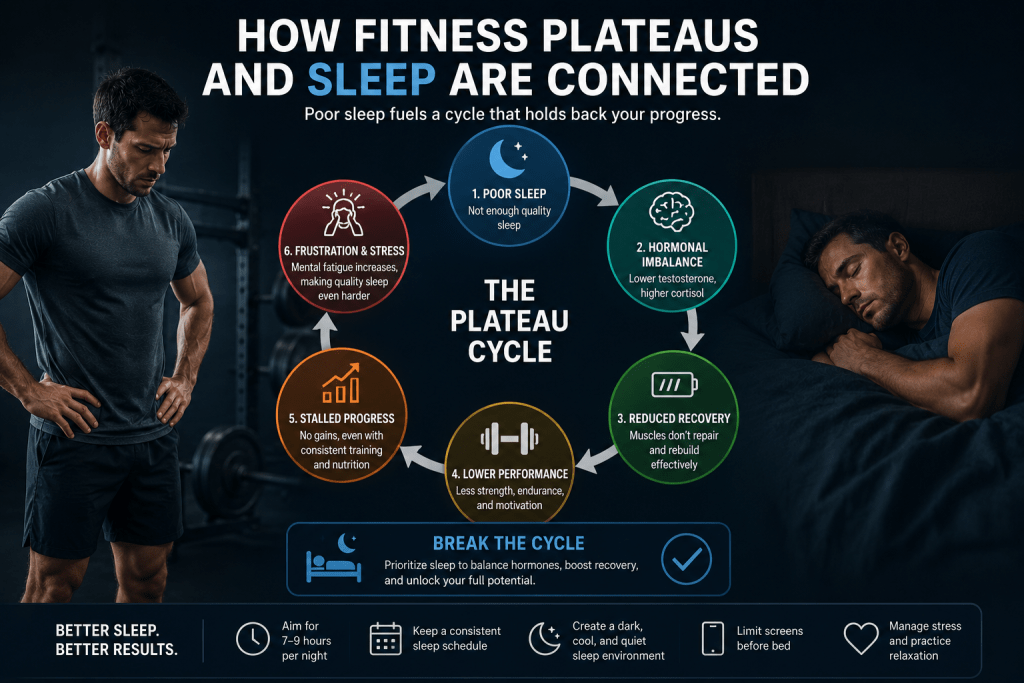
How Fitness Plateaus and Sleep Are Connected
Fitness plateaus often trace back to recovery, and recovery happens while you sleep. Every workout creates small amounts of wear in your muscles. Your body repairs that wear during the deep stages of sleep. Skip those stages, and the repair never fully finishes.
Six hours may feel like enough, but it often shorts your body to the deep sleep it needs to rebuild.
Think of training and sleep as two halves of one process. You break down muscle in the gym and build it back in bed. When the rebuild falls behind, your progress flattens out. To see how rest fits the bigger picture, read about the importance of sleep and the difference between core sleep and deep sleep.
CHECK YOUR SLEEP SYMPTOMS: TAKE THE 2 MINUTE QUIZ
TAKE THE QUIZ
Why Six Hours Is Not Enough for Gains
Six hours sounds productive, but it usually leaves your body short on repair time. Here is what tends to happen when you cap your sleep too low.
Less Time in Deep Sleep
Your deepest, most restorative sleep comes in chunks across the night. Cut the night short, and you lose some of those chunks.
Fewer hours in bed often means fewer trips through the deep repair stage.
That lost repair time can leave muscles half rebuilt. For more on these stages, see this guide on how much core sleep you need.
Slower Recovery Between Sessions
When repair falls behind, fatigue carries over from one workout to the next. You start each session a little more worn down than the last.
Stacked fatigue means your next workout starts from a worse place, which can flatten your results.
If you feel drained no matter how hard you try, this guide on being exhausted no matter how much you sleep is a helpful read.
Harder Workouts and Lower Output
After short sleep, the same weights and paces can feel heavier. Your sense of effort climbs, and your output drops.
Tired training feels harder and produces less, so your progress slows even with steady effort.
Over weeks, that gap between effort and output is what many people call a plateau.
Hunger and Body Composition Shifts
Short sleep can also nudge your hunger signals and energy, which may make your nutrition harder to manage.
Poor sleep can throw off hunger cues, which can quietly work against your goals.
If your body composition feels stuck, read this guide on how to fix your sleep when weight loss stalls.
What Dr. Avinesh Bhar Suggests to Break the Plateau
Dr. Avinesh Bhar reminds lifters that sleep is a training variable, just like sets and reps. Protect it, and your other work pays off more.
Simple wellness habits that support recovery sleep include:
- Aim for enough hours. Most adults do best with seven to nine hours, not six.
- Keep a steady schedule. Sleep and wake at the same time, even after big sessions.
- Protect your wind-down. Lower the lights and put screens away before bed.
- Time your training and caffeine. Avoid hard workouts and caffeine too close to bedtime.
- Set the scene. Keep your room cool, dark, and quiet for deep sleep.
These steps will not replace medical care, but they give your body its best shot at full repair. For more, read about how to get more deep sleep and ways to improve your sleep quality.
Watch: The Importance of Sleep Behaviors session by Dr. Avinesh Bhar (SLIIIP) and Nick Lambe (Sleep Coach)
When a Home Sleep Test Makes Sense
If you have added hours and cleaned up your habits and your progress still will not move, your sleep may need a closer look. A home sleep test checks your breathing and rest patterns from your own bed.
A home sleep test can reveal hidden breathing pauses that quietly steal the deep sleep your gains depend on.
A breathing problem such as sleep apnea can break up your night many times an hour. You may never remember waking, but your body never reaches the deep repair stages. No new program will fix that. Learn more about the home sleep apnea test. If you are unsure whether your tiredness is typical, this article on whether your fatigue is normal can help.
Trusted public health groups also share clear sleep guidance. The CDC offers tips for healthy sleep, and the NHLBI explains the effects of sleep deprivation.
At Sliiip, we accept the following insurances:

SLIIIP’s board-certified sleep physicians can do sleep evaluations for sleep apnea. Virtual consultations in all 50 states. Home sleep tests shipped to your door.
Frequently Asked Questions
Why do fitness plateaus happen?
Fitness plateaus can come from training, nutrition, or recovery. Poor sleep is a common and often missed cause.
Is six hours of sleep enough for gains?
For most people, six hours falls short. Seven to nine hours gives your body more time to repair and rebuild.
Does sleep really affect muscle growth?
Yes. Deep sleep is when your body does most of its repair work. Short nights can limit your results.
Can poor sleep cause a plateau?
It can be a major factor. When recovery falls behind, progress may stall even with steady effort.
How much sleep do lifters need?
Most adults do best with seven to nine hours. Many active people feel better at the higher end.
Why does my workout feel harder lately?
Short sleep raises your sense of effort. The same weights and paces can feel heavier than usual.
Why am I tired even after a full night?
You may be missing deep sleep due to frequent waking, snoring, or breathing pauses. Quality matters as much as length.
Can short sleep affect my appetite?
Yes. Poor sleep can nudge hunger signals, which may make your nutrition harder to manage.
Does a nap make up for short sleep?
A short nap may help you feel refreshed, but it does not fully replace solid nighttime sleep for repair.
Can caffeine hurt my recovery sleep?
Late caffeine can keep you out of deep sleep, which is when most repair happens. Cut back in the afternoon.
Should I work out right before bed?
Hard workouts close to bedtime can make it harder to wind down. Earlier sessions may protect your sleep.
Does alcohol affect recovery sleep?
Alcohol may help you fall asleep but often breaks up the deeper stages later in the night.
Can better sleep break my plateau?
Many people see progress return after a few weeks of steady, deeper sleep. Sleep is your main repair window.
What is deep sleep?
Deep sleep is the stage where your body does heavy repair. It is key for recovery, energy, and clear thinking.
What is a home sleep test?
A home sleep test is a simple kit you use in your own bed. It checks your breathing and rest patterns overnight.
Can sleep apnea affect my training?
Yes. Sleep apnea can break up the night and cut deep sleep short, which may stall progress for anyone.
Do supplements replace sleep for gains?
No. Supplements do not replace the repair that happens during deep sleep. Sleep comes first.
Are virtual sleep consultations available?
Yes. SLIIIP offers virtual consultations with board-certified sleep physicians in all 50 states.
Will insurance help with a sleep evaluation?
Many plans offer coverage. You can check your benefits online before booking.
When should I see a sleep physician?
If a plateau and tiredness last for weeks despite good habits and more sleep, a sleep evaluation can help.
Sleep Your Way Past the Plateau
Fitness plateaus often break when you give your body the deep, steady sleep it needs to rebuild. If six hours has been your norm, more rest may be the simplest change you can make.
SLIIIP’s board-certified sleep physicians can do sleep evaluations for sleep apnea. Virtual consultations in all 50 states. Home sleep tests shipped to your door.
Latest posts
-
Why Can’t I Wake Up Even After Getting Enough Sleep?
Last updated: October 2, 2026. Medically reviewed by Dr. Avinesh Bhar, Board-Certified Sleep Physician, SLIIIP.com. If you can’t wake up after enough sleep, the cause is usually not the number…
-
Why Does My Heart Rate Drop So Low While I Sleep?
Last updated: October 2, 2026. Medically reviewed by Dr. Avinesh Bhar, Board-Certified Sleep Physician, SLIIIP.com. Your heart rate drops low while sleeping mainly because your body needs less work from…
-
Why Are My Naps Never Refreshing?
Last updated: October 2, 2026. Medically reviewed by Dr. Avinesh Bhar, Board-Certified Sleep Physician, SLIIIP.com. Naps that leave you groggy usually come down to how long you sleep, when you…
Get updates
Spam-free subscription, we guarantee. This is just a friendly ping when new content is out.

