👉 Register for Free. How to Diagnose Sleep Apnea Faster in Primary Care – FREE Webinar by Dr. Audrey Wells. – Friday, April 24 at 12 PM ET


High Blood Pressure: 4 Nighttime Signs of Sleep Apnea
High blood pressure shows up in millions of men and women, and Dr. Avinesh Bhar, Board-Certified Sleep Physician at SLIIIP.com, points out that for some people, the nighttime clues of sleep apnea can sit quietly alongside it.
When your nights are full of snoring, gasping, or restless waking, those patterns may be worth a closer look as part of your overall wellness picture.
Most people think of blood pressure as a daytime number checked at the doctor’s office. What gets less attention is what happens overnight, while you sleep.
SLIIIP’s board-certified sleep physicians can do sleep evaluations for sleep apnea. Virtual consultations in all 50 states. Home sleep tests shipped to your door.
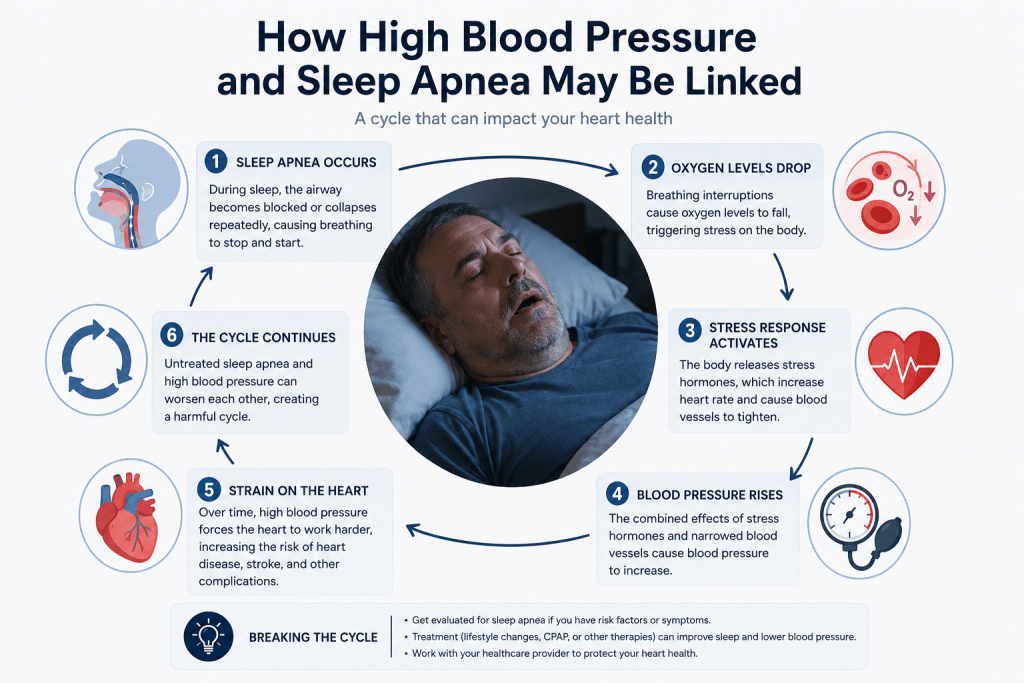
How High Blood Pressure and Sleep Apnea May Be Linked
Sleep apnea is a sleep-related breathing pattern where the airway narrows or briefly closes during the night. These pauses can happen many times an hour, often without the person fully waking up. Each pause can briefly stress the body.
Research groups have observed that sleep apnea and high blood pressure often appear together, which is why understanding the nighttime side matters. When breathing keeps stopping and starting, the body works harder through the night instead of fully resting. Over time, that pattern may show up in your daytime wellness.
This article is not here to diagnose anything or to make medical claims. It is here to help you notice patterns so you can get clear answers. If any of the signs below sound familiar, a sleep telemedicine visit can help you sort it out. You can also review the basics in our overview of what sleep apnea is.
CHECK YOUR SLEEP SYMPTOMS: TAKE THE 2 MINUTE QUIZ
TAKE THE QUIZ
Nighttime Sign 1: Loud, Ongoing Snoring
Snoring is so common that it is easy to brush off. But loud, regular snoring, especially the kind that fills the room night after night, can be one of the most noticeable signs of a breathing issue during sleep.
Snoring happens when air struggles to move freely through a narrowed airway, which is exactly the kind of pattern linked to sleep apnea. Not everyone who snores has sleep apnea, and not everyone with sleep apnea snores. Still, heavy snoring is worth paying attention to.
A bed partner is often the first to notice. If your snoring has gotten louder over the years, or if it comes with pauses and gasps, that is a clue worth following. Our guide on how to stop snoring shares helpful background and habits.
Nighttime Sign 2: Gasping or Choking Awake
Waking up with a gasp or a choking feeling can be alarming. It often happens when the airway briefly closes and the body jolts itself awake to restart normal breathing. You may sit up suddenly, feel short of breath, or struggle for a moment before settling back down.
Repeated gasping or choking during the night is one of the clearer signs that breathing may be interrupted in sleep. Some people remember these moments. Others sleep right through them and only feel the effects the next day, like tiredness or a foggy head.
If this sounds familiar, our article on why you wake up gasping for air explains the experience in plain terms. It is a sign worth bringing to a sleep physician.
Nighttime Sign 3: Waking With a Racing Heart
Some people wake in the night with a pounding or racing heart and no clear reason. They may also feel anxious or sweaty for a few minutes before calming down. While many things can cause this, broken nighttime breathing is one possible piece of the puzzle.
A racing heart that wakes you from sleep can be a signal that your body is under stress at night, which ties into the wider heart and blood pressure picture. When breathing pauses, the body can react with a brief surge that speeds the heart. Doing this many times a night is hard work for the body.
Our article on why you wake up with your heart racing explores possible reasons. Because the heart is involved, you may also want to read about how sleep apnea can affect the heart.
Nighttime Sign 4: Restless, Broken Sleep
The fourth sign is sleep that never feels solid. You toss and turn, wake up several times, and maybe make repeated trips to the bathroom. In the morning, you feel like you barely slept, even after a full night in bed.
Sleep that keeps breaking apart through the night can leave the body without the deep, steady rest it needs to recharge. Frequent waking is one way the body responds to interrupted breathing, though many other things can cause restless nights too.
If you often wake up worn out, our article on why you wake up tired can help you think through the possibilities. The goal is to notice the pattern, not to jump to conclusions.
Why These Signs Matter for Your Wellness
On their own, any one of these signs might mean little. Together, they paint a picture worth understanding. The link between high blood pressure and sleep apnea is one reason physicians often ask about sleep when they review heart wellness.
Getting clear answers is empowering, because once you understand your sleep, you can take informed steps with your care team. This is not about fear. It is about knowing what is happening at night so nothing important slips by unnoticed.
For a deeper look at the connection, our article on whether sleep apnea can cause high blood pressure lays it out clearly. You can also explore the broader topic in our piece on sleep and heart disease.
According to the National Heart, Lung, and Blood Institute, healthy sleep supports many body systems, including the heart. Protecting your rest is a smart part of any wellness plan.
Healthy Habits That Support Better Sleep
Below are simple, wellness-based habits many people find helpful. None of these are treatments or cures. They are everyday steps you can try while you also seek clear answers about your sleep.
Keep a steady schedule. A consistent bedtime and wake time help your body settle into a rhythm.
Mind your sleep position. Some people breathe more easily on their side than on their back.
Build a calm wind-down. Reading or stretching before bed can help you drift off more easily.
Limit alcohol near bedtime. It can relax the airway and disturb rest for many people.
Stay active during the day. Light, regular movement supports both rest and overall wellness.
Keep a healthy routine. Steady habits around food, stress, and sleep all support your body together.
For a full plan, our overview of the signs of sleep apnea helps you see the bigger list of clues. The Centers for Disease Control and Prevention also shares plain-language guidance on healthy sleep habits.
Watch: What happens to your heart without sleep? SLIIIP.COM
When to Talk With a Sleep Physician
If several of these nighttime signs sound familiar, especially alongside a blood pressure concern, it may be time to get a professional look. You do not have to guess or worry on your own.
A sleep evaluation can help you understand whether sleep apnea is part of your nighttime and heart wellness picture. Dr. Avinesh Bhar and the SLIIIP team can review your sleep history, talk through your symptoms, and arrange a home sleep test if needed.
The process is built around convenience. You can meet a board-certified physician through a virtual visit, and a home sleep test can be shipped right to your door. There is no need to spend a night in a lab or rearrange your week. Getting answers is a step toward feeling more in control of your wellness.
At Sliiip, we accept the following insurances:

SLIIIP’s board-certified sleep physicians can do sleep evaluations for sleep apnea. Virtual consultations in all 50 states. Home sleep tests shipped to your door.
Frequently Asked Questions
- Is high blood pressure linked to sleep apnea?
Research groups have observed that the two often appear together. That is one reason physicians may ask about your sleep during a heart wellness review. - What are the main nighttime signs of sleep apnea?
Common signs include loud ongoing snoring, gasping or choking awake, waking with a racing heart, and restless, broken sleep. - Does everyone who snores have sleep apnea?
No. Many people snore without having sleep apnea, and some people with sleep apnea do not snore much. Loud, regular snoring is still worth noting. - Why do I wake up gasping for air?
This can happen when the airway briefly closes and the body jolts awake to restart normal breathing. It is a sign worth discussing with a physician. - Can sleep apnea make my heart race at night?
Breathing pauses can trigger a brief surge that speeds the heart. A racing heart that wakes you is worth bringing to a sleep physician. - Why do I wake up so many times a night?
Frequent waking can be one way the body responds to interrupted breathing, though many other things can cause restless nights too. - Can a partner help spot these signs?
Yes. A bed partner often notices snoring, gasping, or pauses in breathing that the sleeper does not feel. - Does sleep affect blood pressure?
Healthy sleep supports many body systems, including the heart. Protecting your rest is a helpful part of overall wellness. - What is a home sleep test?
It is a sleep study you can do in your own bed. The device is shipped to you, and the results help a physician understand your nights. - Do I have to visit a lab for a sleep evaluation?
No. SLIIIP offers virtual consultations in all 50 states, and home sleep tests can be shipped to your door. - Can my sleep position affect breathing at night?
Some people breathe more easily on their side than on their back. Small changes in position may help comfort for some. - Does alcohol affect sleep apnea signs?
Alcohol near bedtime can relax the airway and disturb rest, which may make nighttime breathing patterns more noticeable. - How much sleep do adults need?
Most adults benefit from at least seven hours of sleep each night to support overall health and wellness. - Should I worry if I have just one of these signs?
On its own, one sign may mean little. Several together are more worth understanding through a professional evaluation. - Can morning tiredness be related to nighttime breathing?
Yes. Broken sleep can leave you feeling unrested even after a full night, which is a common daytime effect. - Is sleep apnea common?
It is more common than many people think, and many cases go unnoticed because the signs happen during sleep. - Can better habits help my sleep?
Steady sleep times, side sleeping, light activity, and limiting alcohol near bedtime can support rest, alongside a professional evaluation. - Why should I check my sleep if my blood pressure is managed?
Understanding your nights gives your care team a fuller picture, so nothing important about your wellness slips by unnoticed. - What happens during a sleep evaluation?
A physician reviews your sleep history and symptoms and may arrange a home sleep test to better understand your nighttime breathing. - How do I get started with SLIIIP?
You can schedule a virtual sleep evaluation online, and a board-certified physician will guide you, including arranging a home sleep test if needed.
Take the Next Step Toward Better Rest
Your nights hold useful clues about your overall wellness. Paying attention to them is a smart, simple first step. You do not have to figure it out alone.
SLIIIP’s board-certified sleep physicians can do sleep evaluations for sleep apnea. Virtual consultations in all 50 states. Home sleep tests shipped to your door.
Latest posts
-
Why Can’t I Wake Up Even After Getting Enough Sleep?
Last updated: October 2, 2026. Medically reviewed by Dr. Avinesh Bhar, Board-Certified Sleep Physician, SLIIIP.com. If you can’t wake up after enough sleep, the cause is usually not the number…
-
Why Does My Heart Rate Drop So Low While I Sleep?
Last updated: October 2, 2026. Medically reviewed by Dr. Avinesh Bhar, Board-Certified Sleep Physician, SLIIIP.com. Your heart rate drops low while sleeping mainly because your body needs less work from…
-
Why Are My Naps Never Refreshing?
Last updated: October 2, 2026. Medically reviewed by Dr. Avinesh Bhar, Board-Certified Sleep Physician, SLIIIP.com. Naps that leave you groggy usually come down to how long you sleep, when you…
Get updates
Spam-free subscription, we guarantee. This is just a friendly ping when new content is out.

