👉 Register for Free. How to Diagnose Sleep Apnea Faster in Primary Care – FREE Webinar by Dr. Audrey Wells. – Friday, April 24 at 12 PM ET

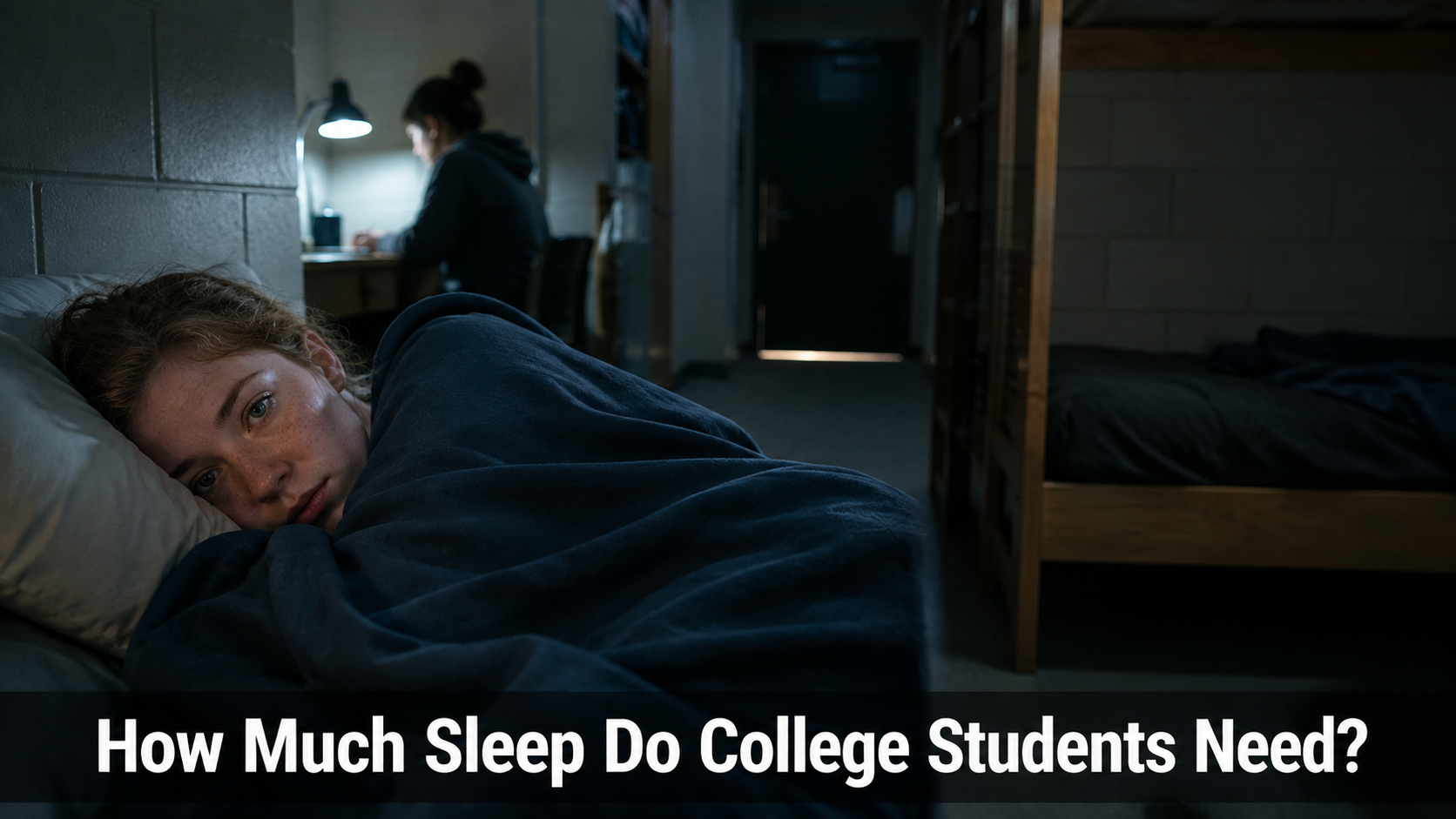
How Much Sleep Do College Students Need?
The question how much sleep do college students need has a clear answer, and Dr. Avinesh Bhar, Board-Certified Sleep Physician at SLIIIP.com, puts it at seven to nine hours a night for nearly every undergraduate. The gap between that number and what students actually get is one of the widest in any adult age group. Survey after survey finds that a large share of undergraduates sleep closer to six hours on weeknights, then try to repay the difference on Saturday and Sunday.
That pattern is worth understanding on its own terms. This is not really a story about laziness or poor discipline. College combines a biological shift in the body clock with a schedule that fights against it, and the result is a predictable shortfall that follows students across the whole semester. Below is the target range, the reasons the campus environment makes it hard to hit, what chronic short sleep tends to cost, and how to rebuild a schedule that holds up past week three.
SLIIIP’s board-certified sleep physicians can do sleep evaluations for sleep apnea. Virtual consultations in all 50 states. Home sleep tests shipped to your door.

How Much Sleep Do College Students Need Each Night?
Most undergraduates are eighteen or older, which places them in the adult category. The Centers for Disease Control and Prevention sets seven or more hours per night as the guidance for adults, and sleep physicians generally describe the healthy window as seven to nine hours.
A few details change how that range applies on a campus:
- Students aged seventeen and eighteen who started early still sit closer to the teen range of eight to ten hours.
- Student athletes in heavy training often function better at the upper end, since physical recovery happens largely during sleep.
- Anyone carrying a deficit from previous weeks should aim high in the range rather than at the floor.
There is also a difference between time in bed and time asleep. If eight hours is the goal, plan for roughly eight and a half hours in bed. The extra thirty minutes absorbs the time it takes to fall asleep, which for most people runs between ten and twenty minutes.
A useful test is how you feel on a free morning. If you wake without an alarm after seven or eight hours and feel reasonably clear, your total is probably close to right. If you sleep ten or eleven hours whenever you get the chance, you are likely running a deficit during the week.
CHECK YOUR SLEEP SYMPTOMS: TAKE THE 2 MINUTE QUIZ
TAKE THE QUIZ
Why the College Schedule Works Against the Body Clock
Two forces push in opposite directions during these years, and understanding both makes the shortfall easier to fix.
The first is biological. Late adolescence and early adulthood bring a natural delay in the body clock. Sleepiness arrives later in the evening and the body wants to wake later in the morning. This shift is well documented and it typically starts reversing in the mid twenties. A nineteen year old who cannot fall asleep at 10:00 p.m. is usually not doing anything wrong.
The second is structural. Class schedules, early labs, part-time work, and campus social life are all built around clock time rather than body time. A student whose body wants to sleep from 1:00 a.m. to 9:00 a.m. but who has an 8:00 a.m. lecture loses an hour or more every single weekday.
Weekend catch-up sleep then shifts the clock even later, which makes Monday harder than the Monday before. Researchers call this mismatch social jet lag, and it produces something close to the feeling of flying across time zones every week without leaving campus.
Dorm environments add friction on top of that. Shared rooms, hallway noise, roommates on different schedules, and light from screens or windows all make it harder to fall asleep and stay asleep. Our guide on how to fix your sleep schedule covers the practical side of resetting after the pattern has drifted.
What Chronic Short Sleep Tends to Cost
Occasional short nights are part of life. A sustained pattern is different, and the effects show up in areas students care about.
Learning and grades. Sleep is associated with consolidating what you studied during the day. Running six hours a night across a semester means every study session is being stored under worse conditions than it could be.
Mood and stress tolerance. Short sleep and anxiety tend to feed each other. Less sleep raises emotional reactivity, and higher stress makes falling asleep harder. Our article on anxiety, insomnia, and sleep apnea covers how these overlap.
Physical health. Insufficient sleep is associated with weakened immune response, which is part of why illness spreads quickly through residence halls, and with changes in appetite regulation.
Safety. Drowsy driving is a real risk for students commuting home or driving late after work or study sessions.
The National Heart, Lung, and Blood Institute describes sleep deficiency as covering both too little sleep and sleep that is poor in quality, which matters here. A student who spends eight hours in bed but wakes repeatedly is still running a deficit.
Building a Sleep Schedule That Survives the Semester
Ambitious plans collapse. Small, boring ones tend to hold. Work through these in order.
Set a consistent wake time first. Pick the wake time your earliest class demands and keep it within about an hour on weekends. Sleeping until 1:00 p.m. Sunday tends to make Monday much harder.
Move your bedtime in small steps. If you currently fall asleep at 2:00 a.m. and want midnight, shift by fifteen to twenty minutes every few nights. Trying to jump two hours in one evening usually produces one long night of staring at the ceiling.
Get light early. Daylight within the first hour of waking is one of the stronger signals for pulling the body clock earlier. Walking to class counts.
Cut caffeine after early afternoon. Caffeine lingers far longer than most people expect. A 5:00 p.m. energy drink can still be affecting sleep at midnight.
Protect the last thirty minutes. Close the laptop, dim the lights, and give your mind a chance to slow down before you expect it to shut off.
Deal with the room. An eye mask, earplugs, and a fan for steady background sound solve a large share of dorm sleep complaints for very little money.
For a fuller framework, our sleep routine guide walks through building the habit stack that supports all of this. If your body clock itself feels inverted rather than simply late, this piece on fixing your circadian rhythm goes deeper.
One important note: if you take any prescribed sleep aid or stimulant medication, do not change the dose or timing on your own to adjust your schedule. Speak with the prescribing clinician first.
Watch: Sleep Disorder Treatment Success Story. CPAP Story! Patient is happy with Sleep Apnea Treatment.
When It Is More Than a Busy Schedule
Some students follow every recommendation, protect eight hours, and still wake up exhausted. That combination deserves attention rather than more effort.
Dr. Avinesh Bhar notes that young adults often assume constant tiredness is simply what college feels like, which can delay recognition of an underlying sleep condition by years. Obstructive sleep apnea is associated with daytime sleepiness, difficulty concentrating, morning headaches, and unrefreshing sleep. It is less common in this age group than in middle age, but it is not rare, particularly with loud snoring, witnessed pauses in breathing, or nasal obstruction.
Warning signs worth raising with a physician include:
- Loud snoring or gasping reported by a roommate
- Waking with a dry mouth or headache most mornings
- Falling asleep in class despite adequate time in bed
- Sleepiness that does not improve after a full week of good sleep
Persistent difficulty falling or staying asleep is a separate track. If that has continued for months, this guide on telling insomnia from something else is a reasonable place to start.
None of this is a diagnosis, and it does not replace an evaluation by a clinician familiar with your history. Most campus health centers can make a referral, and virtual consultations make it possible to keep the same physician across semesters and summer breaks.
At Sliiip, we accept the following insurances:

SLIIIP’s board-certified sleep physicians can do sleep evaluations for sleep apnea. Virtual consultations in all 50 states. Home sleep tests shipped to your door.
Frequently Asked Questions
How much sleep do college students need per night?
Seven to nine hours is the recommended range for adults, including nearly all undergraduates.
Is six hours of sleep enough for a college student?
Six hours falls below the recommended range and the shortfall tends to accumulate across the week.
Do college students really need eight hours?
Eight hours sits in the middle of the recommended range and works well for most students.
Why do college students sleep so little?
A natural delay in the body clock during these years collides with early classes, work, and social schedules.
Can I catch up on sleep during the weekend?
Weekend recovery helps somewhat, but large shifts in wake time make the following week harder.
What is social jet lag?
It describes the mismatch between weekday and weekend sleep timing, which feels similar to crossing time zones.
How much sleep do college students need before a big test?
The same seven to nine hours applies, and a consistent week matters more than one long night.
Does napping count toward my daily total?
Naps add to your total, though they work best as a supplement rather than a replacement for nighttime sleep.
How long should a student nap be?
About twenty minutes generally lifts alertness without leaving you groggy.
Does caffeine affect how much sleep I need?
Caffeine does not reduce your need for sleep, it only delays the feeling of sleepiness.
Is it normal to feel tired all the time in college?
Tiredness is common, but constant exhaustion despite adequate sleep is worth discussing with a clinician.
How does poor sleep affect grades?
Sleep is associated with retaining recently learned material, so short sleep tends to weaken recall.
Can exercise help me sleep better at school?
Regular daytime activity is associated with falling asleep more easily for many people.
Should I study in bed?
Using the bed mainly for sleep helps the association between the bed and falling asleep stay strong.
How do I sleep with a noisy roommate?
Earplugs, a fan for steady background sound, and an agreed quiet hour address most shared room issues.
Do student athletes need more sleep?
Athletes in heavy training often do better at the upper end of the range because recovery happens during sleep.
How much sleep do college students need if they work night shifts?
The total requirement stays the same, though shift work makes protecting a consistent block much harder.
Does alcohol help me sleep?
Alcohol can shorten the time it takes to fall asleep while making the rest of the night more fragmented.
How long does it take to fix a broken sleep schedule?
Shifting in fifteen to twenty minute steps, most students reset within one to two weeks.
When should a student see a sleep physician?
If exhaustion, snoring, or trouble sleeping continues for months despite a steady schedule, an evaluation makes sense.
SLIIIP’s board-certified sleep physicians can do sleep evaluations for sleep apnea. Virtual consultations in all 50 states. Home sleep tests shipped to your door.
Latest posts
-
Why Are My Naps Never Refreshing?
Last updated: October 2, 2026. Medically reviewed by Dr. Avinesh Bhar, Board-Certified Sleep Physician, SLIIIP.com. Naps that leave you groggy usually come down to how long you sleep, when you…
-
Is Sleeping Too Much a Sleep Disorder?
Last updated: October 2, 2026. Medically reviewed by Dr. Avinesh Bhar, Board-Certified Sleep Physician, SLIIIP.com. Sleeping too much is not always a sleep disorder, but it can be a sign…
-
Why Does My Insomnia Get Worse After Stopping Sleep Medication?
Last updated: October 2, 2026. Medically reviewed by Dr. Avinesh Bhar, Board-Certified Sleep Physician, SLIIIP.com. Insomnia can get worse after stopping sleep medication for three main reasons. They are rebound…
Get updates
Spam-free subscription, we guarantee. This is just a friendly ping when new content is out.

