👉 Register for Free. How to Diagnose Sleep Apnea Faster in Primary Care – FREE Webinar by Dr. Audrey Wells. – Friday, April 24 at 12 PM ET

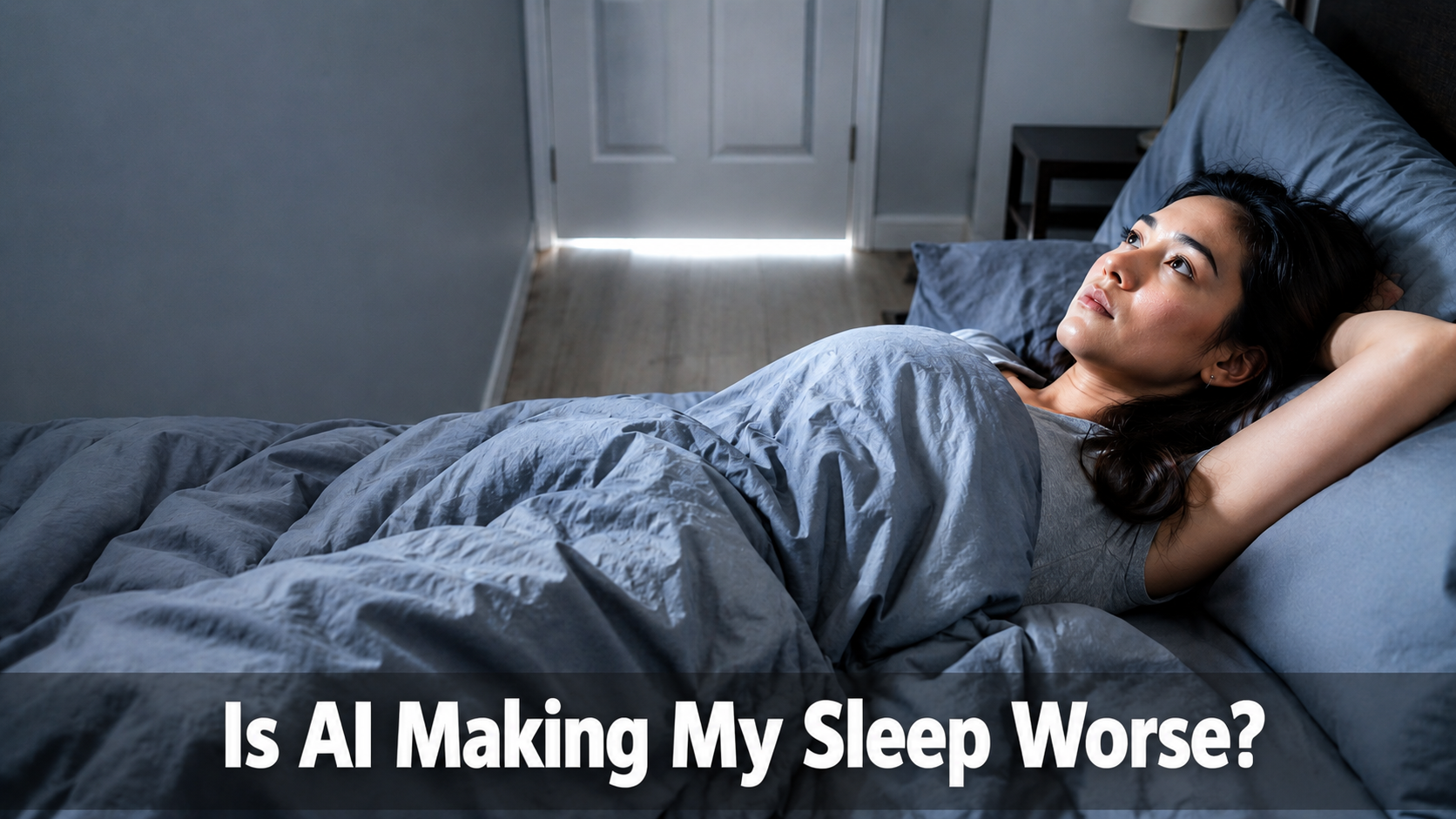
Is AI Making My Sleep Worse? A Sleep Physician on AI and Sleep
The honest answer about AI and sleep is that the tools themselves are neutral, but the way people use them at night is not, says Dr. Avinesh Bhar, Board-Certified Sleep Physician at SLIIIP.com, who now hears this question from patients almost every week. Chatbots, algorithmic feeds, and smart trackers have moved into the hour before bed for millions of people. The concern is rarely the technology itself. It is what the technology replaces, which is usually winding down.
SLIIIP’s board-certified sleep physicians can do sleep evaluations for sleep apnea. Virtual consultations in all 50 states. Home sleep tests shipped to your door.
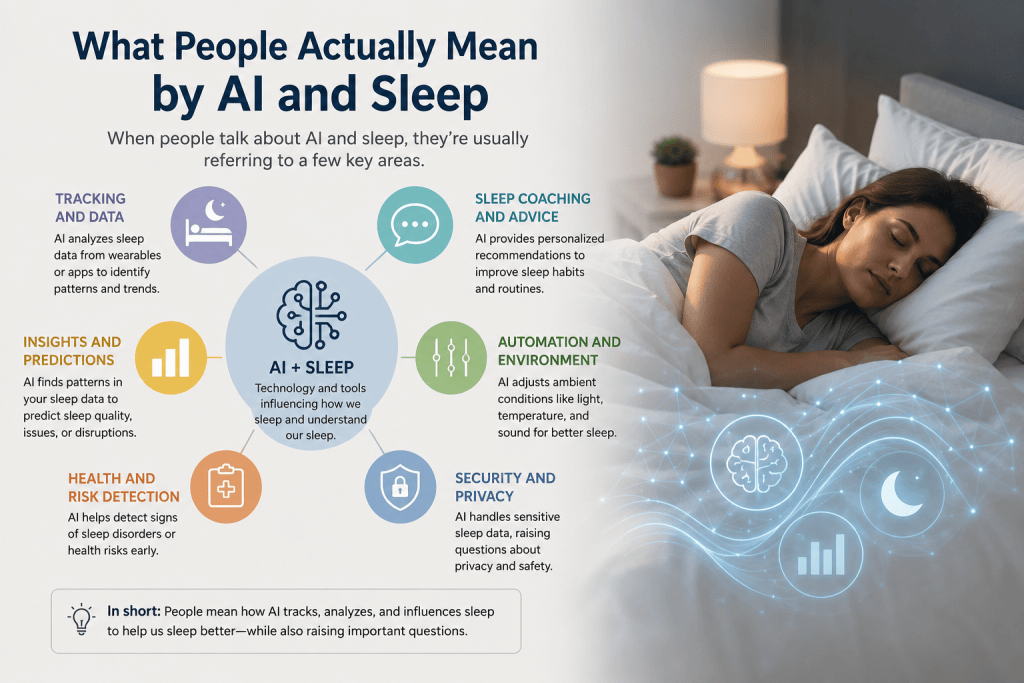
What People Actually Mean by AI and Sleep
When someone asks whether AI is hurting their rest, they are usually pointing at one of four habits.
The first is late night conversation with a chatbot, often about work, or worry, or something they cannot stop thinking about. The second is a recommendation feed that keeps serving the next video. The third is a wearable or app that scores their night and gives them something new to worry about. The fourth is using AI to look up symptoms at two in the morning.
Each of these affects sleep through mechanisms sleep medicine already understands well: light exposure, cognitive arousal, delayed bedtime, and anxiety. None of them require a new theory.
CHECK YOUR SLEEP SYMPTOMS: TAKE THE 2 MINUTE QUIZ
TAKE THE QUIZ
Cognitive Arousal Is the Main Problem
Falling asleep requires the brain to disengage. Anything that keeps it actively problem solving delays that process.
A chatbot conversation is more engaging than passive television because it responds to you. Active mental engagement in the final hour before bed raises alertness in a way that passive activity generally does not. People report the same effect from a late work email or an argument. The medium changes; the mechanism does not.
If your mind will not switch off at bedtime, our article on why you cannot shut your brain off at night covers what usually helps.
Light matters too, though less than most headlines suggest. Screen brightness at close range does suppress melatonin somewhat, but for most adults the content and the timing matter more than the color temperature of the display.
Feeds Built to Keep You Watching
Recommendation systems are optimized for time spent. That is their purpose. A feed that never ends removes the natural stopping point that used to exist when a show finished or a chapter ended.
This is the clearest link between AI and sleep loss, and it is not subtle. Bedtime delay is the mechanism. Someone who intended to sleep at eleven finds themselves still watching at one, and the following morning starts at the same time it always does. The result is short sleep, not poor sleep, and short sleep is what most people are actually experiencing.
The Centers for Disease Control and Prevention notes that adults need at least seven hours of sleep on a regular basis for good health. Delaying bedtime by ninety minutes on a work night takes most people below that line.
Sleep Trackers, Scores, and Orthosomnia
Wearables now use machine learning to estimate sleep stages, readiness, and recovery. These estimates are useful for trends across weeks and unreliable for any single night.
The problem clinicians see is not inaccuracy. It is a preoccupation. Some people become so focused on improving their sleep score that the monitoring itself creates the anxiety that keeps them awake. This pattern has been described as orthosomnia, and it is one of the more common ways technology can worsen sleep in someone who was sleeping reasonably well before.
Our guide to the wearable sleep tracker explains what these devices measure and where the estimates break down.
A practical rule: look at your data once a week, not every morning. If checking your score changes your mood before breakfast, stop checking it.
Searching Symptoms at Two in the Morning
AI assistants make symptom searching faster and more conversational than a search engine ever did. That is genuinely useful during the day. At three in the morning, when you have already woken up and feel unsettled, it tends to escalate worry rather than settle it.
Health anxiety and insomnia reinforce each other, and any tool that feeds detailed possibilities into a worried mind at night will usually make returning to sleep harder. If night waking already comes with a racing heart or dread, our page on why you feel anxious at night is a better starting point than a midnight search.
Where These Tools Genuinely Help
The AI and sleep conversation is not one sided. Software has an established place in sleep care.
Cognitive behavioral therapy for insomnia is the first line approach recommended for chronic insomnia, and structured digital programs deliver it effectively for many people. Our overview of cognitive behavioral therapy for sleep disorders explains the method, and our page on digital therapeutics covers how software based treatment fits into clinical care.
Scheduling tools, wind down reminders, and light exposure guidance all support consistency, which is the single most valuable habit in sleep health. The distinction is whether the tool helps you build a routine or replaces the routine with more screen time.
When the Technology Is Not the Cause
According to Dr. Avinesh Bhar, one of the risks of blaming AI and sleep problems on each other is that people spend months adjusting habits while an underlying issue goes unexamined.
Watch for signs that point elsewhere:
- Loud snoring, gasping, or breathing pauses noticed by a partner
- Waking with a dry mouth, sore throat, or morning headache
- Daytime sleepiness that persists even after nights when you went to bed early
- Falling asleep unintentionally during meetings, reading, or driving
- Fatigue that has lasted months regardless of screen habits
These patterns are associated with breathing that becomes unstable during sleep, and they warrant a clinical evaluation rather than a change in phone settings. The National Heart, Lung, and Blood Institute maintains a plain language overview of sleep deprivation and deficiency worth reading if symptoms have been going on for a while.
A sleep evaluation is one part of a broader clinical assessment. Concerns involving the heart, mood, or an existing diagnosis should be raised with the physician managing that care as well. Never change or stop prescribed therapy, including CPAP settings, on the basis of anything an AI tool tells you.
Practical Boundaries That Work
None of this requires deleting anything. It requires a stopping point.
Pick a hard cutoff. Sixty minutes before your target bedtime, close anything conversational or algorithmic. The cutoff matters more than which app it applies to.
Charge devices outside the bedroom. This removes the two in the morning search entirely.
Use a timer, not willpower. Feeds are engineered to override intention. An external limit works better than a decision.
Anchor your wake time. A steady morning is more powerful than a steady bedtime. Our guide to fixing your sleep schedule walks through it.
Replace, do not just remove. Reading, stretching, or a shower gives the hour something to be. An empty hour usually gets filled by the phone again.
Review tracker data weekly. Trends are informative. Single nights are noise.
Watch: Sleep apnea sounds
When to Talk to a Sleep Physician
Consider an evaluation if poor sleep has lasted more than a month, if a partner has observed breathing pauses, if you are sleepy during the day despite adequate time in bed, or if fatigue is affecting your safety at work or on the road.
At Sliiip, we accept the following insurances:

SLIIIP’s board-certified sleep physicians can do sleep evaluations for sleep apnea. Virtual consultations in all 50 states. Home sleep tests shipped to your door.
Frequently Asked Questions
Is AI making my sleep worse?
Not directly. The habits built around these tools, including later bedtimes and more mental engagement at night, are what affect sleep.
Are chatbots worse for sleep than television?
They may be more activating because they require a response from you. Passive viewing is generally less arousing than active conversation.
Does blue light from screens really matter?
It suppresses melatonin somewhat, but for most adults the timing and the content are bigger factors than the light itself.
What is orthosomnia?
It describes anxiety driven by preoccupation with sleep tracking data, where the monitoring itself begins to interfere with sleep.
Are sleep trackers accurate?
They are reasonable for weekly trends and unreliable for individual nights. They estimate stages from movement and heart rate rather than measuring brain activity.
Should I stop using my sleep tracker?
Only if checking it causes anxiety. Otherwise, reviewing data once a week rather than every morning usually solves the problem.
How long before bed should I stop using screens?
Sixty minutes is a practical target for most adults. Consistency matters more than the exact number.
Can AI help me sleep better?
Structured digital programs that deliver cognitive behavioral therapy for insomnia have a real evidence base. Passive scrolling does not.
Why do I keep scrolling past my bedtime?
Recommendation feeds are designed to remove natural stopping points. External limits work better than intention alone.
Is it bad to ask AI about symptoms at night?
It tends to increase worry at a time when you need less stimulation. Daytime is a better moment for that question.
Does listening to AI generated sleep sounds help?
Some people find a steady background sound helpful. The risk is keeping a bright screen nearby to control it.
Can I use AI instead of seeing a sleep doctor?
No. These tools cannot examine you, order testing, or interpret results, and they should never guide changes to prescribed therapy.
Why am I tired even when I go to bed early?
Time in bed and quality of sleep are different things. Persistent tiredness despite adequate hours warrants an evaluation.
Do phone night modes help?
They reduce blue light modestly. They do not reduce mental engagement, which is usually the larger factor.
Is one late night on my phone harmful?
No. A single short night is normal. Repeated late nights across weeks are what accumulate.
Should I keep my phone out of the bedroom?
For most people with disrupted sleep, yes. It removes both the pre-sleep scroll and the middle of the night search.
Can technology cause insomnia?
It can contribute to the behaviors that maintain insomnia. Chronic insomnia usually involves several factors and responds well to structured treatment.
Does my tracker detect sleep apnea?
Consumer devices may flag possible signals, but they do not diagnose. A clinical test is required for that.
What if my sleep is bad even without screens at night?
That is a meaningful clue that something else is going on and a good reason to speak with a sleep physician.
How quickly can better habits improve sleep?
Many people notice improvement within two to three weeks of a consistent wake time and a firm evening cutoff.
Ready to Get a Real Answer
If your sleep has been poor for weeks and adjusting your evening habits has not changed it, testing can tell you what is actually happening overnight.
SLIIIP’s board-certified sleep physicians can do sleep evaluations for sleep apnea. Virtual consultations in all 50 states. Home sleep tests shipped to your door.
Latest posts
-
Evie Ring Sleep Tracking Review: Does It Work?
Last updated: September 14, 2026. Medically reviewed by Dr. Avinesh Bhar, Board-Certified Sleep Physician, SLIIIP.com. The Evie Ring tracks sleep using a finger-based light sensor that estimates heart rate, movement,…
-
Do EEG Sleep Headbands Actually Track Sleep Accurately?
Last updated: September 14, 2026. Medically reviewed by Dr. Avinesh Bhar, Board-Certified Sleep Physician, SLIIIP.com. EEG sleep headbands, like the Dreem headband, use dry electrodes to record brain wave activity,…
-
Circular Ring Sleep Accuracy: What It Gets Right and Wrong
Last updated: September 14, 2026. Medically reviewed by Dr. Avinesh Bhar, Board-Certified Sleep Physician, SLIIIP.com. The Circular Ring estimates sleep stages, heart rate, and recovery using a finger-worn light sensor,…
Get updates
Spam-free subscription, we guarantee. This is just a friendly ping when new content is out.

