👉 Register for Free. How to Diagnose Sleep Apnea Faster in Primary Care – FREE Webinar by Dr. Audrey Wells. – Friday, April 24 at 12 PM ET


Micro-Arousals: The Invisible Sleep Interrupters You Don’t Even Remember
Micro-arousals break up your sleep in ways you rarely notice, and Dr. Avinesh Bhar, Board-Certified Sleep Physician at SLIIIP.com, explains that these brief, hidden wake-ups can leave you feeling tired even after a full night in bed.
When your sleep is quietly interrupted many times a night, you can wake up unrested without ever knowing why.
Most people think of waking up as something you remember. But your brain can stir for just a few seconds, then drift back, without leaving any memory behind.
SLIIIP’s board-certified sleep physicians can do sleep evaluations for sleep apnea. Virtual consultations in all 50 states. Home sleep tests shipped to your door.
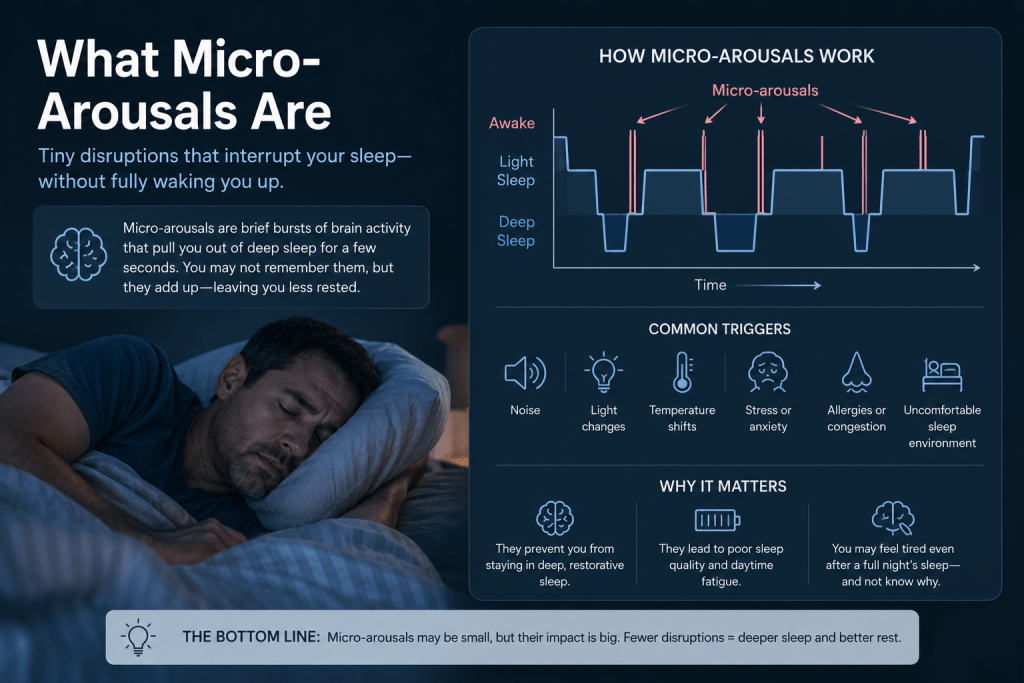
What Micro-Arousals Are
These brief events are very short shifts toward wakefulness during sleep. They often last only a few seconds, just long enough to pull you out of deeper sleep into a lighter stage. Most of the time, you do not wake up fully, and you do not remember them at all.
Micro-arousals are brief interruptions that quietly pull you out of deep sleep without you ever realizing it. A few of these a night are normal for everyone. The concern is when they happen many times an hour, night after night.
The goal of this article is not to diagnose anything. It is to help you understand a hidden pattern so you can take simple steps. If you wake up tired no matter what, a sleep telemedicine visit can help you find out why.
CHECK YOUR SLEEP SYMPTOMS: TAKE THE 2 MINUTE QUIZ
TAKE THE QUIZ
Why You Do Not Remember Them
This is the part that surprises people most. You can be interrupted dozens of times a night and have no memory of it in the morning. That is because the event is too brief for your brain to store as a memory.
Your brain can stir and settle so quickly that the interruption never becomes a conscious memory. You simply wake up feeling like you slept poorly, without any clear reason why. This is why these interruptions are often called invisible.
If you regularly feel like your sleep is not refreshing, our article on why you wake up tired can help you think it through. The mismatch between hours in bed and how you feel is a common clue.
How These Interruptions Affect Your Rest
Sleep moves through stages, including lighter stages and deeper, more restoring ones. Deep sleep is when much of your body’s repair happens. Each interruption can knock you out of that deep stage and back into a lighter one.
When deep sleep keeps getting cut short, your body misses out on some of its most important recovery time. Even if you spend enough hours in bed, the quality of that sleep suffers. The result is daytime tiredness, foggy focus, and low energy.
To understand the stages better, our article on core sleep versus deep sleep breaks them down. And if you want to protect your deeper rest, our guide on how to get more deep sleep shares helpful habits.
Common Causes of Micro-Arousals
Many things can trigger these brief wake-ups. Some are simple, like noise, light, or an uncomfortable room. Others relate to the body itself, such as breathing changes during sleep.
One common cause of frequent micro-arousals is a sleep-related breathing pattern like sleep apnea, where the body briefly stirs to restart normal breathing. When breathing pauses, the body wakes just enough to fix it, then settles again. This can happen many times an hour without the person noticing.
If you snore loudly or wake gasping, those can be signs worth checking. Our overview of what sleep apnea is explains the basics, and our article on why you wake up gasping for air covers a related experience. You can also review the common signs of sleep apnea.
Signs That Hidden Interruptions May Be Affecting You
Since you cannot feel these interruptions directly, you have to look at the clues they leave behind. The most common one is waking up tired even after a full night. Others include daytime sleepiness, trouble focusing, and a foggy head.
If you sleep enough hours but still feel drained, hidden interruptions may be part of the picture. This pattern is worth paying attention to, because it often points to something a sleep physician can help you understand.
Our article on why you feel exhausted no matter how much you sleep explores this further. And if brain fog is part of your day, our piece on sleep apnea and brain fog may resonate.
Healthy Habits That May Reduce Sleep Interruptions
Below are simple, wellness-based steps many people find helpful. None of these are treatments or cures. They are everyday habits you can try while you also seek clear answers about your sleep.
Keep your room cool and dark. A comfortable space reduces interruptions from heat or light.
Lower the noise. Earplugs or white noise can block sounds that nudge you awake.
Limit alcohol near bedtime. It can lead to lighter, more broken sleep for many people.
Keep a steady schedule. A consistent bedtime and wake time support deeper, steadier rest.
Watch caffeine timing. Caffeine late in the day can make sleep lighter and easier to interrupt.
Build a calm wind-down. Relaxing before bed helps you settle into deeper stages more easily.
If you keep surfacing through the night, our article on how to stop waking up multiple times at night offers a practical look. And if snoring is part of your nights, our guide on how to stop snoring is a helpful read.
According to the Centers for Disease Control and Prevention, most adults need at least seven hours of sleep each night for good health. But the quality of those hours matters just as much as the number.
Watch: How Does a Home Sleep Test Work? — SLIIIP.COM
When to Talk With a Sleep Physician
If you wake up tired no matter how long you sleep, or if a partner notices snoring or gasping, it may be worth getting a professional look. Hidden interruptions are hard to spot on your own, but a sleep study can reveal them.
A sleep evaluation can uncover these hidden interruptions and breathing patterns that you cannot feel, giving you real answers. Dr. Avinesh Bhar and the SLIIIP team can review your sleep history, talk through your symptoms, and arrange a home sleep test if needed.
The process is built around convenience. You can meet a board-certified physician through a virtual visit, and a home sleep test can be shipped right to your door. There is no need to spend a night in a lab. For more on the value of rest, our guide on reasons for improving the quality of your sleep and the National Heart, Lung, and Blood Institute both offer clear, supportive guidance.
At Sliiip, we accept the following insurances:

SLIIIP’s board-certified sleep physicians can do sleep evaluations for sleep apnea. Virtual consultations in all 50 states. Home sleep tests shipped to your door.
Frequently Asked Questions
- What are micro-arousals?
They are very short shifts toward wakefulness during sleep, often lasting only a few seconds, that pull you out of deep sleep into a lighter stage. - Why do I not remember these wake-ups?
They are too brief for your brain to store as a memory, so you wake up feeling like you slept poorly without knowing why. - Are these brief wake-ups normal?
A few a night is normal for everyone. The concern is when they happen many times an hour, night after night. - How do these interruptions affect my sleep?
Each one can knock you out of deep, restoring sleep into a lighter stage, so even a full night in bed may not feel refreshing. - What causes frequent sleep interruptions?
Causes range from noise, light, and an uncomfortable room to body-related triggers like breathing changes during sleep. - Can sleep apnea cause these interruptions?
Yes. With a sleep-related breathing pattern, the body briefly stirs to restart normal breathing, which can happen many times an hour. - How do I know if hidden interruptions affect me?
The most common clue is waking up tired after a full night. Daytime sleepiness, trouble focusing, and brain fog are others. - Can I feel these interruptions happening?
Usually not. Because they are so brief and unremembered, you have to look at the clues they leave, like morning tiredness. - What sleep stages do these interruptions affect?
They often pull you from deeper, restoring sleep into lighter stages. Our article on core sleep versus deep sleep explains the stages. - What habits can reduce sleep interruptions?
A cool dark room, less noise, limited alcohol near bedtime, a steady schedule, and a calm wind-down can all help. - Does alcohol affect sleep interruptions?
Alcohol near bedtime can lead to lighter, more broken sleep for many people, which may increase nighttime interruptions. - Can a partner help me notice signs?
Yes. A bed partner may notice snoring or gasping that points to a breathing pattern worth checking. - What is a home sleep test?
It is a sleep study you can do in your own bed. The device is shipped to you, and the results help a physician understand your nights. - Do I have to visit a lab for a sleep evaluation?
No. SLIIIP offers virtual consultations in all 50 states, and home sleep tests can be shipped to your door. - Why do I feel tired even after eight hours?
Hidden interruptions can cut deep sleep short, so you may spend enough time in bed and still wake up feeling drained. - Can broken sleep cause brain fog?
Broken, lighter sleep can lead to foggy focus during the day. Our article on sleep apnea and brain fog explores this link. - How much sleep do adults need?
Most adults benefit from at least seven hours each night, though the quality of those hours matters just as much as the number. - Can better sleep habits fully fix this?
Healthy habits may help, but if a breathing pattern is the cause, a professional evaluation gives the clearest path forward. - What happens during a sleep evaluation?
A physician reviews your sleep history and symptoms and, if needed, arranges a home sleep test to reveal hidden interruptions. - How do I get started with SLIIIP?
You can schedule a virtual sleep evaluation online, and a board-certified physician will guide you, including arranging a home sleep test if needed.
Take the Next Step Toward Better Rest
The interruptions you cannot remember can still shape how you feel every day. Understanding them is the first step toward deeper, more refreshing sleep. You do not have to guess on your own.
SLIIIP’s board-certified sleep physicians can do sleep evaluations for sleep apnea. Virtual consultations in all 50 states. Home sleep tests shipped to your door.
Latest posts
-
Why Can’t I Wake Up Even After Getting Enough Sleep?
Last updated: October 2, 2026. Medically reviewed by Dr. Avinesh Bhar, Board-Certified Sleep Physician, SLIIIP.com. If you can’t wake up after enough sleep, the cause is usually not the number…
-
Why Does My Heart Rate Drop So Low While I Sleep?
Last updated: October 2, 2026. Medically reviewed by Dr. Avinesh Bhar, Board-Certified Sleep Physician, SLIIIP.com. Your heart rate drops low while sleeping mainly because your body needs less work from…
-
Why Are My Naps Never Refreshing?
Last updated: October 2, 2026. Medically reviewed by Dr. Avinesh Bhar, Board-Certified Sleep Physician, SLIIIP.com. Naps that leave you groggy usually come down to how long you sleep, when you…
Get updates
Spam-free subscription, we guarantee. This is just a friendly ping when new content is out.

