👉 Register for Free. How to Diagnose Sleep Apnea Faster in Primary Care – FREE Webinar by Dr. Audrey Wells. – Friday, April 24 at 12 PM ET

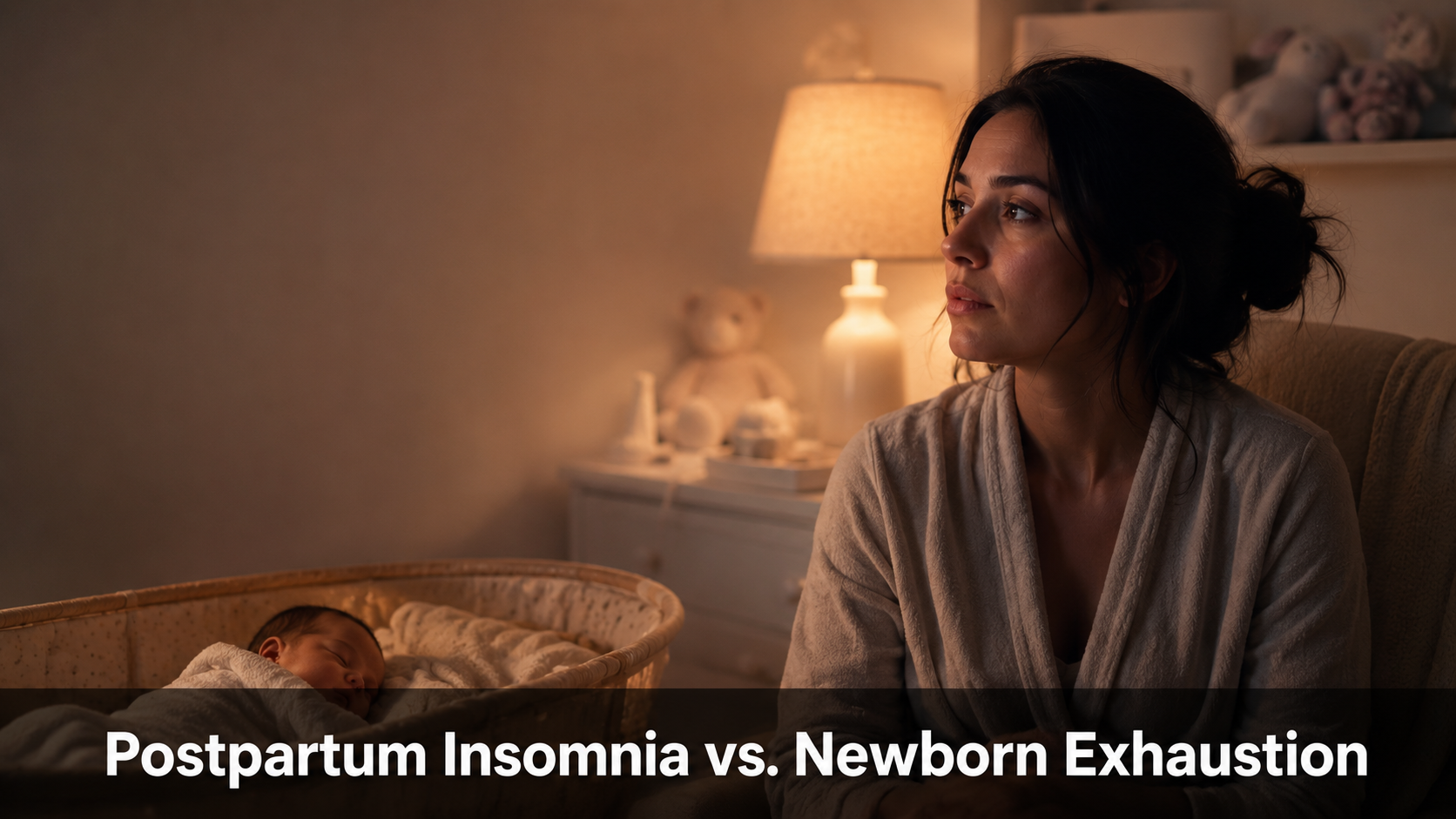
Postpartum Insomnia vs. Newborn Exhaustion: When Is It More Than Just Sleep Deprivation?
Postpartum insomnia can leave new parents wide awake even when the baby is finally sleeping, and Dr. Avinesh Bhar, Board-Certified Sleep Physician at SLIIIP.com, explains that this is different from the normal tiredness that comes with caring for a newborn.
When you cannot fall asleep even though you have the chance to rest, the issue may be more than simple sleep deprivation.
The early weeks with a baby are exhausting for almost everyone. But there is a real difference between being tired because the baby keeps waking you and lying awake when you could be sleeping.
SLIIIP’s board-certified sleep physicians can do sleep evaluations for sleep apnea. Virtual consultations in all 50 states. Home sleep tests shipped to your door.

Newborn Exhaustion: The Normal Kind of Tired
Newborn exhaustion is the deep tiredness that comes from broken nights of feeding, soothing, and diaper changes. Your sleep gets chopped into short pieces because the baby needs you around the clock. This kind of tiredness is hard, but it is expected.
With newborn exhaustion, your body still wants to sleep, and you would drift off easily if the baby gave you the chance. The moment the baby finally settles, you can usually fall asleep fast. The problem is simply not enough hours, not an inability to sleep.
This phase is real and draining, but it tends to ease as the baby starts sleeping longer. Resting whenever you can, even short naps, helps your body cope. If you feel wiped out no matter what, our article on why you feel exhausted no matter how much you sleep may help you sort it out.
CHECK YOUR SLEEP SYMPTOMS: TAKE THE 2 MINUTE QUIZ
TAKE THE QUIZ
Postpartum Insomnia: When Sleep Will Not Come
This kind of insomnia is different. With insomnia, you have the chance to sleep, but your body will not let you. The baby is sleeping, you are tired, and yet you lie there wide awake. Your mind may race, or you may feel restless and tense.
The key sign of postpartum insomnia is being unable to sleep even when you finally have the time to rest. Some people cannot fall asleep at all. Others fall asleep but wake up and cannot drift back off, even though they are exhausted.
This can be frustrating and lonely, especially at night when the house is quiet. You are not doing anything wrong, and you are not alone. Our overview of the types of insomnia explains how insomnia can show up in different ways.
Why Postpartum Insomnia Happens
There are many reasons sleep can feel out of reach after a baby arrives. Big hormone shifts in the weeks after birth can affect sleep for many new parents. A racing mind, worry about the baby, and a body that stays on high alert can all play a role.
A mind that stays switched on, always listening for the baby, can make it hard to relax into sleep even when you have the chance. This protective alertness is natural, but it can get in the way of rest.
If hormones feel like part of your picture, our article on hormonal insomnia offers a clear look. And if your thoughts spin at night, our piece on why you overthink before bed and our guide on how to stop overthinking at night share gentle strategies.
When Is It More Than Just Sleep Deprivation?
This is the question many new parents ask. Most short-term sleep struggles ease with time and support. But there are signs that suggest it may be worth reaching out for help sooner rather than later.
It may be more than sleep deprivation if you cannot sleep even when the baby does, if the trouble lasts for weeks, or if it comes with ongoing worry, sadness, or anxiety. These signs are worth taking seriously, and support is available.
Postpartum changes can affect mood as well as sleep, and the two are closely linked. If low mood or anxiety is part of your experience, please reach out to your healthcare provider. A simple starting point is our postpartum mood screening resource, which can help you decide whether to talk with a professional. There is no shame in asking for help.
According to the Centers for Disease Control and Prevention, healthy sleep supports overall wellbeing. Caring for your sleep is part of caring for yourself and your baby.
Gentle Habits That May Support Better Sleep
Below are simple, wellness-based steps many new parents find helpful. None of these are treatments or cures. They are gentle habits you can try while you also seek support if you need it.
Rest when the baby rests. Even short naps can help your body recover during this season.
Share the night load. If you have a partner or helper, take turns so each person gets a longer stretch.
Keep a calm wind-down. A few quiet minutes, dim light, and slow breathing can help signal rest.
Limit late screens. Bright light and scrolling at night can make it harder to drift off.
Be gentle with yourself. Worrying about not sleeping can keep you awake, so try to ease the pressure.
Ask for help. Friends, family, or a professional can lighten the load so you can rest.
If you want more ideas, our guide on how to fix insomnia naturally shares calming, everyday habits. And our article on sleep solutions for mental health covers the close link between rest and how you feel.
Watch: Sleep Doctors via Telemedicine – SLIIIP.COM
When to Talk With a Sleep Physician
If your sleep does not improve with time and support, or if you cannot sleep even when you have the chance, it may help to talk with a professional. You do not have to push through this alone.
A sleep evaluation can help you understand what is keeping you awake and what gentle steps might help. Dr. Avinesh Bhar and the SLIIIP team offer virtual visits that fit around a busy new-parent schedule. If a sleep-related breathing issue is a concern, a home sleep test can be shipped right to your door.
For mood concerns specifically, your obstetric or primary care provider is also an important partner in your care. Reaching out is a sign of strength, not weakness. For the bigger picture on rest, our article on insomnia or something else and the National Heart, Lung, and Blood Institute both offer clear, supportive guidance.
At Sliiip, we accept the following insurances:

SLIIIP’s board-certified sleep physicians can do sleep evaluations for sleep apnea. Virtual consultations in all 50 states. Home sleep tests shipped to your door.
Frequently Asked Questions
- What is the difference between postpartum insomnia and newborn exhaustion?
Newborn exhaustion is normal tiredness from broken nights of baby care. This kind of insomnia is being unable to sleep even when you have the chance to rest. - How do I know if I have postpartum insomnia?
A key sign is lying awake when the baby is sleeping and you are tired. With insomnia, sleep will not come even when you have the time. - Is it normal to feel this tired after a baby?
Yes. The early weeks are exhausting for almost everyone because sleep gets chopped into short pieces. That part tends to ease over time. - Why can I not sleep even when the baby finally sleeps?
A mind that stays alert for the baby, hormone shifts, and worry can all make it hard to relax into sleep even when you have the chance. - Do hormones affect sleep after birth?
Big hormone shifts in the weeks after birth can affect sleep for many new parents. Our article on hormonal insomnia explains this further. - When is it more than just sleep deprivation?
It may be more if you cannot sleep when the baby does, if it lasts for weeks, or if it comes with ongoing worry, sadness, or anxiety. - Should I be worried about my mood too?
Postpartum changes can affect mood as well as sleep. If low mood or anxiety is part of your experience, please reach out to your healthcare provider. - What gentle habits can help me sleep?
Resting when the baby rests, sharing the night load, keeping a calm wind-down, limiting late screens, and being gentle with yourself can all help. - Why does worrying about sleep keep me awake?
Stress about not sleeping can keep your body alert, which makes rest harder. Easing the pressure on yourself can sometimes help. - Can a partner help with night feedings?
Yes. Taking turns so each person gets a longer stretch of sleep can make a real difference during this season. - How long does this kind of insomnia usually last?
It varies. Many short-term struggles ease with time and support, but if yours lasts for weeks, it is worth reaching out for help. - Is it okay to ask for help?
Absolutely. Reaching out to friends, family, or a professional is a sign of strength, and support can lighten the load so you can rest. - What is a home sleep test?
It is a sleep study you can do in your own bed. The device is shipped to you, and the results help a physician understand your nights. - Do I have to visit a lab for a sleep evaluation?
No. SLIIIP offers virtual consultations in all 50 states, and home sleep tests can be shipped to your door. - Can naps really help?
Yes. Even short naps when the baby rests can help your body recover during the early weeks. - Will my sleep go back to normal?
For many people, sleep improves as the baby settles into longer stretches. If it does not, support and a professional look can help. - Who should I talk to about postpartum mood?
Your obstetric or primary care provider is an important partner. A simple mood screening resource can help you decide to reach out. - Does screen time at night make insomnia worse?
Bright light and scrolling at night can make it harder to drift off, so limiting late screens may help some people. - What happens during a sleep evaluation?
A physician reviews your sleep history and symptoms and, if needed, arranges a home sleep test to better understand your nights. - How do I get started with SLIIIP?
You can schedule a virtual sleep evaluation online that fits a new-parent schedule, and a board-certified physician will guide you from there.
You Deserve Rest Too
Caring for a newborn is one of the hardest jobs there is, and your rest matters just as much as your baby’s. If sleep will not come even when you have the chance, support is available and you do not have to face it alone.
SLIIIP’s board-certified sleep physicians can do sleep evaluations for sleep apnea. Virtual consultations in all 50 states. Home sleep tests shipped to your door.
Latest posts
-
Why Can’t I Wake Up Even After Getting Enough Sleep?
Last updated: October 2, 2026. Medically reviewed by Dr. Avinesh Bhar, Board-Certified Sleep Physician, SLIIIP.com. If you can’t wake up after enough sleep, the cause is usually not the number…
-
Why Does My Heart Rate Drop So Low While I Sleep?
Last updated: October 2, 2026. Medically reviewed by Dr. Avinesh Bhar, Board-Certified Sleep Physician, SLIIIP.com. Your heart rate drops low while sleeping mainly because your body needs less work from…
-
Why Are My Naps Never Refreshing?
Last updated: October 2, 2026. Medically reviewed by Dr. Avinesh Bhar, Board-Certified Sleep Physician, SLIIIP.com. Naps that leave you groggy usually come down to how long you sleep, when you…
Get updates
Spam-free subscription, we guarantee. This is just a friendly ping when new content is out.

