👉 Register for Free. How to Diagnose Sleep Apnea Faster in Primary Care – FREE Webinar by Dr. Audrey Wells. – Friday, April 24 at 12 PM ET


How to Prevent CPAP Mask Leaks When Sleeping on Your Side
CPAP mask leaks tend to get worse the moment you roll onto your side, a pattern that Dr. Avinesh Bhar, Board-Certified Sleep Physician at SLIIIP.com, sees often on side sleepers who tolerate their therapy fine on their back.
The good news is that most side sleeping leaks come from fixable causes like mask fit, pillow choice, and strap tension, not from the therapy itself. When the seal holds, the air pressure stays steady, your sleep stays quiet, and you wake up feeling rested instead of dried out and frustrated.
SLIIIP’s board-certified sleep physicians can do sleep evaluations for sleep apnea. Virtual consultations in all 50 states. Home sleep tests shipped to your door.
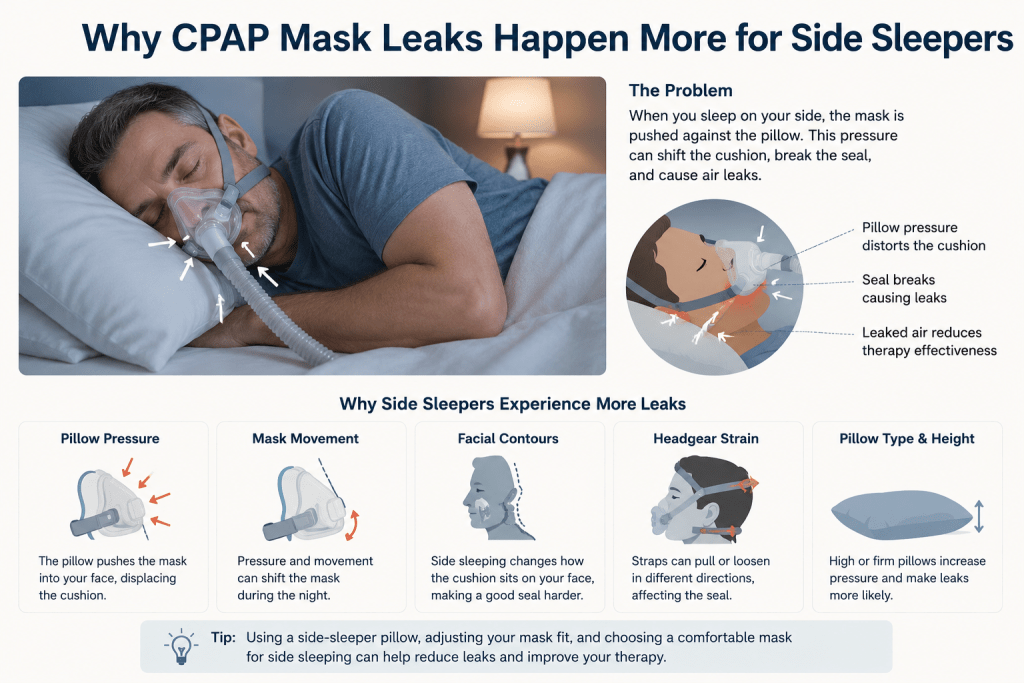
Why CPAP Mask Leaks Happen More for Side Sleepers
Side sleeping puts pressure on one edge of your mask. When your cheek and pillow press against the cushion, they push it sideways and break the seal. Air escapes through the gap, and the machine works harder to keep your pressure steady.
A leak that stays small may seem harmless, but it can lower the air pressure that keeps your airway open. That is the whole point of therapy, so a steady seal matters more than most people think.
Back sleepers rarely deal with this because gravity holds the mask flat against the face. Side and stomach sleepers fight a constant battle with shifting pressure. The mask moves, the cushion folds, and the air finds a way out.
Common spots where leaks start include the bridge of the nose, the corners of the mouth, and the lower edge near the chin. Each spot has its own fix, which we cover below.
CHECK YOUR SLEEP SYMPTOMS: TAKE THE 2 MINUTE QUIZ
TAKE THE QUIZ
Pick a Mask Built for Movement
The wrong mask is the most common reason CPAP mask leaks happen at night. A large full face mask has more surface area to break the seal when you turn. For many side sleepers, a smaller mask sits lower and stays put.
Nasal pillow masks rest right at the nostrils. They have the smallest footprint, so your pillow has less to push against. Many side sleepers find this style stays sealed even when they move a lot.
Nasal masks cover only the nose. They sit higher than nasal pillows but lower than a full face mask. This middle option works well if nasal pillows feel too direct.
Full face masks are not off the table, but side sleepers usually need a model with a soft, flexible frame that bends with the pillow instead of fighting it. If you breathe through your mouth at night, you may still need a full face style, so fit becomes even more important.
Not sure which style fits your face and your sleep position? Our guide to the best CPAP mask walks through the trade-offs in plain language.
Use a CPAP Pillow Designed for the Mask
A regular pillow is bulky and pushes your mask out of place every time you turn. This is one of the biggest hidden causes of CPAP mask leaks for side sleepers, and it is one of the easiest to fix.
A CPAP pillow has cutouts and contours that give the mask and tubing room to sit without pressure. Your face sinks into the open space, and the cushion stays flat against your skin instead of getting shoved sideways.
Switching to a pillow made for therapy can stop leaks without changing your mask at all. Many people try three new masks before they realize the pillow was the real problem.
These pillows also help the hose route over your shoulder or through a channel, so you do not lie on the tube. A pinched hose can change your pressure just like a leak does. Learn more in our overview of the CPAP pillow and how it supports a clean seal.
Adjust the Headgear the Right Way
Many people fight leaks by yanking the straps tighter. This usually backfires. Over-tightening warps the cushion and creates new gaps, which makes CPAP mask leaks worse, not better.
The seal comes from the cushion shape and air pressure, not from crushing force. Your straps should feel snug, like a baseball cap, not painful.
Try this simple method. Loosen all the straps until air leaks freely. Then tighten each one a little at a time while the machine runs. Stop the moment the leak quiets down. This finds the lightest tension that still seals.
Check the straps in your side sleeping position, not sitting up. The fit changes when your head rests on a pillow, so test it the way you actually sleep. If the headgear leaves deep marks on your face by morning, it is too tight. Our notes on how to get rid of CPAP lines can help you ease those marks.
Keep the Cushion Clean and Fresh
Oils from your skin build up on the cushion over time. A dirty or worn cushion gets stiff and slick, and it will not grip your face the way a fresh one does.
A worn cushion is a quiet cause of leaks that no amount of strap tightening will fix. Replacing a cushion costs far less than the lost sleep it causes.
Wipe the cushion daily with a gentle cloth and mild soap. Let it air dry. Replace the cushion on the schedule your supplier suggests, usually every few weeks to a month. A soft, clean cushion molds to your face and holds the seal as you turn.
If you are running low on parts, our CPAP supplies page covers cushions, masks, and the small items that keep your seal tight.
Match the Mask Size to Your Face
A mask that is too big leaves room for air to escape, and a mask that is too small pinches and lifts at the edges. Side sleeping makes both problems louder.
Most masks come in several sizes, and the right size is not always the one you expect. A sizing guide from the maker shows you how to measure. Many people wear the wrong size for months and blame the therapy when the fix is a different cushion size.
If you bought your mask a while ago and your face has changed from weight loss or weight gain, a resize may be due. A new cushion in the correct size often solves leaks on its own.
Track Your Leak Numbers
Modern CPAP machines record leak data each night. You can see how often the seal breaks and roughly when it happens. This turns guesswork into a clear picture.
If your leak rate spikes every time you roll over, that points straight at your sleeping position and your pillow. The data tells you where to focus instead of trying random fixes.
A high leak rate can also raise your AHI score, the number that shows how well therapy is working. If you want to understand that link, see our guide to what is a good AHI score on CPAP.
Bring these numbers to your next visit. A sleep physician can read the patterns and suggest a setup that fits how you sleep.
Simple Habits That Help the Seal Hold
Small daily habits make a real difference for side sleepers. None of these replace medical care, but they support a clean seal night after night.
Wash your face before bed so skin oils do not coat the cushion. A clean face grips the silicone better than an oily one.
Keep your hose routed above your head or clipped to the headboard. This stops the tube from tugging the mask sideways when you turn.
Try a gentle pillow under your knees to keep your body stable. Less rolling means less mask movement and fewer leaks.
If dry air or mask soreness pushes you to loosen the straps, talk to your care team about humidity settings instead. The right tweak keeps you comfortable without breaking the seal.
For more on how sleep position affects your rest, our piece on the best sleeping position puts these habits in context.
This section shares general wellness and comfort tips. It is not medical advice. For pressure changes, equipment swaps, or any breathing concern, talk with your own physician or a licensed sleep specialist.
Watch: How to Manage Mask Leak on CPAP
When to Talk With a Sleep Specialist
Some leaks need a professional eye. If you have tried a new mask, a CPAP pillow, and careful strap tuning and the seal still breaks every night, it is time to get help.
Dr. Avinesh Bhar and the SLIIIP team can review your mask fit, your pressure settings, and your leak data over a virtual visit. You do not have to live with a leaky mask or give up on therapy because one setup did not work.
Ongoing leaks can also be a sign that your pressure needs adjusting or that a different therapy might suit you better. A specialist can sort that out and point you toward a sleep apnea treatment plan that fits your life.
If you suspect your therapy is not controlling your symptoms, a fresh evaluation or a home sleep apnea test can show whether your current setup is doing its job.
Trusted Sources on Sleep and Sleep Apnea
To learn more about why quality sleep matters, the CDC sleep resources explain how rest affects your overall health. For a clear medical overview of the condition behind CPAP therapy, the NHLBI guide to sleep apnea is a reliable, plain-language source.
At Sliiip, we accept the following insurances:

SLIIIP’s board-certified sleep physicians can do sleep evaluations for sleep apnea. Virtual consultations in all 50 states. Home sleep tests shipped to your door.
Frequently Asked Questions
Why do CPAP mask leaks get worse when I sleep on my side?
Lying on your side presses one edge of the mask against the pillow, which shifts the cushion and breaks the seal. The escaping air becomes a leak that you may hear or feel as a dry breeze.
What is the best CPAP mask for side sleepers?
Many side sleepers do well with nasal pillow masks because they have a small footprint that the pillow cannot easily push out of place. The best choice depends on your face shape and whether you breathe through your mouth.
Does a special CPAP pillow really stop leaks?
A CPAP pillow has cutouts that give the mask and hose room to sit without pressure. For many side sleepers, switching pillows stops leaks even when nothing else changes.
Should I tighten my straps to stop a leak?
Usually no. Over-tightening warps the cushion and creates new gaps. Aim for a snug, comfortable fit and let the cushion and air pressure form the seal.
How tight should CPAP headgear be?
It should feel like a well-fitted baseball cap, snug but not painful. If it leaves deep marks on your face by morning, it is too tight.
How often should I replace my mask cushion?
Most suppliers suggest every few weeks to a month, since skin oils make the cushion stiff and slick over time. A fresh cushion grips your face far better than a worn one.
Can a dirty cushion cause leaks?
Yes. Oils and grime make the cushion lose its grip, so it slides instead of sealing. Daily cleaning and regular replacement help a lot.
Why does my mask leak near my eyes?
That usually means the cushion sits too high or the bridge of the mask does not match your nose. A different size or style often fixes it.
Can mouth breathing cause leaks?
If you use a nasal mask and breathe through your mouth, air escapes that way. A full face mask or a chin support may help, so ask your care team.
Does the wrong mask size cause leaks?
Yes. A mask that is too big leaves gaps, and one that is too small lifts at the edges. Use the maker’s sizing guide and recheck after weight changes.
Will a leak lower my therapy pressure?
A large leak can drop the pressure that keeps your airway open, which reduces how well therapy works. A steady seal helps keep your pressure on target.
How do I check my leak rate?
Most modern machines record nightly leak data on the display or in an app. You can see how often and roughly when the seal breaks.
Can leaks raise my AHI score?
Yes. When pressure drops from a leak, more breathing events can slip through, which can raise your AHI. Fixing the leak often improves the number.
Is it normal for the mask to leak a little?
A small, steady vent leak is built into every mask by design. The problem is an extra, shifting leak that changes when you move.
Should I stop using CPAP if it keeps leaking?
No. Stopping leaves your airway unsupported. Work through mask fit, pillow choice, and strap tuning, and reach out to a specialist if leaks continue.
Can my sleeping position be changed to reduce leaks?
You do not have to give up side-sleeping. The better path is to adapt your mask, pillow, and hose routing so the seal holds in your favorite position.
Why is my hose pulling my mask sideways?
If you lie on the tube or it dangles off the bed, it tugs the mask. Route the hose over your head or clip it to the headboard to ease the pull.
Do nasal pillow masks work for everyone?
No. They suit many side sleepers but can feel too direct or dry for some people, and they do not help mouth breathers on their own.
How long does it take to fix a leaky mask?
Some fixes, like a cleaner cushion or looser straps, work the same night. Others, like a new mask or pillow, may take a few nights to feel right.
Can SLIIIP help with CPAP mask leaks online?
Yes. SLIIIP’s board-certified sleep physicians can review your mask fit and leak data over a virtual visit, with care available in all 50 states.
Take the Next Step Toward Quiet, Restful Nights
A leaky mask does not have to define your therapy. With the right mask, a supportive pillow, and a few smart habits, most side sleepers seal the gap and sleep through the night. If the leaks keep coming, a sleep specialist can find the cause fast.
SLIIIP’s board-certified sleep physicians can do sleep evaluations for sleep apnea. Virtual consultations in all 50 states. Home sleep tests shipped to your door.
Latest posts
-
Why Can’t I Wake Up Even After Getting Enough Sleep?
Last updated: October 2, 2026. Medically reviewed by Dr. Avinesh Bhar, Board-Certified Sleep Physician, SLIIIP.com. If you can’t wake up after enough sleep, the cause is usually not the number…
-
Why Does My Heart Rate Drop So Low While I Sleep?
Last updated: October 2, 2026. Medically reviewed by Dr. Avinesh Bhar, Board-Certified Sleep Physician, SLIIIP.com. Your heart rate drops low while sleeping mainly because your body needs less work from…
-
Why Are My Naps Never Refreshing?
Last updated: October 2, 2026. Medically reviewed by Dr. Avinesh Bhar, Board-Certified Sleep Physician, SLIIIP.com. Naps that leave you groggy usually come down to how long you sleep, when you…
Get updates
Spam-free subscription, we guarantee. This is just a friendly ping when new content is out.

