👉 Register for Free. How to Diagnose Sleep Apnea Faster in Primary Care – FREE Webinar by Dr. Audrey Wells. – Friday, April 24 at 12 PM ET

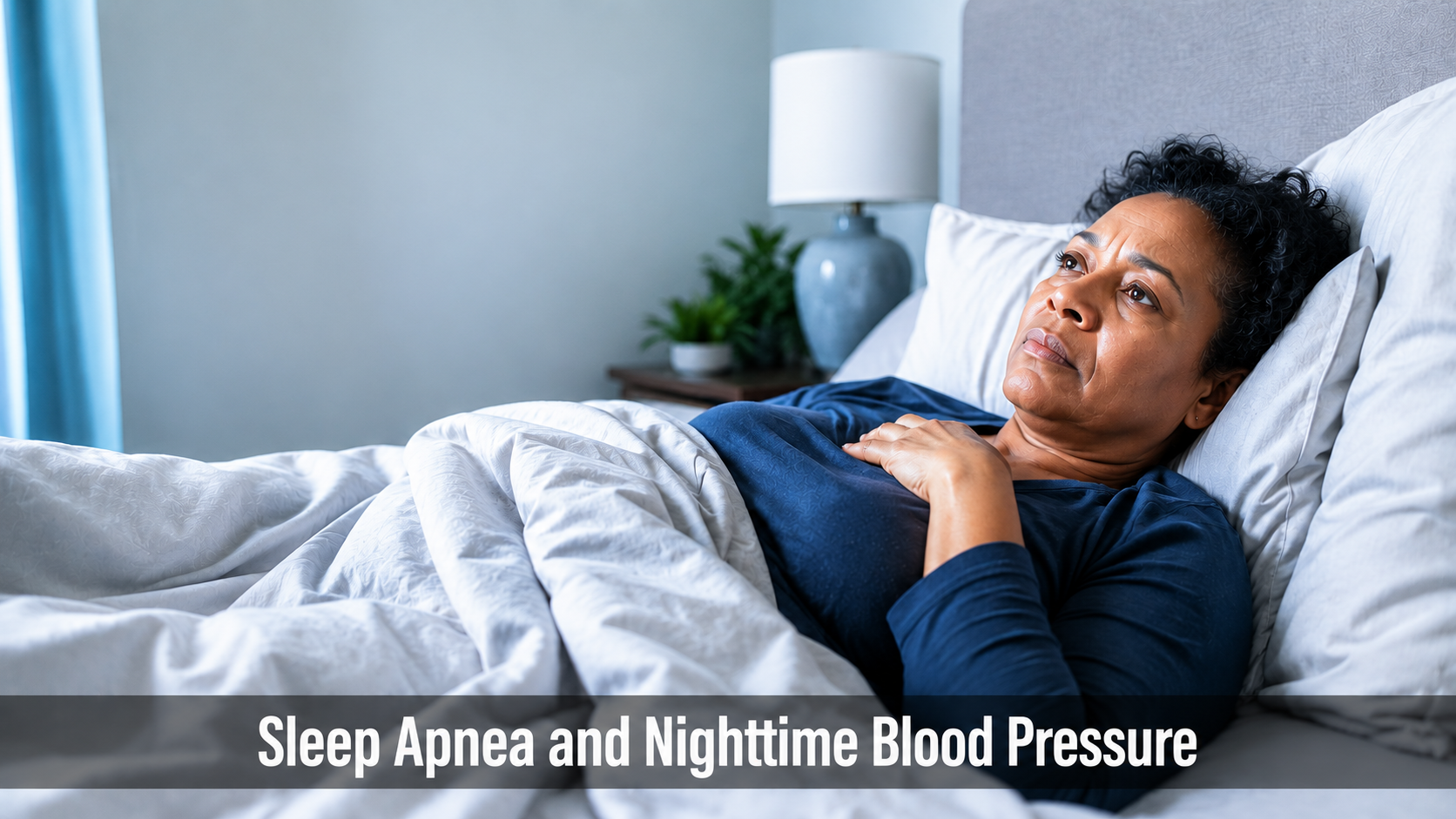
Can Sleep Apnea Cause Sudden Spikes in Nighttime Blood Pressure?
Nighttime blood pressure rises and falls on a quiet rhythm most of us never feel, and as Dr. Avinesh Bhar, Board-Certified Sleep Physician at SLIIIP.com, explains, sleep apnea can break that rhythm and push those numbers up while you sleep.
Research has linked sleep apnea with higher and more erratic blood pressure overnight, often through repeated drops in oxygen and bursts of stress hormones. That does not mean every snore spells trouble, but it does mean your sleep and your heart health are closely tied.
SLIIIP’s board-certified sleep physicians can do sleep evaluations for sleep apnea. Virtual consultations in all 50 states. Home sleep tests shipped to your door.

What Happens to Nighttime Blood Pressure During Healthy Sleep
Your blood pressure is not meant to stay flat all day and night. It moves with your activity, your stress, and your sleep. In a healthy pattern, it usually falls during the night.
This natural overnight drop is often called dipping, and it gives your heart and blood vessels a chance to rest. Most people see their numbers fall by about ten to twenty percent while they sleep. That nightly break is part of why deep, steady sleep feels so restoring.
When sleep is calm and breathing is smooth, your blood pressure follows this gentle downward curve. The problem starts when breathing keeps stopping and starting, which is exactly what happens with sleep apnea.
To understand the breathing side of this, our plain language guide on what sleep apnea is is a good starting point.
CHECK YOUR SLEEP SYMPTOMS: TAKE THE 2 MINUTE QUIZ
TAKE THE QUIZ
How Sleep Apnea Triggers Sudden Blood Pressure Spikes
Sleep apnea means your airway narrows or closes again and again during the night. Each pause can last several seconds or longer. Your body does not take these pauses lying down. It reacts, and that reaction is what drives the spikes.
Every time breathing stops, a chain of events pushes your nighttime blood pressure upward, sometimes sharply. Here is how that chain works.
The Drop in Oxygen
When your airway closes, the oxygen in your blood starts to fall. Your body senses this dip and treats it as a warning. The brain steps in to protect you, and part of that protection involves tightening blood vessels.
The Surge of Stress Hormones
To restart your breathing, your brain briefly wakes you, often without you knowing. This tiny wake up sends out adrenaline and other stress signals. Those signals speed up your heart and squeeze your vessels, which lifts your pressure fast.
The Repeat Cycle All Night
This is not a one time event. In moderate or severe apnea, it can repeat many times an hour. Each cycle is another small surge, so your numbers keep getting nudged up instead of settling down.
If you often wake with a pounding chest, our article on why you wake up with your heart racing covers a related side of this pattern.
Why the Lost Nighttime Dip Matters
Here is the part that worries sleep physicians the most. When apnea keeps interrupting your night, your blood pressure may stop falling the way it should. Instead of dipping, it stays high.
People whose pressure does not dip overnight are described as non-dippers, and research links this pattern with greater strain on the heart and blood vessels over time. The night, which should be a time of rest for your heart, becomes another period of stress.
This is one reason sleep apnea and heart health are studied together so often. You can read more in our overviews of how sleep apnea affects the heart and the broader link between sleep and heart disease. For the daytime side of this question, see our article on whether sleep apnea can cause high blood pressure.
Signs Your Nighttime Blood Pressure May Be Affected
You cannot feel your blood pressure spiking while you sleep. But there are clues during the night and in the morning. Pay attention to these patterns.
Your blood pressure is hard to control even with medication.
Your morning readings are high, especially right after you wake.
You snore loudly or have been told you stop breathing in your sleep.
You wake up gasping, choking, or with your heart pounding.
You feel tired during the day no matter how long you stay in bed.
You get morning headaches that fade as the day goes on.
None of these prove you have sleep apnea on their own. Together, they are a strong reason to look closer. Our piece on signs of sleep apnea goes through more of these warning signs.
Watch: Can You Die from Sleep Apnea? SLIIIP.COM
How a Sleep Physician Evaluates the Connection
Sorting out whether sleep apnea is driving your numbers takes more than a guess. A sleep physician looks at your breathing, your oxygen levels, and your symptoms together, then connects that to your blood pressure picture.
Dr. Avinesh Bhar and the SLIIIP care team can review your history during a virtual visit and decide if testing makes sense. Because SLIIIP is built around telemedicine, much of this can happen from your own home.
A common next step is a home sleep apnea test, which records your breathing and oxygen overnight in your own bed. If you are not sure whether to test, our quick sleep apnea quiz can help you decide. From there, your physician can talk through options, including whether therapy like CPAP fits your case.
Treating the apnea is not a promise about your blood pressure, since many things shape those numbers. But better, steadier breathing at night gives your heart a calmer environment, and that is worth understanding with a professional.
Lifestyle Habits That Support Healthy Sleep and Blood Pressure
Working with a physician matters most, but daily habits also shape both your sleep and your heart. Small, steady choices add up over weeks and months.
Keep a regular sleep schedule so your body learns when to wind down.
Limit salt and watch your overall eating pattern, since both affect blood pressure.
Move your body during the day, even with a short daily walk.
Go easy on alcohol near bedtime, because it can relax the airway and worsen apnea.
Manage stress with calm routines, since stress lifts both heart rate and pressure.
Reach a comfortable weight at a steady pace, as extra weight can raise apnea risk.
These habits do not replace medical care, and they are not a cure for any condition. They simply give your body a better foundation while you and your physician look at the bigger picture. Healthy sleep is one piece of heart health, not a stand in for it.
For trusted background, the Centers for Disease Control and Prevention and the National Heart, Lung, and Blood Institute both publish clear public guides on sleep and the heart.
At Sliiip, we accept the following insurances:

SLIIIP’s board-certified sleep physicians can do sleep evaluations for sleep apnea. Virtual consultations in all 50 states. Home sleep tests shipped to your door.
Frequently Asked Questions
Can sleep apnea cause sudden spikes in nighttime blood pressure?
Research links sleep apnea with rises in blood pressure overnight. Each pause in breathing lowers oxygen and triggers a stress response that can push the numbers up. A sleep physician can help you understand your own pattern.
Why does my blood pressure go up while I sleep?
If breathing keeps stopping, your body reacts with bursts of stress hormones and tightening blood vessels. This can lift your blood pressure instead of letting it fall as it should.
What is a normal nighttime blood pressure pattern?
In a healthy pattern, blood pressure usually dips by about ten to twenty percent during sleep. This overnight drop gives the heart and vessels a rest.
What does it mean to be a non-dipper?
A non-dipper is someone whose blood pressure does not fall normally at night. Research links this pattern with more strain on the heart over time.
Is high morning blood pressure a sign of sleep apnea?
It can be one clue, especially alongside snoring, gasping, or daytime tiredness. It does not prove apnea by itself, so an evaluation is the next step.
Can treating sleep apnea help my blood pressure?
Steadier breathing at night can create a calmer environment for your heart. Results vary from person to person, and many factors shape blood pressure, so this is best discussed with your physician.
How is sleep apnea tested for at home?
A home sleep apnea test records your breathing and oxygen levels overnight in your own bed. A physician reviews the results and explains what they mean.
Does snoring mean I have a blood pressure problem?
Snoring alone does not. But loud snoring with pauses in breathing can be a sign of apnea, which is linked with blood pressure changes worth checking.
Can sleep apnea affect my heart in other ways?
Yes. It is studied alongside heart rhythm issues and heart disease. Our heart focused articles explain more about these links.
Why do I wake up with my heart racing?
A pause in breathing can trigger a stress response that speeds the heart. Waking with a racing heart is one pattern people with apnea report.
Are nighttime readings more important than daytime ones?
Both matter. Some research suggests nighttime readings can be especially telling, which is why the overnight dip is studied so closely.
Can losing weight lower my apnea and blood pressure?
Reaching a comfortable weight at a steady pace can lower apnea risk for some people and supports heart health. It is one habit among several, not a guaranteed fix.
Does alcohol before bed make this worse?
It can. Alcohol near bedtime may relax the airway and worsen apnea, which can affect your blood pressure overnight.
How often do apnea events happen in a night?
In moderate or severe cases, breathing can pause many times an hour. Each pause is a chance for another small surge in blood pressure.
Will a CPAP machine fix my blood pressure?
CPAP treats the apnea, not blood pressure directly. By steadying your breathing, it may help create a calmer night, but outcomes vary and should be reviewed with a physician.
Can young or fit people have this problem?
Yes. Apnea is more common with certain risk factors, but it can affect people of many ages and body types. Symptoms matter more than appearance.
Do morning headaches connect to sleep apnea?
Morning headaches that fade through the day can be one sign of disrupted overnight breathing. They are worth mentioning to your physician.
Should I stop my blood pressure medication if I have apnea?
No. Never stop prescribed medication on your own. Talk with your prescribing doctor and your sleep physician so they can coordinate your care.
Can SLIIIP evaluate this from home?
Yes. Through virtual consultations, the SLIIIP team can review your history, arrange a home sleep test, and explain your options without an in person visit.
When should I see a sleep physician about this?
If your blood pressure is hard to control, you snore loudly or gasp at night, or you feel tired despite enough time in bed, it is a good time to get evaluated.
SLIIIP’s board-certified sleep physicians can do sleep evaluations for sleep apnea. Virtual consultations in all 50 states. Home sleep tests shipped to your door.
Latest posts
-
Circular Ring Sleep Accuracy: What It Gets Right and Wrong
Last updated: September 14, 2026. Medically reviewed by Dr. Avinesh Bhar, Board-Certified Sleep Physician, SLIIIP.com. The Circular Ring estimates sleep stages, heart rate, and recovery using a finger-worn light sensor,…
-
Ballistocardiography Sleep Sensors: How Under-Mattress Tracking Works
Last updated: September 14, 2026. Medically reviewed by Dr. Avinesh Bhar, Board-Certified Sleep Physician, SLIIIP.com. Ballistocardiography sleep sensors sit under your mattress and detect the tiny mechanical vibrations your body…
-
RingConn vs Oura: Which Smart Ring Tracks Sleep Better?
Last updated: September 10, 2026. Medically reviewed by Dr. Avinesh Bhar, Board-Certified Sleep Physician, SLIIIP.com. RingConn and Oura both track sleep through a finger-worn ring, but they differ most in…
Get updates
Spam-free subscription, we guarantee. This is just a friendly ping when new content is out.

