👉 Register for Free. How to Diagnose Sleep Apnea Faster in Primary Care – FREE Webinar by Dr. Audrey Wells. – Friday, April 24 at 12 PM ET


Is Your Sleep Apnea Masking as “Quiet Quitting” and Workplace Burnout?
Sleep apnea can quietly drain your energy and focus in ways that look a lot like burnout at work, and Dr. Avinesh Bhar, Board-Certified Sleep Physician at SLIIIP.com, points out that what some people call checking out at work may sometimes trace back to poor rest at night.
When exhaustion and low motivation get blamed on your job, the real reason might be hiding in how you sleep.
The terms quiet quitting and burnout are everywhere now. They usually point to a person who feels drained, distant, and done. But sometimes that drained feeling is not about the job at all.
SLIIIP’s board-certified sleep physicians can do sleep evaluations for sleep apnea. Virtual consultations in all 50 states. Home sleep tests shipped to your door.
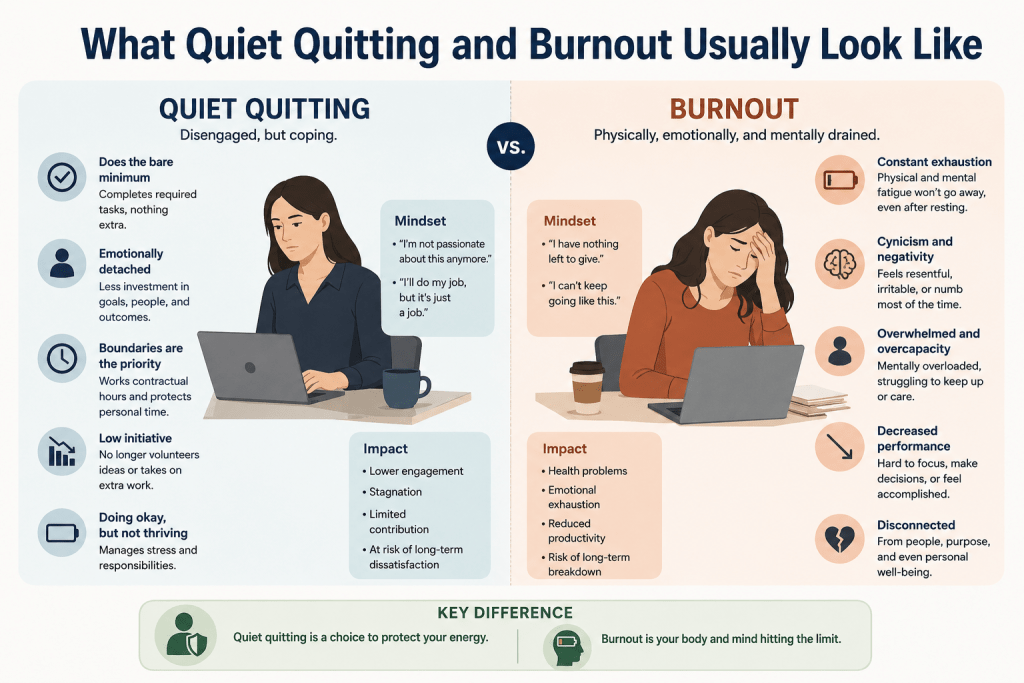
What Quiet Quitting and Burnout Usually Look Like
Quiet quitting is a popular phrase for doing the bare minimum at work and pulling back from extra effort. Burnout describes a deep, ongoing exhaustion that builds from steady stress. Both can leave a person feeling flat, foggy, and unmotivated.
The classic signs of burnout, like low energy, poor focus, and fading motivation, can also be signs of poor sleep. That overlap is what makes this topic so important. The feelings look the same on the surface, but the cause can be very different.
The goal here is not to dismiss real workplace stress, which is genuine and common. The goal is to point out that a hidden sleep problem can wear the same mask. If you feel drained no matter what, a sleep telemedicine visit can help you find out why.
CHECK YOUR SLEEP SYMPTOMS: TAKE THE 2 MINUTE QUIZ
TAKE THE QUIZ
How Poor Sleep Can Look Like Burnout
When sleep is broken night after night, your body never fully recharges. You wake up tired, drag through the day, and reach for coffee just to function. Over time, that can look exactly like someone who has lost interest in their work.
A person running on poor sleep can seem checked out, when really they are just exhausted. Low motivation, short patience, and trouble focusing are common when rest is shallow or interrupted. None of these mean the person does not care.
If you wake up tired even after enough hours, our article on why you wake up tired can help you think it through. And if a foggy head is part of your workday, our piece on exhaustion no matter how much you sleep may sound familiar.
Could Sleep Apnea Be Behind Your Burnout?
Here is the part many people miss. A sleep-related breathing pattern can interrupt rest dozens of times a night without you ever noticing. The result is the same daytime drag that gets blamed on the job.
Sleep apnea is one possible cause of the constant tiredness, brain fog, and low drive that often get labeled as burnout. When breathing pauses during sleep, the body keeps stirring to restart it. You may never remember these moments, but you feel them the next day.
This is why it is worth looking past the obvious explanation. Our overview of what this condition is explains the basics, and our list of signs to watch for can help you spot common clues. Many people are surprised by what they learn.
The Brain Fog Connection
One of the most disruptive symptoms at work is brain fog. You read the same email three times. You lose your train of thought in meetings. Simple tasks take longer than they should. This is a common sign of poor, broken sleep.
Brain fog from disrupted rest can quietly hurt your work performance, even when you are trying your hardest. It is not a sign of laziness or a bad attitude. It is often a sign that your brain is not getting the deep, restoring sleep it needs.
Our article on the brain fog connection to sleep-disordered breathing digs into this. Understanding the cause can take a lot of self-blame off your shoulders.
When It Is Mood, Not Just Energy
Poor sleep does not only sap energy. It can affect mood, patience, and outlook too. Someone who feels low, irritable, and disconnected at work may be dealing with the emotional side of poor rest, not a problem with the job itself.
Low mood and lost motivation can be tied to sleep, which is why caring for your rest is part of caring for your wellbeing. The link between sleep and how you feel runs deep, and improving one often helps the other.
If low mood is part of your picture, our articles on sleep and depression and sleep solutions for mental health offer balanced, supportive looks. If your mood concerns feel heavy, please also reach out to a healthcare provider.
Why People Miss the Signs
Many people never connect their work struggles to their sleep. They assume tiredness is normal, or that they just need to push harder. Some also believe a breathing issue only affects a certain body type, which is not true.
A breathing problem during sleep can affect people of many shapes, ages, and fitness levels, so it is easy to overlook. This is one reason so many cases go unnoticed for years. The signs hide in plain sight, dressed up as everyday tiredness or work stress.
Our article on not looking like someone with a sleep issue explores this myth. Getting clear answers is the best way to know for sure.
According to the Centers for Disease Control and Prevention, most adults need at least seven hours of sleep each night for good health. When rest keeps falling short, both work and wellbeing can suffer.
Healthy Habits That Support Better Rest
Below are simple, wellness-based habits many people find helpful. None of these are treatments or cures. They are everyday steps you can try while you also seek clear answers about your sleep.
Keep a steady schedule. A consistent bedtime and wake time support deeper, steadier rest.
Protect a wind-down hour. Calm time before bed helps your body shift out of work mode.
Set work boundaries. A clear stop time each evening helps separate the job from your rest.
Limit late screens and caffeine. Both can make sleep lighter and harder to reach.
Move during the day. Light activity supports both rest and daytime energy.
Be kind to yourself. Tiredness is a signal, not a character flaw.
For more on protecting deeper rest, our guide on reasons for improving the quality of your sleep shares practical ideas. The National Heart, Lung, and Blood Institute also offers clear guidance on healthy sleep.
Watch: Why Can’t I Sleep?
When to Talk With a Sleep Physician
If you feel burned out at work and nothing seems to help, it may be worth looking at your sleep before you blame the job entirely. Real answers can change how you feel and how you work.
A sleep evaluation can reveal whether a hidden breathing pattern is behind your fatigue and foggy days. Dr. Avinesh Bhar and the SLIIIP team can review your sleep history, talk through your symptoms, and arrange a home sleep test if needed.
The process is built around convenience. You can meet a board-certified physician through a virtual visit, and a home sleep test can be shipped right to your door. There is no need to spend a night in a lab or take time off work. Getting answers is a step toward feeling like yourself again.
At Sliiip, we accept the following insurances:

SLIIIP’s board-certified sleep physicians can do sleep evaluations for sleep apnea. Virtual consultations in all 50 states. Home sleep tests shipped to your door.
Frequently Asked Questions
- Can a sleep problem look like workplace burnout?
Yes. Low energy, poor focus, and fading motivation are common signs of both burnout and poor sleep, so the two can look very similar. - What is quiet quitting?
It is a popular phrase for doing the bare minimum at work and pulling back from extra effort, often because a person feels drained. - How does poor sleep mimic burnout?
When sleep is broken night after night, you wake up tired and drag through the day, which can look like someone who has checked out. - Could sleep apnea be causing my fatigue?
It is one possible cause. A breathing pattern that interrupts rest can leave you exhausted, foggy, and low on drive the next day. - What is brain fog?
Brain fog is trouble focusing and thinking clearly. It is a common sign of poor, broken sleep and can quietly hurt work performance. - Does poor sleep affect mood at work?
Yes. Disrupted rest can lead to low mood, irritability, and feeling disconnected, which can show up as struggles at work. - Why do people miss the signs?
Many assume tiredness is normal or that they just need to push harder. Some also wrongly believe a breathing issue only affects certain body types. - Can a breathing issue affect fit or younger people?
Yes. It can affect people of many shapes, ages, and fitness levels, which is one reason so many cases go unnoticed. - What everyday habits can help my sleep?
A steady schedule, a wind-down hour, work boundaries, limited late screens and caffeine, and daytime movement can all support rest. - How much sleep do adults need?
Most adults benefit from at least seven hours of sleep each night to support overall health and daytime energy. - Is feeling burned out always about the job?
Not always. Sometimes a hidden sleep problem wears the same mask, which is why checking your sleep can be worthwhile. - What is a home sleep test?
It is a sleep study you can do in your own bed. The device is shipped to you, and the results help a physician understand your nights. - Do I have to visit a lab for a sleep evaluation?
No. SLIIIP offers virtual consultations in all 50 states, and home sleep tests can be shipped to your door. - Can a partner help me notice signs?
Yes. A bed partner may notice snoring or gasping that points to a breathing pattern worth checking. - Will better sleep improve my work focus?
Better, deeper rest often supports clearer thinking and steadier energy, which can help your focus during the day. - Should I talk to my doctor about my mood too?
If a low mood feels heavy, please reach out to a healthcare provider. Sleep and mood are linked, and support is available. - Can fixing my sleep help with burnout?
If poor sleep is part of the cause, understanding and addressing it may ease some of the tiredness behind your burnout. - How do I know if it is sleep or stress?
A sleep evaluation can help separate the two by revealing hidden interruptions that you cannot feel on your own. - What happens during a sleep evaluation?
A physician reviews your sleep history and symptoms and, if needed, arranges a home sleep test to better understand your nights. - How do I get started with SLIIIP?
You can schedule a virtual sleep evaluation online, and a board-certified physician will guide you, including arranging a home sleep test if needed.
Take the Next Step Toward Better Rest
Before you blame the job, it can be worth looking at your sleep. What feels like burnout may have a cause you can actually address. You do not have to push through exhaustion alone.
SLIIIP’s board-certified sleep physicians can do sleep evaluations for sleep apnea. Virtual consultations in all 50 states. Home sleep tests shipped to your door.
Latest posts
-
Why Can’t I Wake Up Even After Getting Enough Sleep?
Last updated: October 2, 2026. Medically reviewed by Dr. Avinesh Bhar, Board-Certified Sleep Physician, SLIIIP.com. If you can’t wake up after enough sleep, the cause is usually not the number…
-
Why Does My Heart Rate Drop So Low While I Sleep?
Last updated: October 2, 2026. Medically reviewed by Dr. Avinesh Bhar, Board-Certified Sleep Physician, SLIIIP.com. Your heart rate drops low while sleeping mainly because your body needs less work from…
-
Why Are My Naps Never Refreshing?
Last updated: October 2, 2026. Medically reviewed by Dr. Avinesh Bhar, Board-Certified Sleep Physician, SLIIIP.com. Naps that leave you groggy usually come down to how long you sleep, when you…
Get updates
Spam-free subscription, we guarantee. This is just a friendly ping when new content is out.

