👉 Register for Free. How to Diagnose Sleep Apnea Faster in Primary Care – FREE Webinar by Dr. Audrey Wells. – Friday, April 24 at 12 PM ET


Sudden Insomnia: Why It Happens Even When Nothing in Your Life Has Changed
Sudden insomnia often shows up without warning, according to Dr. Avinesh Bhar, Board-Certified Sleep Physician at SLIIIP.com, many individuals experience symptoms without clear awareness. You go to bed at the same time as always. You wake up at 3 a.m. and stare at the ceiling. Nothing in your life looks different on the surface. No new job. No big move. No breakup. And yet your sleep feels broken. This kind of sudden insomnia is more common than most people think, and it usually has quiet causes that build up slowly over weeks or months. SLIIIP.com offers virtual consultations in all 50 states, home sleep tests shipped to your door, and nationwide coverage, so you can talk with a board-certified sleep physician from home and get clarity on what is really going on.
SLIIIP.com was built to make that answer easy to find, with virtual consultations in all 50 states, home sleep tests shipped to your door, and nationwide coverage.
SLIIIP’s board-certified sleep physicians can do sleep evaluations for sleep apnea. Virtual consultations in all 50 states. Home sleep tests shipped to your door.
What Sudden Insomnia Really Means
Sudden insomnia is when trouble falling asleep or staying asleep appears out of nowhere. One week you sleep fine. The next week you lie awake for two hours, wake up at 2 a.m., or feel wired even though you are exhausted. Short term sleep trouble that lasts less than three months is usually called acute insomnia. If it keeps happening three or more nights a week for three months or longer, it is often called chronic insomnia.
The confusing part is this: your life can look the same from the outside, and your sleep can still fall apart from the inside. That is because sleep is shaped by many small signals in your body, your brain, and your environment. When one signal shifts, sleep can shift too. Learn more about the different patterns in this guide to types of insomnia.
CHECK YOUR SLEEP SYMPTOMS: TAKE THE 2 MINUTE QUIZ
TAKE THE QUIZ
Why Sudden Insomnia Can Happen When Nothing Obvious Has Changed
People often say, “But nothing has changed.” What they usually mean is nothing big has changed. But sleep is very sensitive. Small changes in stress, light, temperature, hormones, breathing, or daily habits can quietly push your sleep off track. According to the National Heart, Lung, and Blood Institute, insomnia can be triggered by stress, health conditions, medications, and changes in your sleep environment, even when these changes feel minor.
Sudden insomnia is often the result of many small shifts adding up, not one big event. Below are the most common hidden causes.
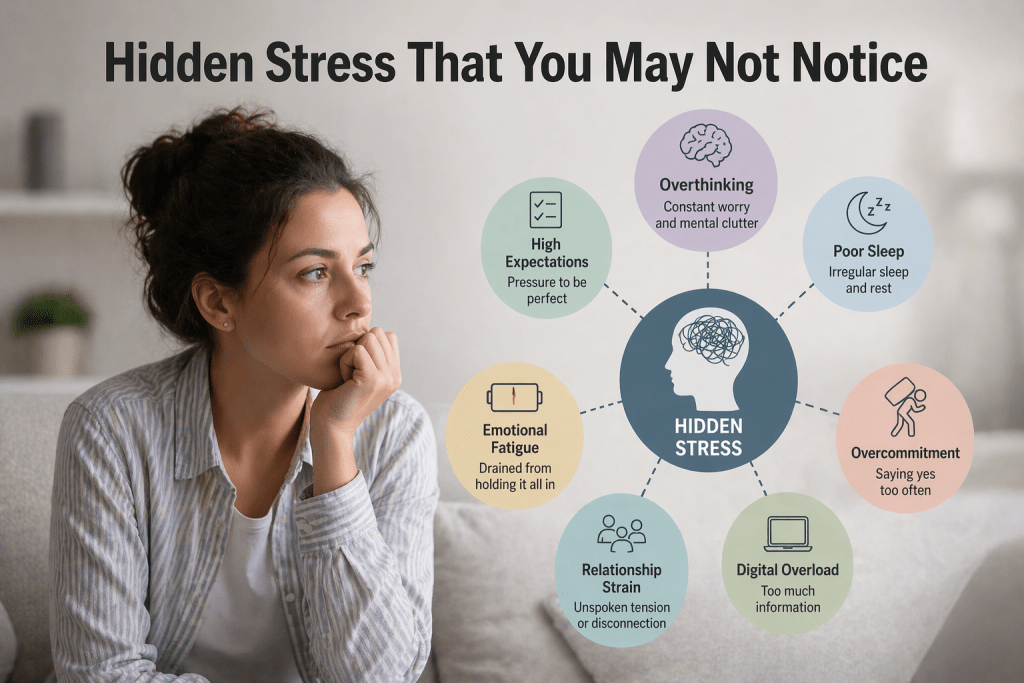
Hidden Stress That You May Not Notice
Stress does not have to feel dramatic to ruin your sleep. You can feel calm during the day and still have a nervous system that is stuck in a low level alert state at night. Work deadlines, family worries, money pressure, and even good stress like a new project can all raise cortisol and delay sleep.
Signs that hidden stress may be driving your sudden insomnia:
- You fall asleep fine, then wake at 2 or 3 a.m. with your mind racing.
- You feel tired but wired when you lie down.
- Your chest feels tight or your jaw is clenched at night.
- You wake up thinking about tasks you already finished.
If your mind will not slow down, you are not alone. Many people feel this way. Tips for this pattern can be found in how to stop overthinking at night and why do I overthink before bed.
Hormone Shifts Can Cause Sudden Insomnia
Hormones guide sleep in a very direct way. When hormones shift, sleep often shifts with them. This is one of the top hidden reasons sudden insomnia appears in women between ages 35 and 55, even when life feels stable.
Common hormone related triggers include:
- Perimenopause and menopause changes in estrogen and progesterone.
- Thyroid changes, both high and low.
- Cycle related changes in the week before a period.
- Postpartum hormone drops.
- Age related drops in melatonin.
If this sounds familiar, review hormonal insomnia and is this perimenopause or insomnia. Men can also have hormone related sleep shifts, often tied to changes in testosterone or cortisol rhythm.
Hidden Breathing Problems And Sudden Insomnia
One of the most missed causes of sudden insomnia is a quiet breathing problem at night. Many people think sleep apnea only looks like loud snoring and gasping. That is a myth. Sleep apnea can show up as waking at the same time every night, light sleep, racing heart at night, or feeling tired after eight hours in bed.
In fact, Dr. Avinesh Bhar often sees patients who were told they “just have insomnia,” when the real driver is mild obstructive sleep apnea or upper airway resistance that has slowly gotten worse with age, weight change, nasal congestion, or changes in muscle tone.
If you often wake up around the same hour, check waking up at 2 a.m. and the signs of sleep apnea. A simple home sleep test can help rule this in or out.
Small Habits That Quietly Build Up
You may not have changed anything big. But small habits often drift over time.
- An extra coffee in the afternoon.
- A glass of wine a few nights a week.
- More screen time in bed.
- Later dinners.
- Less daylight in the morning.
- Skipping workouts because you are tired.
Any one of these is small. Together they can flip a healthy sleeper into a sudden insomnia pattern. Alcohol is a big one. It can help you fall asleep, then wake you up at 3 a.m. when it wears off. Caffeine has a half life of about five hours, which means your 3 p.m. coffee is still working at 8 p.m.
For a reset, see how to fix insomnia naturally and the ultimate sleep routine guide.
Your Body Clock May Be Drifting
Your body has an internal clock called the circadian rhythm. It uses light, meal times, and activity to know when to sleep and when to wake. When your body clock drifts, even by an hour, you can feel like your sleep has broken overnight.
Common causes of a drifting body clock:
- Working from home with less morning sunlight.
- Bright screens late at night.
- Eating dinner closer to bedtime.
- Weekend sleep times very different from weekday times.
- Age, which naturally shifts sleep earlier for many adults.
Learn more in how do I fix my circadian rhythm and circadian rhythm sleep disorder.
Racing Thoughts And Anxious Nights
Some people get sudden insomnia because their brain has learned a new habit: to wake up and worry. This is called conditioned arousal. The bed stops being a place for sleep and starts being a place for thinking. Even a few bad nights can teach the brain this pattern.
If you feel anxious the moment your head hits the pillow, see can’t shut brain off at night and why do I feel anxious at night. Cognitive behavior therapy for insomnia, or CBTI, is the first line wellness approach for this pattern. Read more at cognitive behavior therapy (CBTI) for sleep disorders.
Medical And Lifestyle Shifts That Are Easy To Miss
Sudden insomnia can also follow small changes that you did not think of as “changes”:
- A new medication or a dose change.
- A cold, sinus issue, or new allergies.
- New pain, even mild.
- Reflux at night.
- A pet joining or leaving the bed.
- A warmer bedroom in summer.
- A partner who started snoring more.
A sleep physician can help you sort through these quiet factors and figure out what actually flipped the switch.
When To Consider A Sleep Evaluation
Talk to a board-certified sleep physician if any of the following is true:
- Sudden insomnia has lasted more than three weeks.
- You wake up tired even after seven or eight hours.
- You wake at the same time every night.
- You snore, gasp, or have been told you stop breathing.
- You are using alcohol or sleep aids more often.
- Daytime fatigue is affecting work, mood, or driving.
If you are not sure where you fall, try do I have insomnia or something else.

How SLIIIP Helps People With Sudden Insomnia
SLIIIP.com was built for exactly this situation. You can book a virtual consultation from home, in any of the 50 states. If needed, a home sleep test can be shipped directly to your door to check for breathing issues during the night. Nationwide coverage means you do not need to find a local sleep lab or wait months for an appointment.
Dr. Avinesh Bhar and the SLIIIP team focus on the full picture: stress, hormones, breathing, habits, body clock, and mindset. Most people do not need a strong sleep aid. They need someone to help them understand why their sleep broke, and what small changes will actually fix it.
At Sliiip, we accept the following insurances:

SLIIIP’s board-certified sleep physicians can do sleep evaluations for sleep apnea. Virtual consultations in all 50 states. Home sleep tests shipped to your door.
Frequently Asked Questions
- Why do I suddenly have insomnia even though nothing has changed?
Small shifts in stress, hormones, breathing, light, caffeine, or screen time can add up and trigger sudden insomnia, even when life feels the same. - Is sudden insomnia a sign of something serious?
Most often it is not dangerous, but it can point to anxiety, hormone changes, or hidden sleep apnea. A sleep physician can help you sort it out. - How long does sudden insomnia usually last?
Acute insomnia often improves within a few weeks once the trigger is found. If it lasts more than three months, it is considered chronic. - Can sudden insomnia happen in your 30s or 40s?
Yes. Hormone changes, career stress, and parenting stress are common triggers in these years, even when life feels stable. - Can sudden insomnia happen in your 50s or 60s?
Yes. Perimenopause, menopause, andropause, and changes in body clock and breathing all rise in these years. - Is it normal to wake at 3 a.m. and not fall back asleep?
It is common, but it is not ideal. It often points to stress, alcohol, blood sugar dips, or mild sleep apnea. - Why do I feel tired but wired at night?
This is usually a cortisol and nervous system pattern, often linked to stress or a drifting body clock. - Can anxiety cause sudden insomnia without feeling anxious?
Yes. Your body can be in a low level alert state even if your mind feels calm. - Can hidden sleep apnea cause insomnia?
Yes. Many people with mild sleep apnea have insomnia as their main symptom, not snoring. - Does alcohol cause sudden insomnia?
Alcohol helps you fall asleep, but it disrupts the second half of the night and is a common driver of 2 a.m. and 3 a.m. wake ups. - Does caffeine really affect my sleep if I only drink it in the morning?
For most people, yes. The half life is about five hours, and genetics can make it last longer for some. - Can perimenopause cause sudden insomnia?
Yes. Drops in progesterone and estrogen often cause new onset insomnia in women over 35. - Can men also get hormone related insomnia?
Yes. Changes in testosterone and cortisol rhythm can disrupt sleep in men too. - Is melatonin a good fix for sudden insomnia?
Melatonin is a body clock signal, not a sleeping pill. It helps more with timing issues than with anxiety driven insomnia. - Should I use sleep aids for sudden insomnia?
Short term, sometimes. Long term, most experts prefer behavioral approaches like CBTI, which address the root cause. - What is CBTI?
CBTI is a structured program that retrains your brain and body to sleep. It is the first line wellness approach for chronic insomnia. - Can a home sleep test help if my main problem is insomnia?
Yes, if there is any chance that breathing is part of the picture. A home test can rule sleep apnea in or out from home. - Do I need to see a sleep doctor or just my primary doctor?
Primary care is a great start. If insomnia lasts more than a few weeks or you have any signs of sleep apnea, a sleep physician can go deeper. - Can I see a sleep doctor online?
Yes. SLIIIP.com offers virtual consultations in all 50 states, with home sleep tests shipped to your door. - What is the first thing I should do tonight if I have sudden insomnia?
Keep a steady wake time, get morning light, cut caffeine after noon, avoid alcohol, and do not stay in bed awake for more than 20 minutes at a time.
Take The Next Step
If sudden insomnia has shown up in your life with no clear reason, you do not have to guess your way through it. A short virtual visit with a board-certified sleep physician can save you weeks of trial and error. SLIIIP makes it simple: virtual consultations in all 50 states, home sleep tests shipped to your door, and nationwide coverage.
SLIIIP’s board-certified sleep physicians can do sleep evaluations for sleep apnea. Virtual consultations in all 50 states. Home sleep tests shipped to your door.
Thank you for reading this article.
Latest posts
-
Why Can’t I Wake Up Even After Getting Enough Sleep?
Last updated: October 2, 2026. Medically reviewed by Dr. Avinesh Bhar, Board-Certified Sleep Physician, SLIIIP.com. If you can’t wake up after enough sleep, the cause is usually not the number…
-
Why Does My Heart Rate Drop So Low While I Sleep?
Last updated: October 2, 2026. Medically reviewed by Dr. Avinesh Bhar, Board-Certified Sleep Physician, SLIIIP.com. Your heart rate drops low while sleeping mainly because your body needs less work from…
-
Why Are My Naps Never Refreshing?
Last updated: October 2, 2026. Medically reviewed by Dr. Avinesh Bhar, Board-Certified Sleep Physician, SLIIIP.com. Naps that leave you groggy usually come down to how long you sleep, when you…
Get updates
Spam-free subscription, we guarantee. This is just a friendly ping when new content is out.

