👉 Register for Free. How to Diagnose Sleep Apnea Faster in Primary Care – FREE Webinar by Dr. Audrey Wells. – Friday, April 24 at 12 PM ET


Why Does My Heart Pound When I Try to Sleep?
A heart pound when I try to sleep often shows up without warning, according to Dr. Avinesh Bhar, Board-Certified Sleep Physician at SLIIIP.com, and many people feel it the moment their head hits the pillow even when the rest of the day feels calm.
That sudden thumping in the chest can feel scary. You lie down to rest, and instead your heart speeds up, skips, or beats so hard you can feel it in your ears. For some people this happens once in a while. For others it shows up almost every night and turns bedtime into a stressful event. A pounding heart at night is not always a sign of something serious, but it is a signal worth paying attention to. The body uses these moments to tell you that something in your sleep, breathing, hormones, stress level, or daily habits may be off balance.
SLIIIP’s board-certified sleep physicians can do sleep evaluations for sleep apnea. Virtual consultations in all 50 states. Home sleep tests shipped to your door.
What People Mean When They Say Their Heart Pounds at Bedtime
The phrase covers a wide range of feelings. Some people notice a fast heartbeat. Others feel a strong thump that seems louder than usual. A few feel skipped beats, fluttering, or a heavy pulse in the neck and chest. All of these are forms of heart awareness. During the day, noise and activity hide your heartbeat. At night, when the room is quiet and your body slows down, you simply notice it more.
That said, noticing your heart is not the same as having a heart problem. The reasons it pounds at bedtime usually fall into a small set of common causes that a sleep physician can sort through during a focused evaluation.
CHECK YOUR SLEEP SYMPTOMS: TAKE THE 2 MINUTE QUIZ
TAKE THE QUIZ
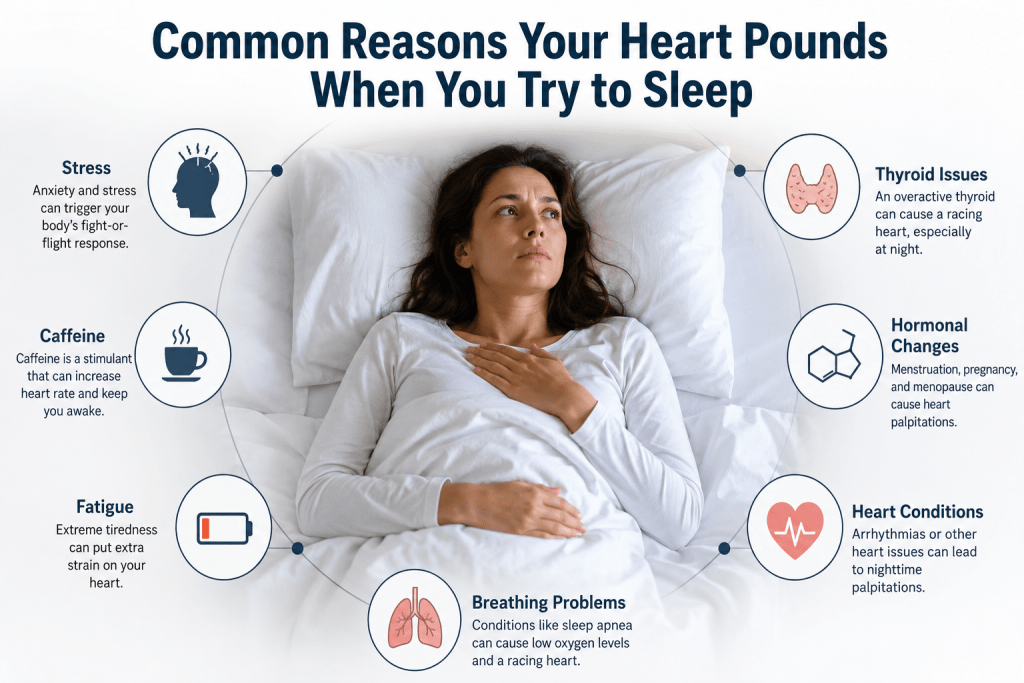
Common Reasons Your Heart Pounds When You Try to Sleep
Below are the most frequent causes Dr. Avinesh Bhar and other sleep doctors see in practice. Many people have more than one at the same time.
1. Stress and Bedtime Anxiety
When the lights go out, the mind often replays the day. Worries about work, money, family, or health rise to the surface. Your body answers by releasing stress hormones like adrenaline and cortisol. These hormones push the heart to beat faster and harder, even though you are lying still. The pounding then makes you more anxious, which raises the heart rate even more. It becomes a loop. Learn more about this cycle in our guide on why I feel anxious at night and how to stop overthinking at night.
2. Sleep Apnea and Breathing Issues
Sleep apnea is one of the most overlooked causes of a pounding heart at night. When the airway narrows or closes, oxygen drops and the body wakes itself up to breathe. Each event triggers a small surge of stress hormones. Many people with sleep apnea wake up with a racing or pounding heart and do not realize their breathing is the real cause. Read more in our articles on signs of sleep apnea, what causes sleep apnea, and how sleep apnea affects the heart. According to the National Heart, Lung, and Blood Institute, untreated sleep apnea is linked to higher blood pressure and heart rhythm problems.
3. Caffeine, Nicotine, and Stimulants Late in the Day
Coffee, energy drinks, pre-workout powders, certain teas, and nicotine all push the heart to beat faster. Caffeine can stay in the body for many hours. A cup of coffee at 3 p.m. can still be active in your system at 10 p.m. If you notice the heart pounding most on days when you had more caffeine, the timing is likely linked.
4. Alcohol Before Bed
A glass of wine or a beer can feel relaxing at first, but as your body breaks down alcohol it can speed up the heart and disrupt sleep stages. Many people wake a few hours later with a racing heart. Even small amounts close to bedtime can change your heart rhythm at night.
5. Low Blood Sugar
If you skip dinner or eat very little before bed, your blood sugar can dip while you sleep. The body responds by releasing adrenaline to bring sugar levels back up. That same adrenaline makes the heart beat harder. A small, balanced snack with protein can sometimes help in cases like this.
6. Hormonal Shifts
Hormones play a strong role in heart awareness. Perimenopause, menopause, thyroid changes, and the days around a menstrual cycle can all bring on palpitations at night. Our guides on perimenopause heart palpitations and hormonal insomnia cover these patterns in more detail.
7. Dehydration
When the body is short on fluids, the heart has to work harder to move blood. A dehydrated heart often beats faster, and that extra effort is easier to notice when you are lying down. Sipping water through the day, not just at night, can help.
8. Certain Medications and Supplements
Some inhalers, decongestants, ADHD medications, thyroid medications, and weight loss supplements can speed the heart. If your pounding heart started after a new prescription or supplement, make a note of it. Your doctor can help review the list.
9. Poor Sleep Habits and Irregular Schedules
Going to bed at very different times each night confuses the internal clock. So does heavy screen use right before bed. An overworked nervous system often shows up as a fast, pounding heart when lights out. See our article on how to fix your circadian rhythm for steady habits that calm the system.
10. Heart Rhythm Conditions
Sometimes the cause is the heart itself. Conditions like atrial fibrillation can cause skipped or pounding beats. Sleep apnea is closely tied to these rhythms. Our article on sleep apnea and atrial fibrillation explains the link. If your symptoms include chest pain, fainting, or shortness of breath, see a doctor right away.
How Sleep Apnea Can Make Your Heart Pound When You Try to Sleep
This cause deserves its own section because it is so common and so often missed. With obstructive sleep apnea, the soft tissue in the throat collapses during sleep. Oxygen drops. The brain senses danger and sends a burst of stress signals to restart breathing. Each one of these events is a small jolt to the heart. Over time the heart muscle is asked to do more work, blood pressure climbs, and rhythm problems are more likely.
Dr. Avinesh Bhar often sees patients who first came in for palpitations, only to learn that a sleep breathing problem was driving the symptom. A home sleep test can show how often breathing pauses are happening at night. You can read more in our guide on home sleep apnea testing and how to prepare for a home sleep study.
Simple Habits That May Calm a Pounding Heart at Bedtime
These are lifestyle steps, not medical treatments, and they work best when paired with a real evaluation if symptoms last.
- Keep a steady sleep and wake time, even on weekends.
- Cut caffeine after early afternoon.
- Avoid alcohol in the two to three hours before bed.
- Eat a light, balanced meal in the evening so blood sugar stays stable.
- Sip water through the day so you are not dehydrated by night.
- Try slow nasal breathing for a few minutes when you lie down.
- Keep the bedroom cool, dark, and quiet.
- Limit screens for 30 to 60 minutes before bed.
- Write down worries on paper so the mind can let them go.
- Get checked for sleep apnea if you snore, gasp, or wake tired.
These habits do not replace medical care, but they often lower the load on the heart and the nervous system.
Watch: Waking Up Anxious
When to See a Doctor
A pounding heart at night is sometimes mild and goes away on its own. Other times it points to something that needs care. Reach out to a doctor if any of the following are true.
- The pounding happens almost every night.
- It comes with chest pain, dizziness, or fainting.
- You snore loudly or gasp during sleep.
- You wake up tired even after a full night in bed.
- You have high blood pressure, diabetes, or heart disease.
- A family member has heart rhythm problems.
According to the Centers for Disease Control and Prevention, sleep problems are linked with several chronic health concerns, which is why a steady plan with a sleep doctor matters.
How a SLIIIP Sleep Evaluation Works
SLIIIP makes the process simple. You book a virtual visit with a board-certified sleep physician like Dr. Avinesh Bhar. You talk through your symptoms, history, and goals. If a sleep study is needed, a home sleep test is shipped to your door. You wear it for one or two nights, send it back, and review the results with your doctor on a follow-up video visit. Every step happens from home, with full nationwide coverage.
You can review more about the team at SLIIIP’s physicians page and the full visit flow on the how it works page.
At Sliiip, we accept the following insurances:

SLIIIP’s board-certified sleep physicians can do sleep evaluations for sleep apnea. Virtual consultations in all 50 states. Home sleep tests shipped to your door.
20 Questions People Ask About a Heart Pound When I Try to Sleep
1. Why does my heart pound when I try to sleep but not during the day?
The room is quiet and your body is still, so you notice your heartbeat more. Stress hormones and breathing changes can also rise as you try to relax.
2. Is it normal for my heart to pound at bedtime?
Now and then, yes. Every night is not normal and should be checked.
3. Can anxiety cause my heart to pound at night?
Yes. Anxiety raises stress hormones that speed the heart.
4. Can sleep apnea make my heart pound when I try to sleep?
Yes. Drops in oxygen trigger stress signals that make the heart race or pound.
5. Should I worry if my heart pounds when I lie down?
You should pay attention. If it is frequent or comes with other symptoms, talk to a doctor.
6. Why does my heart pound harder when I lie on my left side?
You may feel the heart against the chest wall more in that position. It is usually not serious by itself.
7. Can caffeine cause my heart to pound at night?
Yes. Caffeine can stay in your system for many hours after the last cup.
8. Can alcohol cause heart pounding at bedtime?
Yes. Alcohol can speed the heart and disturb sleep stages.
9. Can dehydration make my heart pound at night?
Yes. The heart works harder when fluid levels are low.
10. Can low blood sugar cause a pounding heart while trying to sleep?
Yes. Blood sugar dips can trigger adrenaline, which raises the heart rate.
11. Can hormones cause my heart to pound at night?
Yes. Perimenopause, menopause, thyroid issues, and cycle changes can all play a part.
12. Are heart palpitations at night dangerous?
Most are not, but they should still be checked, especially if they are frequent.
13. How can I calm a pounding heart at bedtime?
Slow breathing, a cool dark room, fewer stimulants, and a steady sleep schedule can help.
14. Can a sleep study help find the cause?
Yes. A sleep study can show if breathing problems are driving the pounding.
15. Do I need to go to a sleep lab?
Not always. SLIIIP offers home sleep tests that can be done in your own bed.
16. Can poor sleep itself cause a pounding heart?
Yes. Sleep loss can raise stress hormones and heart rate.
17. Can certain medications cause heart pounding?
Yes. Stimulants, decongestants, inhalers, and some weight loss aids can do this.
18. What lifestyle changes help most?
Steady bedtimes, less caffeine and alcohol, regular meals, hydration, and stress care.
19. Should I see a heart doctor or a sleep doctor first?
If you have no known heart problem, a sleep doctor can often spot the cause and refer you out if needed.
20. How fast can I see a SLIIIP doctor?
Visits are virtual and often scheduled within days through SLIIIP.com.
Talk to a Sleep Doctor at SLIIIP
If your heart pounds when you try to sleep, you do not have to keep guessing. A virtual visit with a board-certified sleep physician can help you find the real cause and a clear next step.
SLIIIP’s board-certified sleep physicians can do sleep evaluations for sleep apnea. Virtual consultations in all 50 states. Home sleep tests shipped to your door.
Latest posts
-
Why Are My Naps Never Refreshing?
Last updated: October 2, 2026. Medically reviewed by Dr. Avinesh Bhar, Board-Certified Sleep Physician, SLIIIP.com. Naps that leave you groggy usually come down to how long you sleep, when you…
-
Is Sleeping Too Much a Sleep Disorder?
Last updated: October 2, 2026. Medically reviewed by Dr. Avinesh Bhar, Board-Certified Sleep Physician, SLIIIP.com. Sleeping too much is not always a sleep disorder, but it can be a sign…
-
Why Does My Insomnia Get Worse After Stopping Sleep Medication?
Last updated: October 2, 2026. Medically reviewed by Dr. Avinesh Bhar, Board-Certified Sleep Physician, SLIIIP.com. Insomnia can get worse after stopping sleep medication for three main reasons. They are rebound…
Get updates
Spam-free subscription, we guarantee. This is just a friendly ping when new content is out.

