👉 Register for Free. How to Diagnose Sleep Apnea Faster in Primary Care – FREE Webinar by Dr. Audrey Wells. – Friday, April 24 at 12 PM ET

What Is the Difference Between CPAP and Oral Appliance Therapy
Choosing between CPAP and oral appliance therapy comes down to how each device keeps your airway open while you sleep, a comparison Dr. Avinesh Bhar, Board-Certified Sleep Physician at SLIIIP.com, walks patients through every week.
Both options aim to ease the same problem, interrupted breathing during sleep, yet they work in very different ways, and the better fit depends on your comfort, your breathing pattern, and your daily routine.
SLIIIP’s board-certified sleep physicians can do sleep evaluations for sleep apnea. Virtual consultations in all 50 states. Home sleep tests shipped to your door.
What CPAP Therapy Is
CPAP stands for continuous positive airway pressure. The machine sends a steady stream of air through a hose and mask, and that gentle pressure acts like a cushion that holds the airway open. When the airway stays open, breathing stays smooth, and the pauses that mark obstructive sleep apnea happen far less often.
A CPAP setup usually includes three parts: the machine, the hose, and the mask. Masks come in several styles, from small nasal pillows to fuller masks that cover the nose and mouth. You can read more about fit and comfort in the guide to the best CPAP mask.
People often pick CPAP because it works across a wide range of cases, from mild to severe. The tradeoff is the gear. Some users adjust to the mask within days, while others need a few weeks to feel at ease. If the mask feels like a hurdle, the article on why CPAP may not feel right at first covers common fixes.
CHECK YOUR SLEEP SYMPTOMS: TAKE THE 2 MINUTE QUIZ
TAKE THE QUIZ
What Oral Appliance Therapy Is
Oral appliance therapy uses a custom-fit device that you wear in your mouth, a bit like a sports mouthguard but built for breathing. The most common type is a mandibular advancement device, which gently moves the lower jaw forward. That small shift helps keep the back of the throat open so air can move freely.
A custom oral appliance is shaped to your bite, which is why it differs from a one-size mouthpiece off a store shelf. The fit matters for both comfort and results, and you can see how the two compare in the breakdown of a custom oral appliance versus a mouthguard.
Many people like oral appliances because they are small, quiet, and easy to pack. There is no hose, no mask, and no power outlet. To learn more about how these devices fit into a care plan, visit the page on oral appliance therapy.
The Main Difference Between CPAP and Oral Appliance Therapy
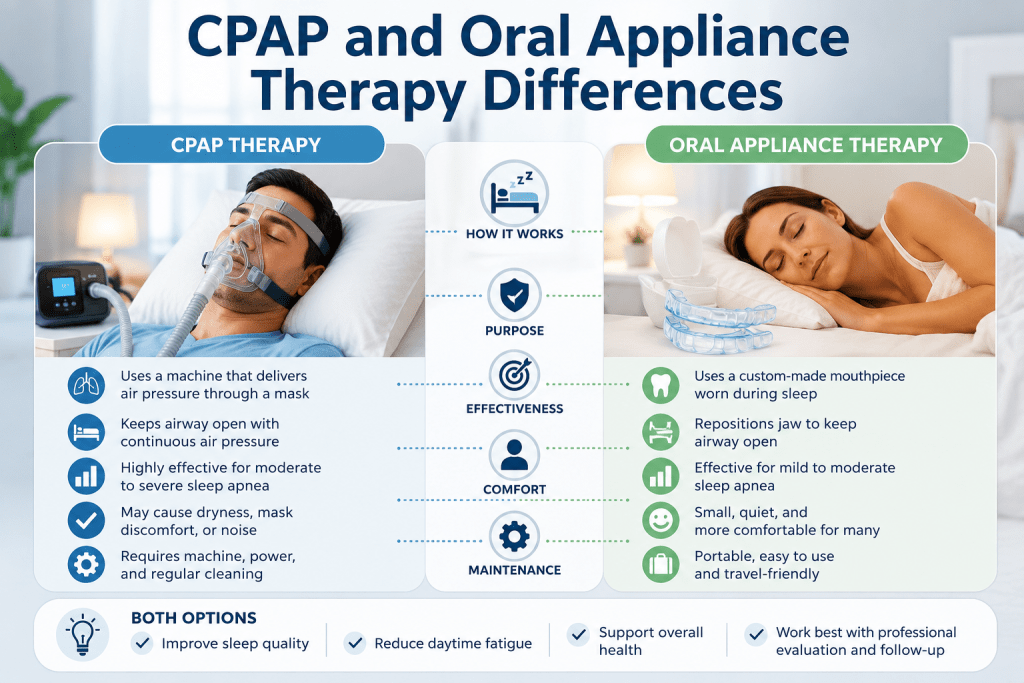
The core difference between CPAP and oral appliance therapy is the method. CPAP uses air pressure from a machine to splint the airway open. An oral appliance uses a physical change in jaw position to create more room at the back of the throat. One pushes air in, the other shifts the jaw forward.
That single difference shapes almost everything else, from setup and noise to travel and upkeep. A direct, in-depth comparison lives on the oral appliance versus CPAP page, which is a helpful next read once you understand the basics here.
Severity also plays a role. CPAP tends to handle a broad range of cases, including more severe ones. Oral appliances often suit mild to moderate cases, and they can be a strong option for people who find the CPAP mask hard to tolerate. The guide to managing sleep apnea without CPAP explores when an appliance may fit.
Comparing CPAP and Oral Appliance Therapy Side by Side
Looking at CPAP and oral appliance therapy in a simple side by side view can make the choice clearer.
Feature | CPAP | Oral Appliance |
How it works | Air pressure holds the airway open | Jaw moves forward to widen the airway |
Size | Machine, hose, and mask | Small device that fits in the mouth |
Noise | A soft hum from the motor | Silent |
Travel | Needs power and packing space | Slips into a small case |
Best fit | Mild to severe cases | Often mild to moderate cases |
Cleaning | Mask, hose, and tank care | Quick rinse and brush |
Neither option is automatically better than the other, the right pick depends on your body, your sleep, and what you will actually use every night. A device only helps when you wear it, so comfort and habit carry real weight in this decision.
How Each Option Feels to Use
Comfort is where many people make their decision. CPAP delivers steady airflow, which some users find soothing once they adjust, while others take time to get used to the mask and the sensation of pressure. A travel-friendly unit, like the one covered in the ResMed AirMini review, can ease the bulk for people on the go.
Oral appliances skip the mask and the airflow entirely, so they feel less intrusive for many users, though some notice mild jaw soreness or extra saliva at first. Those early sensations usually settle as the jaw adjusts. Keeping the device clean is simple, and the steps are spelled out in the guide on how to clean a sleep apnea oral appliance.
Who Each Option Fits Best
Picking between CPAP and oral appliance therapy is rarely about which is best in general. It is about which is best for you. People with more severe breathing pauses often start with CPAP because of its broad reach. People with milder cases, frequent travel, or strong mask discomfort may lean toward an oral appliance.
Dr. Avinesh Bhar often reminds patients that the deciding factor is consistency. The option you stick with night after night is the one that supports your sleep over the long run. A virtual visit can help match the choice to your test results and your lifestyle, and you can start with a quick home sleep test.
Cost, Insurance, and Daily Upkeep
Both paths come with their own costs and care routines. CPAP machines, masks, and filters need regular replacement, and many plans help cover them. You can read about coverage in the article on whether insurance covers CPAP machines.
Oral appliances carry their own fitting and replacement timeline, and coverage varies by plan. To see what your benefits include for either route, the fastest step is to check directly with the SLIIIP team using the verify benefits link above. Clear cost expectations help you choose a path you can keep up over time.
Lifestyle Habits That Support Either Choice
Whichever device you choose, healthy sleep habits make it work better.
- Keep a steady sleep schedule. Going to bed and waking at the same time helps your body settle into a rhythm. The ultimate sleep routine guide offers a simple framework.
- Mind your sleep position. Some people breathe easier on their side. The overview of the best sleeping position explains why.
- Limit alcohol near bedtime. Alcohol can relax the throat muscles and make breathing pauses more likely.
- Support a healthy weight. Weight can influence breathing during sleep, as covered in the piece on whether losing weight reduces sleep apnea.
- Stick with your routine. The benefit of any device builds over time, so steady nightly use matters more than perfect nights here and there.
These habits are wellness steps, not replacements for professional guidance. For any health concern about your breathing or sleep, your own physician is the right person to guide your next move.
Watch: Sleep Disorder Treatment Success Story. CPAP Story! Patient is happy with Sleep Apnea Treatment.
Trusted General Resources
For a broad, plain-language background on healthy sleep, the CDC sleep information page is a reliable starting point. For an overview of breathing pauses during sleep, the NHLBI sleep apnea page offers clear, general education.
At Sliiip, we accept the following insurances:

SLIIIP’s board-certified sleep physicians can do sleep evaluations for sleep apnea. Virtual consultations in all 50 states. Home sleep tests shipped to your door.
Frequently Asked Questions
What is the main difference between CPAP and oral appliance therapy?
CPAP uses air pressure from a machine to hold the airway open, while an oral appliance shifts the lower jaw forward to widen the airway. One uses airflow, the other uses jaw position.
Is a CPAP machine more effective than an oral appliance?
CPAP works across a wide range of cases, including more severe ones. An oral appliance often suits mild to moderate cases. The best choice depends on your test results and what you will use nightly, so talk with a sleep physician.
Does an oral appliance work for severe cases?
Oral appliances are most often used for mild to moderate cases. For more severe breathing pauses, a sleep physician can explain whether an appliance, CPAP, or another path fits best.
Can I switch from CPAP to an oral appliance?
Many people explore a switch, especially if the mask feels hard to tolerate. A sleep physician can review your case and explain whether an oral appliance may be a good fit for you.
Which option is better for travel?
An oral appliance packs into a small case and needs no power. CPAP needs the machine and a power source, though travel units are smaller. Many frequent travelers value the simplicity of an appliance.
Are oral appliances quieter than CPAP machines?
Yes. Oral appliances make no sound. CPAP machines produce a soft hum from the motor, which most users find easy to sleep through.
Does insurance cover both options?
Coverage varies by plan for both CPAP and oral appliances. The quickest way to check is to verify your benefits directly with the SLIIIP team.
How long does it take to get used to each option?
Some people adjust within days, others over a few weeks. CPAP users adapt to the mask and airflow, while oral appliance users adapt to the jaw position. Patience helps with either.
Can I use a CPAP machine and an oral appliance together?
Some people use both in different situations. A sleep physician can explain whether a combined approach makes sense for your case.
Is an oral appliance the same as a store-bought mouthguard?
No. A custom oral appliance is fitted to your bite for comfort and results. A generic mouthguard is not built for the same purpose and fits differently.
Which option is easier to clean?
Oral appliances usually need a quick rinse and brush. CPAP requires care for the mask, hose, and water tank. Both routines are simple once they become a habit.
Do oral appliances cause jaw soreness?
Some users notice mild jaw soreness or extra saliva early on. These sensations often ease as the jaw adjusts. Share any lasting discomfort with your provider.
Does CPAP help with snoring more than an oral appliance?
Both can reduce snoring by keeping the airway open. Which works better depends on the person. A sleep physician can help you compare based on your case.
How do I know which option is right for me?
A sleep evaluation and your test results help match the option to your breathing and lifestyle. A virtual visit with a sleep physician can guide that choice.
Can an oral appliance help if I cannot tolerate CPAP?
For many people who struggle with the CPAP mask, an oral appliance is a comfortable alternative worth discussing with a sleep physician.
Do I need a sleep study before either option?
A sleep study or home sleep test gives the information needed to guide your choice. SLIIIP offers home sleep tests shipped to your door.
How often do oral appliances need to be replaced?
Replacement timing varies based on wear and fit. Your provider can advise on the right schedule for your device.
Is CPAP loud at night?
Modern CPAP machines are designed to run quietly, with only a soft hum. Most users and bed partners adjust easily.
Does weight affect which option works best?
Weight can influence breathing during sleep. A sleep physician can factor that in when helping you compare your options.
Where can I talk to a sleep doctor about these options?
SLIIIP offers virtual consultations in all 50 states, so you can discuss CPAP and oral appliance therapy from home and start with a simple home sleep test.
Take the Next Step
SLIIIP’s board-certified sleep physicians can do sleep evaluations for sleep apnea. Virtual consultations in all 50 states. Home sleep tests shipped to your door.
SLIIIP’s board-certified sleep physicians can do sleep evaluations for sleep apnea. Virtual consultations in all 50 states. Home sleep tests shipped to your door.
Latest posts
-
Why Does My Body Ache and I Feel Tired With No Fever?
Last updated: October 13, 2026. Medically reviewed by Dr. Avinesh Bhar, Board-Certified Sleep Physician, SLIIIP.com. If your body aches and you feel tired with no fever, the cause is often…
-
COVID and Sleep: Why Sleep Problems Can Linger After Infection
Last updated: October 13, 2026. Medically reviewed by Dr. Avinesh Bhar, Board-Certified Sleep Physician, SLIIIP.com. The link between COVID and sleep often shows up after the test turns negative. Sleep…
-
Why Do I Feel Drunk or Confused When I Wake Up?
Last updated: October 2, 2026. Medically reviewed by Dr. Avinesh Bhar, Board-Certified Sleep Physician, SLIIIP.com. If you often feel drunk when you wake up, you may have sleep drunkenness. It…
Get updates
Spam-free subscription, we guarantee. This is just a friendly ping when new content is out.

