👉 Register for Free. How to Diagnose Sleep Apnea Faster in Primary Care – FREE Webinar by Dr. Audrey Wells. – Friday, April 24 at 12 PM ET

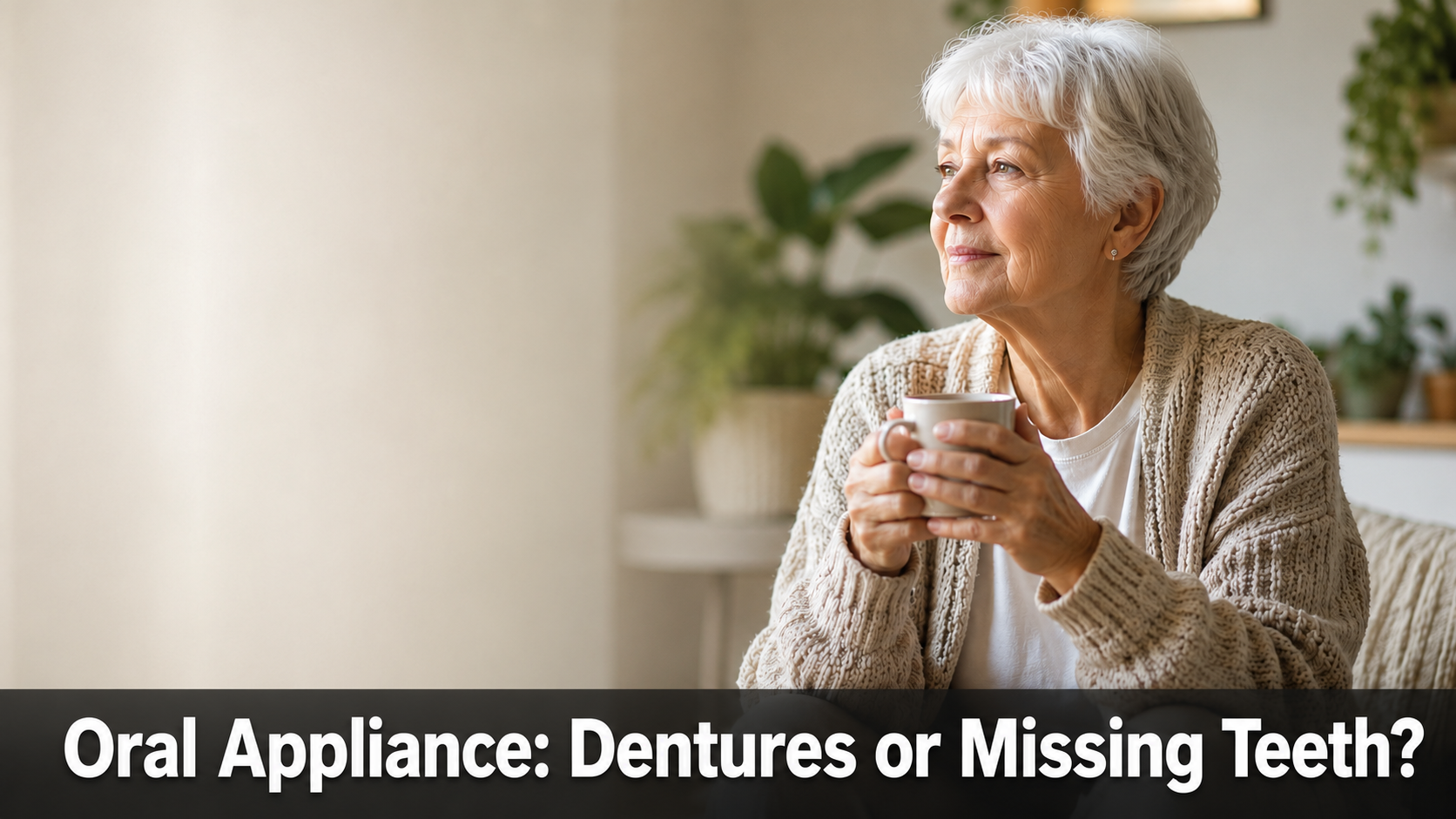
Can You Use an Oral Appliance with Dentures or Missing Teeth
An oral appliance is a popular option for snoring and sleep apnea, and Dr. Avinesh Bhar, Board-Certified Sleep Physician at SLIIIP.com, explains that whether one can work with dentures or missing teeth depends on your unique mouth and a professional assessment.
If you wear dentures or have missing teeth, the right answer is not a simple yes or no, but it is worth exploring with a professional.
Many people assume that dentures or gaps in their smile rule out this kind of device. That is not always the case.
SLIIIP’s board-certified sleep physicians can do sleep evaluations for sleep apnea. Virtual consultations in all 50 states. Home sleep tests shipped to your door.
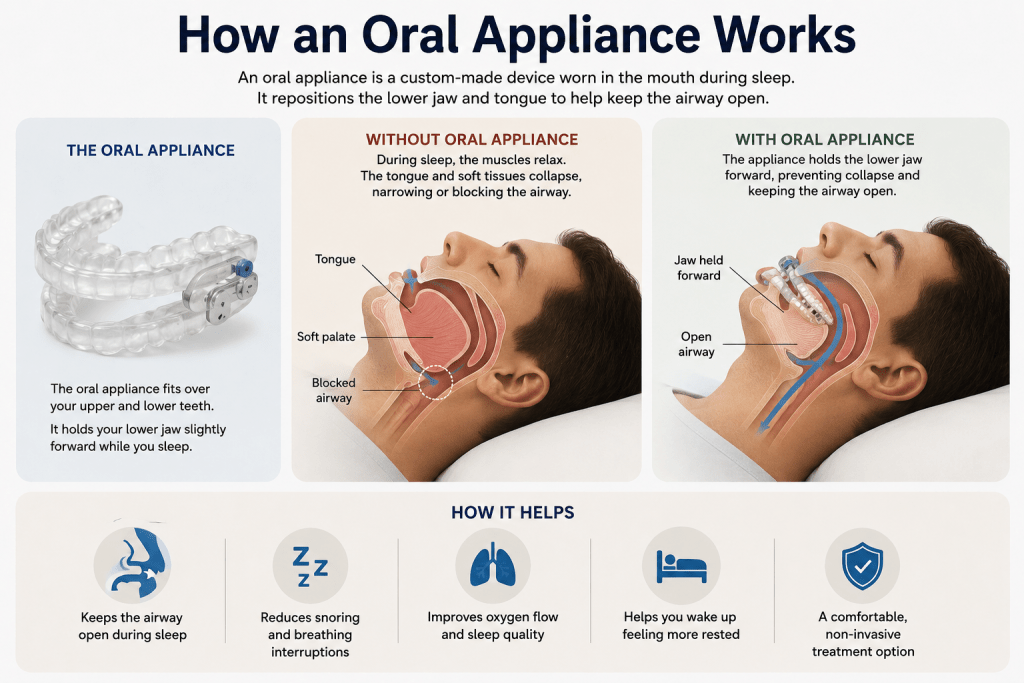
How an Oral Appliance Works
It is a custom device worn in the mouth during sleep. It looks a little like a mouthguard. Its job is to gently hold the lower jaw forward, which helps keep the airway more open while you rest.
By holding the jaw in a slightly forward position, the device aims to reduce the airway narrowing that can lead to snoring and breathing pauses. Because it is small and quiet, many people find it easier to use than other options. It travels well and needs no power.
To understand the device in more depth, our guide on oral appliance therapy explains the basics. You can also read how it compares to other approaches in our article on the appliance versus other options.
CHECK YOUR SLEEP SYMPTOMS: TAKE THE 2 MINUTE QUIZ
TAKE THE QUIZ
Why Teeth Matter for Fit
Here is the key point. A typical device anchors to your upper and lower teeth to hold the jaw in place. That is how it stays put and does its job through the night. So the health and number of your teeth matter for how well it fits.
Because most devices grip the teeth to stay in position, the state of your teeth plays a big role in whether a standard option will work. This is why dentures and missing teeth raise fair questions. The good news is that having fewer teeth does not always mean the door is closed.
A professional can look at your specific situation and tell you what is realistic. Our article on a custom device versus a basic mouthguard explains why a tailored fit matters so much.
Using an Oral Appliance With Dentures
Dentures add an extra layer to the question. The answer often depends on the type of dentures you have and how secure they are. Loose full dentures can make a standard device harder to anchor, while well-fitted or implant-supported options may offer more possibilities.
Whether dentures and a sleep device can work together depends on the type of dentures and a professional assessment of your mouth. Some people with dentures find suitable options, while others may be guided toward a different approach. There is no single answer that fits everyone.
This is exactly the kind of question a sleep professional and a dentist can answer together. Rather than guessing, getting a personal evaluation gives you a clear, honest picture of what is possible.
What About Missing Teeth?
Missing a few teeth is different from wearing full dentures. In some cases, a custom device can still be designed to work around gaps or anchor to the teeth that remain. In other cases, the number and position of missing teeth may make a standard option less practical.
A few missing teeth do not automatically rule out a device, but the details of your mouth decide what is possible. A professional can assess which teeth you have, how strong they are, and whether a suitable fit can be made.
If your main concern is snoring, our article on a device for snoring offers helpful background. The right path always starts with understanding your own situation first.
The Importance of a Proper Evaluation
No online article can tell you for sure whether a device will work for your mouth. That answer comes from a personal evaluation. A sleep professional can confirm whether snoring or sleep apnea is the issue, and a dental assessment can check what your teeth and gums can support.
A proper evaluation is the only reliable way to know what option fits your needs, your mouth, and your health. Skipping this step can lead to a poor fit or a device that does not help. Doing it right saves time and frustration.
This is where a clear diagnosis matters. Our overview of what sleep apnea is explains why understanding the cause comes first. A home sleep test done in your own bed can give the answers a professional needs.
According to the National Heart, Lung, and Blood Institute, healthy sleep supports many body systems. Finding the right approach for better rest is a worthwhile goal.
Caring for a Sleep Device
If you and your provider decide a device is right for you, taking care of it matters. Daily cleaning keeps it fresh and helps it last. A well-kept device is more comfortable and more pleasant to use night after night.
Simple, regular cleaning keeps your device comfortable, hygienic, and ready for use. This is true whether you have a full set of teeth, missing teeth, or dentures. Good habits protect your investment in better sleep.
Our guide on how to clean a sleep device walks through easy daily care. Keeping it clean is a small step that makes a real difference.
Other Options Worth Knowing
A mouth device is not the only path to better sleep. If your teeth or dentures make a standard option tricky, other approaches may suit you better. The right choice depends on your health, your comfort, and what is causing your sleep trouble.
There is usually more than one way to support better sleep, so a closed door on one option is not the end of the road. A sleep professional can walk you through the choices and help you find a fit for your life.
For more general help with snoring, our article on how to stop snoring shares everyday habits. And our deeper look at device therapy for sleep apnea covers how these options fit into a broader plan.
Watch: Sleep Apnea – What is Oral Appliance Therapy? (SLIIIP)
When to Talk With a Sleep Physician
If you snore, awake gasping, or feel tired no matter how long you sleep, it may be time to get a professional look before choosing any device. Understanding the cause comes first.
A sleep evaluation can confirm what is disturbing your sleep and guide you toward the right option for your mouth and your health. Dr. Avinesh Bhar and the SLIIIP team can review your sleep history, talk through your symptoms, and arrange a home sleep test if needed.
The process is built around convenience. You can meet a board-certified physician through a virtual visit, and a home sleep test can be shipped right to your door. There is no need to spend a night in a lab. The Centers for Disease Control and Prevention also shares clear guidance on healthy sleep, and our sleep telemedicine page explains how virtual care works.
At Sliiip, we accept the following insurances:

SLIIIP’s board-certified sleep physicians can do sleep evaluations for sleep apnea. Virtual consultations in all 50 states. Home sleep tests shipped to your door.
Frequently Asked Questions
- Can I use an oral appliance with dentures?
It depends on the type of dentures and a professional assessment. Well-fitted or implant-supported dentures may offer more options than loose full dentures. - Can I use a sleep device with missing teeth?
Sometimes. A few missing teeth do not automatically rule it out, but the number and position of missing teeth affect what is possible. - How does an oral appliance work?
It is a custom device worn during sleep that gently holds the lower jaw forward to help keep the airway more open. - Why do teeth matter for these devices?
Most devices anchor to the upper and lower teeth to stay in place, so the health and number of your teeth affect the fit. - Are loose dentures a problem?
Loose full dentures can make a standard device harder to anchor, while more secure options may offer more possibilities. - Do I need a custom device?
A custom-fitted device usually works better than a basic mouthguard. Our article on custom versus basic options explains why fit matters. - Can a device help with snoring only?
Yes, some devices are used for snoring. A professional can confirm whether snoring or a breathing issue is the cause. - Who decides if a device will fit me?
A sleep professional and a dentist can assess your mouth together to give you an honest picture of what is possible. - Is an oral appliance the only option?
No. There is usually more than one way to support better sleep. A professional can walk you through the choices. - What is a home sleep test?
It is a sleep study you can do in your own bed. The device is shipped to you, and the results help a physician understand your nights. - Do I have to visit a lab for a sleep evaluation?
No. SLIIIP offers virtual consultations in all 50 states, and home sleep tests can be shipped to your door. - How do I clean a sleep device?
Simple daily cleaning keeps it fresh and comfortable. Our guide on cleaning a sleep device walks through easy steps. - Will a device work if I have implants?
Implants can sometimes offer a stable anchor, but only a professional assessment can confirm what works for your mouth. - Is a device comfortable to wear?
Many people find a well-fitted device comfortable and easy to use. A custom fit makes a big difference in comfort. - Can I travel with a sleep device?
Yes. These devices are small, quiet, and need no power, which makes them easy to take along when you travel. - Should I get a diagnosis before choosing a device?
Yes. Understanding the cause of your sleep trouble comes first, which is why a sleep evaluation is an important step. - What if a device is not right for me?
A closed door on one option is not the end of the road. A professional can guide you toward another approach that fits. - How much sleep do adults need?
Most adults benefit from at least seven hours of sleep each night to support overall health and wellbeing. - What happens during a sleep evaluation?
A physician reviews your sleep history and symptoms and, if needed, arranges a home sleep test to better understand your nights. - How do I get started with SLIIIP?
You can schedule a virtual sleep evaluation online, and a board-certified physician will guide you toward the right next step.
Take the Next Step Toward Better Rest
Dentures or missing teeth do not have to stand between you and better sleep. With the right evaluation, you can find an approach that fits your mouth and your needs. You do not have to figure it out alone.
SLIIIP’s board-certified sleep physicians can do sleep evaluations for sleep apnea. Virtual consultations in all 50 states. Home sleep tests shipped to your door.
Latest posts
-
Why Can’t I Wake Up Even After Getting Enough Sleep?
Last updated: October 2, 2026. Medically reviewed by Dr. Avinesh Bhar, Board-Certified Sleep Physician, SLIIIP.com. If you can’t wake up after enough sleep, the cause is usually not the number…
-
Why Does My Heart Rate Drop So Low While I Sleep?
Last updated: October 2, 2026. Medically reviewed by Dr. Avinesh Bhar, Board-Certified Sleep Physician, SLIIIP.com. Your heart rate drops low while sleeping mainly because your body needs less work from…
-
Why Are My Naps Never Refreshing?
Last updated: October 2, 2026. Medically reviewed by Dr. Avinesh Bhar, Board-Certified Sleep Physician, SLIIIP.com. Naps that leave you groggy usually come down to how long you sleep, when you…
Get updates
Spam-free subscription, we guarantee. This is just a friendly ping when new content is out.

