👉 Register for Free. How to Diagnose Sleep Apnea Faster in Primary Care – FREE Webinar by Dr. Audrey Wells. – Friday, April 24 at 12 PM ET


The “Sleep Divorce” Survival Guide: How to Sleep Apart Without Growing Apart
Sleep divorce is becoming a popular choice for couples who rest better in separate beds, and Dr. Avinesh Bhar, Board-Certified Sleep Physician at SLIIIP.com, points out that choosing to sleep apart is often about protecting rest, not pulling away from each other.
When two people sleep better in their own space, the relationship can actually benefit from the extra rest each partner gets.
The term sounds dramatic, but the idea is simple. Many couples are discovering that separate sleep can lead to deeper rest, fewer arguments, and brighter mornings together.
SLIIIP’s board-certified sleep physicians can do sleep evaluations for sleep apnea. Virtual consultations in all 50 states. Home sleep tests shipped to your door.
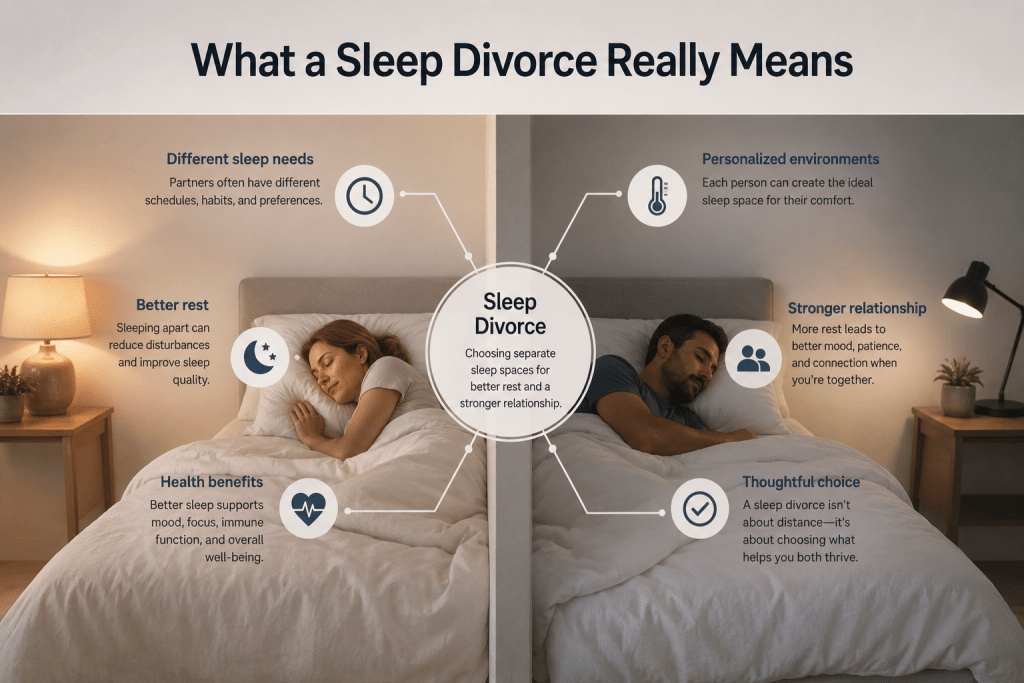
What a Sleep Divorce Really Means
Sleeping apart is simply when two partners choose to sleep in separate beds or separate rooms, at least some of the time. The name makes it sound like a breakup, but it has nothing to do with ending a relationship. It is a sleep strategy, not a relationship decision.
A sleep divorce is about getting better rest, not about loving each other less. Many happy couples make this choice and feel closer from it, because they wake up rested instead of cranky and worn out.
The goal of this guide is to help you think through the choice in a healthy way. If snoring, tossing, or different schedules keep disturbing your nights, a sleep telemedicine visit can help you understand what is happening before you decide.
CHECK YOUR SLEEP SYMPTOMS: TAKE THE 2 MINUTE QUIZ
TAKE THE QUIZ
Why Couples Choose to Sleep Apart
There are many reasons a couple might try sleeping in separate spaces. Often it comes down to one partner’s sleep disturbing the other. Common reasons include snoring, frequent tossing and turning, and very different bedtimes.
When one partner’s sleep habits keep waking the other, both people end up tired, which can strain the relationship more than separate beds ever would. Resentment from lost sleep is real. Many couples find that a good night apart leaves them kinder and more patient together.
Snoring is one of the most common reasons couples consider separate beds. If that is your situation, our guide on how to stop snoring is a helpful read. Loud snoring can sometimes point to a sleep issue worth checking, which we cover below.
When Snoring Is More Than a Nuisance
Here is something many couples miss. Heavy, regular snoring is not just annoying. It can sometimes be a sign of a sleep-related breathing pattern like sleep apnea. So before you decide separate beds are the only answer, it can be worth understanding the cause.
Loud snoring that comes with gasping, pauses, or constant tiredness is worth a closer look, since it may point to something a sleep physician can help with. Addressing the root cause can sometimes improve sleep for both partners, whether they share a bed or not.
Our overview of what sleep apnea is explains the basics, and our list of signs of sleep apnea can help you spot common clues. A home sleep test done in your own bed can give clear answers without a trip to a lab.
How to Sleep Apart Without Growing Apart
The biggest worry couples have about sleeping apart is losing closeness. The good news is that with a little planning, you can protect your bond while still getting the rest you need. Closeness is built in many ways, not just by sharing a mattress.
Intimacy and connection come from intention, not only from sleeping in the same bed. Couples who sleep apart often keep their bond strong by being thoughtful about how they spend time together.
Here are simple ways to stay connected:
Keep a shared wind-down. Spend the hour before bed together, even if you sleep in different rooms.
Protect morning time. A coffee together or a few quiet minutes can start the day connected.
Stay affectionate. Hugs, cuddles, and time in one bed before sleep keep closeness alive.
Talk about it openly. Make the choice together so neither partner feels pushed away.
Plan intimate time. Closeness does not have to depend on a shared sleep schedule.
For more on how rest connects to intimacy and drive, our article on how sleep affects libido offers a balanced look. Better rest can actually support a healthier connection.
The Wellness Benefits of Better Rest
When both partners sleep well, the whole relationship can feel lighter. Good rest supports mood, patience, focus, and energy. Two well-rested people simply have more to give each other.
Quality sleep is one of the best things you can do for your mood and your relationship, and a sleep divorce is one tool some couples use to get there. It is not the right choice for everyone, but for many, it makes a real difference.
If you want to improve your rest whether you sleep together or apart, our guide on reasons for improving the quality of your sleep and our ultimate sleep routine guide both share practical habits.
According to the Centers for Disease Control and Prevention, most adults need at least seven hours of sleep each night for good health. Protecting that rest is a smart goal for both partners.
Making the Choice Together
Sleeping apart works best when both partners feel good about it. The decision should never feel like rejection. It should feel like a shared plan to help both people feel their best.
The healthiest sleep divorce is one both partners choose together, with honesty and care. Talk about your reasons, your worries, and what closeness looks like for you. Many couples find the conversation itself brings them closer.
You can also treat it as a flexible choice. Some couples sleep apart on work nights and together on weekends. Others switch as needed. There is no single right way to do it.
Watch: Menopause and Sleep Apnea – SLIIIP.COM
When to Talk With a Sleep Physician
If snoring, restless nights, or constant tiredness are driving you toward separate beds, it may be worth getting a professional look first. Sometimes the real fix is understanding what is disturbing your sleep.
A sleep evaluation can help you and your partner understand whether a sleep issue is behind your restless nights. Dr. Avinesh Bhar and the SLIIIP team can review your sleep history, talk through your symptoms, and arrange a home sleep test if needed.
The process is built around convenience. You can meet a board-certified physician through a virtual visit, and a home sleep test can be shipped right to your door. There is no need to spend a night in a lab. For the bigger picture on why rest matters so much, our article on the importance of sleep and the National Heart, Lung, and Blood Institute both offer clear, plain-language guidance.
At Sliiip, we accept the following insurances:

SLIIIP’s board-certified sleep physicians can do sleep evaluations for sleep apnea. Virtual consultations in all 50 states. Home sleep tests shipped to your door.
Frequently Asked Questions
- What is a sleep divorce?
It is when two partners choose to sleep in separate beds or rooms, at least some of the time, to get better rest. It is a sleep strategy, not a breakup. - Does sleeping apart mean relationship trouble?
No. Many happy couples sleep apart and feel closer for it, because better rest leaves them kinder and more patient together. - Why do couples choose to sleep apart?
Common reasons include snoring, frequent tossing and turning, and very different bedtimes that keep one partner awake. - Can sleeping apart actually help my relationship?
For many couples, yes. Two well-rested people often have more energy, patience, and warmth to give each other. - How do we stay close if we sleep in separate rooms?
Keep a shared wind-down, protect morning time together, stay affectionate, and plan intimate time. Closeness comes from intention. - Is snoring a reason to consider sleeping apart?
It is one of the most common reasons. But heavy snoring can sometimes signal a sleep issue worth checking before you decide. - When is snoring more than a nuisance?
Loud snoring with gasping, pauses, or constant tiredness may point to a sleep-related breathing pattern worth a professional look. - Can a sleep evaluation help with snoring?
A physician can help you understand the cause of snoring, which may improve sleep for both partners, whether you share a bed or not. - What is a home sleep test?
It is a sleep study you can do in your own bed. The device is shipped to you, and the results help a physician understand your nights. - Do I have to visit a lab for a sleep evaluation?
No. SLIIIP offers virtual consultations in all 50 states, and home sleep tests can be shipped to your door. - Will sleeping apart hurt our intimacy?
It does not have to. Intimacy comes from intention, and many couples keep a strong bond while sleeping in separate spaces. - Can we sleep apart only some nights?
Yes. Many couples sleep apart on work nights and together on weekends, or switch as needed. There is no single right way. - How do we decide if sleeping apart is right for us?
Talk openly about your reasons, worries, and what closeness means to you. The healthiest choice is one both partners make together. - Does better sleep affect mood?
Yes. Good rest supports mood, patience, focus, and energy, which can help the whole relationship feel lighter. - How much sleep do adults need?
Most adults benefit from at least seven hours of sleep each night to support overall health and wellness. - Can different schedules cause sleep problems for couples?
Yes. Very different bedtimes can disturb one partner’s rest, which is a common reason couples try sleeping apart. - Does poor sleep affect drive and connection?
Sleep supports mood and drive, so better rest can actually support a healthier connection between partners. - Should we feel guilty about wanting separate beds?
No. Choosing rest is a healthy decision. Sleeping apart is a tool many couples use to feel their best together. - What happens during a sleep evaluation?
A physician reviews your sleep history and symptoms and may arrange a home sleep test to better understand your nighttime breathing. - How do I get started with SLIIIP?
You can schedule a virtual sleep evaluation online, and a board-certified physician will guide you, including arranging a home sleep test if needed.
Take the Next Step Toward Better Rest
Sleeping apart can be a healthy choice when it helps both partners rest well and wake up happier. With honesty and a little planning, you can protect your sleep and your bond. You do not have to choose between rest and closeness.
SLIIIP’s board-certified sleep physicians can do sleep evaluations for sleep apnea. Virtual consultations in all 50 states. Home sleep tests shipped to your door.
Latest posts
-
Why Does My Body Ache and I Feel Tired With No Fever?
Last updated: October 13, 2026. Medically reviewed by Dr. Avinesh Bhar, Board-Certified Sleep Physician, SLIIIP.com. If your body aches and you feel tired with no fever, the cause is often…
-
COVID and Sleep: Why Sleep Problems Can Linger After Infection
Last updated: October 13, 2026. Medically reviewed by Dr. Avinesh Bhar, Board-Certified Sleep Physician, SLIIIP.com. The link between COVID and sleep often shows up after the test turns negative. Sleep…
-
Why Do I Feel Drunk or Confused When I Wake Up?
Last updated: October 2, 2026. Medically reviewed by Dr. Avinesh Bhar, Board-Certified Sleep Physician, SLIIIP.com. If you often feel drunk when you wake up, you may have sleep drunkenness. It…
Get updates
Spam-free subscription, we guarantee. This is just a friendly ping when new content is out.

