👉 Register for Free. How to Diagnose Sleep Apnea Faster in Primary Care – FREE Webinar by Dr. Audrey Wells. – Friday, April 24 at 12 PM ET

Why Did My Sleep Quality Drop Last Night? A Sleep Physician Explains
A sudden sleep quality drop usually traces back to something specific that happened in the 24 hours before bed, explains Dr. Avinesh Bhar, Board-Certified Sleep Physician at SLIIIP.com, and identifying that trigger is the first step toward a better night. Most people notice the change before their tracker does. You woke up groggy, your head felt heavy, and the number on your watch was lower than usual. A single rough night is normal and rarely a sign of anything serious. What matters more is whether the pattern repeats.
SLIIIP’s board-certified sleep physicians can do sleep evaluations for sleep apnea. Virtual consultations in all 50 states. Home sleep tests shipped to your door.
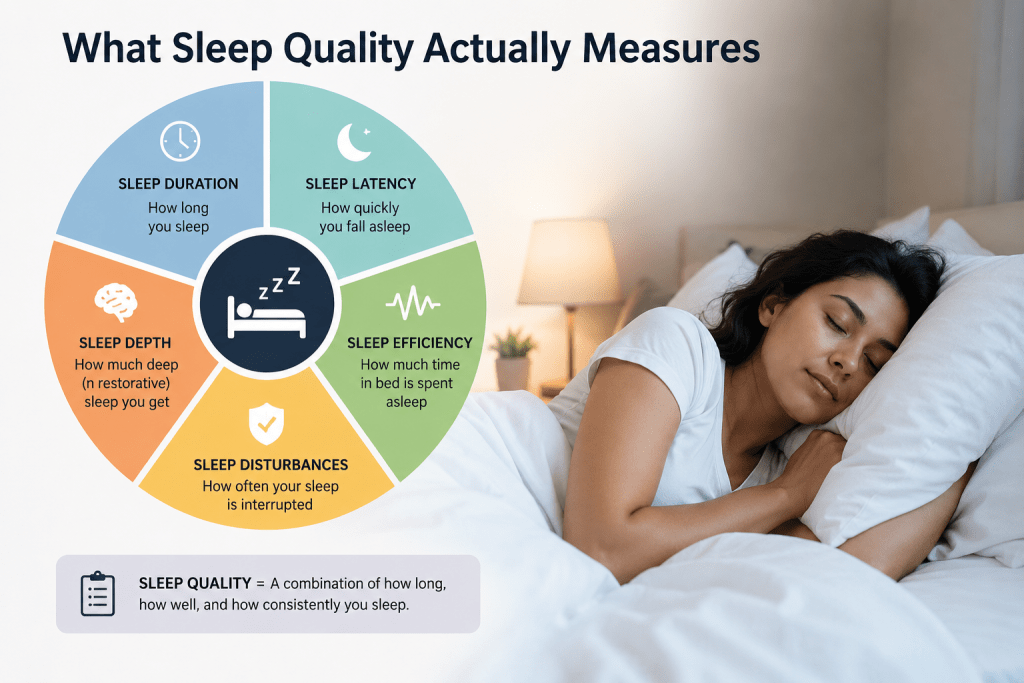
What Sleep Quality Actually Measures
When people say their sleep got worse, they are usually describing one of four things. The first is total time asleep. The second is how long it took to fall asleep. The third is how many times they woke up, whether or not they remember it. The fourth is the mix of light, deep, and REM sleep across the night.
Consumer trackers estimate all four using movement and heart rate. They are useful for spotting trends over weeks, but they are not diagnostic tools and can misread a restless night as something worse. If you want more context on how these devices work and where they fall short, our guide to the wearable sleep tracker covers what the numbers can and cannot tell you.
Deep sleep tends to cluster in the first half of the night. REM sleep builds toward morning. That is why a late bedtime with the same wake time cuts REM more than deep sleep, and why an early alarm feels different from a late night even when the hours match.
CHECK YOUR SLEEP SYMPTOMS: TAKE THE 2 MINUTE QUIZ
TAKE THE QUIZ
Why a Sleep Quality Drop Happens After One Ordinary Day
Most single-night changes come from a short list of everyday inputs. Look at yesterday before you look for a disorder.
Alcohol is the most common culprit. A drink or two helps people fall asleep faster, then fragments the second half of the night as the body clears it. Alcohol in the evening reliably reduces REM sleep and increases awakenings after midnight, even in people who do not feel hungover.
Caffeine has a half life of roughly five to six hours in most adults, which means an afternoon coffee still has measurable levels in your system at bedtime. Sensitivity varies widely between individuals.
A large or late meal raises body temperature and can trigger reflux when you lie flat. Spicy or fatty food within three hours of bed is a frequent cause of a sleep quality drop that people never connect to dinner.
Room temperature matters more than most people expect. Core body temperature needs to fall for sleep to consolidate. A warm room, heavy bedding, or a hot summer night blocks that drop.
Stress and a busy mind raise evening cortisol and delay sleep onset. If your thoughts race the moment your head hits the pillow, our article on why you overthink before bed walks through what helps.
Late intense exercise can push body temperature and heart rate up for hours. Morning or early evening training generally supports sleep. A hard session at nine at night often does not.
Illness and allergies narrow the nasal airway. Congestion pushes people toward mouth breathing, which fragments sleep and dries the throat.
Travel and schedule shifts move your internal clock out of line with your bedtime. Even one late weekend night can carry over.
How Fragmentation Changes How You Feel
You can sleep eight hours and still wake up unrefreshed if those hours were broken into short pieces. Brief awakenings that last only a few seconds often do not reach conscious memory, yet they still interrupt the progression through sleep stages. Twenty of them across a night add up.
This is why total sleep time alone is a poor measure of how you will feel. The Centers for Disease Control and Prevention notes that both duration and quality contribute to health outcomes, and that adults generally need at least seven hours on a regular basis.
If you keep waking during the night without an obvious reason, our piece on waking up at 2am explains the common patterns.
When a Sleep Quality Drop Is Not a One Night Problem
One bad night explains itself. Three bad weeks does not. The signal worth paying attention to is a change that persists after you have removed the obvious triggers.
Watch for these patterns:
- Poor sleep quality most nights for a month or longer
- Daytime sleepiness that interferes with driving, work, or conversation
- Loud snoring, gasping, or pauses in breathing reported by a partner
- Waking with a dry mouth, sore throat, or morning headache
- Needing more and more sleep to feel functional
Persistent short or fragmented sleep is associated with a range of health concerns, and the National Heart, Lung, and Blood Institute maintains a plain language overview of sleep deprivation and deficiency that is worth reading if the pattern has lasted.
Fatigue that does not lift with rest deserves attention. If that describes you, see why am I exhausted no matter how much I sleep.
Breathing Patterns Worth Ruling Out
Breathing that becomes unstable during sleep is one of the more common reasons quality stays low night after night. It fragments sleep without waking the person enough to remember it, which is why so many people report feeling tired despite a full night in bed.
Snoring that is loud, nightly, and accompanied by morning grogginess is worth discussing with a physician rather than ignoring. Position, weight, alcohol, and nasal congestion all influence it. Our overview of how to stop snoring covers the practical starting points.
According to Dr. Avinesh Bhar, a careful history usually points in the right direction before any testing happens. Timing of symptoms, partner observations, medication use, and daytime function all shape the picture. A sleep evaluation is one part of a broader clinical assessment, not a standalone answer. Concerns involving the heart, mood, or an existing medical condition are best raised with the physician managing that care as well.
Habits That Support Better Nights
None of these fix a single bad night after the fact. They reduce how often it happens.
Keep your wake time steady. A consistent morning anchor is more effective than a consistent bedtime because it stabilizes your internal clock. Our guide to fixing your sleep schedule walks through the process.
Get morning light. Fifteen to thirty minutes of outdoor light within an hour of waking strengthens the timing signal your body uses at night.
Set a caffeine cutoff. Eight hours before bed is a reasonable default for most adults. Move it earlier if you are sensitive.
Cool the room. Most people sleep better between 60 and 67 degrees Fahrenheit.
Give alcohol a wide margin. If you drink, finishing three or more hours before bed reduces the effect on the second half of the night.
Protect the last hour. Dim lighting, lower stimulation, and a predictable routine tell the body what is coming.
Do not chase the number. Checking your tracker anxiously each morning can itself worsen sleep. Trends over weeks are useful. Single nights are noise.
Watch: How to Get Better Sliiio – SLIIIP.COM
When to Talk to a Sleep Physician
A single sleep quality drop needs no medical attention. A pattern does. Consider an evaluation if poor sleep has lasted more than a month, if a partner has noticed breathing pauses, if you fall asleep unintentionally during the day, or if fatigue is affecting your safety or your work.
Never change or stop prescribed therapy, including CPAP settings, without speaking to your physician first.
At Sliiip, we accept the following insurances:

SLIIIP’s board-certified sleep physicians can do sleep evaluations for sleep apnea. Virtual consultations in all 50 states. Home sleep tests shipped to your door.
Frequently Asked Questions
Why did my sleep quality drop last night for no reason?
There is almost always a reason, but it may not be obvious. Alcohol, a late meal, a warm room, stress, illness, or a schedule shift are the usual explanations.
Is one night of poor sleep harmful?
No. A single rough night is normal and the body recovers quickly. Persistent poor sleep over weeks is what warrants attention.
Can my sleep tracker be wrong?
Yes. Consumer trackers estimate sleep stages from movement and heart rate. They are reasonable for trends and unreliable for any single night.
Does alcohol really affect sleep quality that much?
Yes. Alcohol shortens the time it takes to fall asleep but fragments the second half of the night and reduces REM sleep.
How long does caffeine stay in my system?
Roughly five to six hours for the half life in most adults, though sensitivity varies considerably between people.
Why do I feel worse after eight hours than after six?
Waking in the middle of a deep sleep cycle causes grogginess called sleep inertia. Total hours matter less than where in the cycle you wake.
Can stress alone lower sleep quality?
Yes. Elevated evening cortisol delays sleep onset and increases awakenings, even without any other change in routine.
Does room temperature matter?
Considerably. Core body temperature needs to fall for sleep to consolidate, and a warm room interferes with that process.
Should I nap after a bad night?
A short nap of 20 to 30 minutes early in the afternoon is generally fine. Longer or later naps can push back the following night.
Why is my deep sleep low but my REM normal?
Deep sleep concentrates early in the night. A late bedtime, alcohol, or evening exercise commonly reduces it while leaving REM more intact.
Can allergies cause poor sleep?
Yes. Nasal congestion narrows the airway and encourages mouth breathing, which fragments sleep and dries the throat.
Does exercise timing matter?
For many people, yes. Intense exercise within two to three hours of bed raises core temperature and heart rate enough to delay sleep.
Why do I wake up at the same time every night?
Consistent overnight awakenings often reflect circadian timing, alcohol clearance, reflux, or a breathing pattern that stabilizes at a similar point.
Is snoring always a problem?
Not always. Occasional snoring is common. Loud nightly snoring with daytime tiredness is worth discussing with a physician.
How many nights of bad sleep should worry me?
Poor sleep most nights for a month or more, especially with daytime symptoms, is a reasonable point to seek an evaluation.
Can medications lower sleep quality?
Some can, including certain blood pressure medications, antidepressants, and decongestants. Ask your prescribing physician rather than stopping anything.
Does screen use before bed matter?
Light and mental stimulation both delay sleep onset. The content you engage with often matters as much as the light itself.
Why does my sleep get worse before my period?
Hormonal shifts across the menstrual cycle affect body temperature and sleep continuity for many people.
Can I recover lost sleep on the weekend?
Partially. Extra weekend sleep helps with sleepiness but shifts your clock later, which often makes Sunday night harder.
What does a home sleep test measure?
It records breathing, oxygen levels, heart rate, and effort overnight in your own bed, then is reviewed by a board-certified physician.
Ready to Find Out What Is Behind Your Sleep
If poor sleep has become the rule rather than the exception, an evaluation can tell you whether something treatable is behind it.
SLIIIP’s board-certified sleep physicians can do sleep evaluations for sleep apnea. Virtual consultations in all 50 states. Home sleep tests shipped to your door.
Latest posts
-
Sleep Debt: What It Is and How to Pay It Back
Most people first hear the term sleep debt after a rough week, and Dr. Avinesh Bhar, Board-Certified Sleep Physician at SLIIIP.com, says the banking metaphor is useful right up until…
-
Studying at Night vs Morning: Which Works Better for You?
The debate over studying at night vs morning usually gets framed as a discipline question, but Dr. Avinesh Bhar, Board-Certified Sleep Physician at SLIIIP.com, treats it as a biology question…
-
Can’t Sleep the Night Before an Exam? Here Is What to Do
If you can’t sleep the night before an exam, you are dealing with a normal stress response rather than a broken sleep system, according to Dr. Avinesh Bhar, Board-Certified Sleep…
Get updates
Spam-free subscription, we guarantee. This is just a friendly ping when new content is out.

