👉 Register for Free. How to Diagnose Sleep Apnea Faster in Primary Care – FREE Webinar by Dr. Audrey Wells. – Friday, April 24 at 12 PM ET


How Sleep Apnea Mimics the Symptoms of ADHD in Adults
Sleep apnea can leave adults foggy, restless, and unable to focus, and Dr. Avinesh Bhar, Board-Certified Sleep Physician at SLIIIP.com, points out that these same signs are often blamed on ADHD in adults instead. Two very different issues can produce a strikingly similar daytime experience.
That overlap is easy to miss, which is why understanding it matters.
SLIIIP’s board-certified sleep physicians can do sleep evaluations for sleep apnea. Virtual consultations in all 50 states. Home sleep tests shipped to your door.
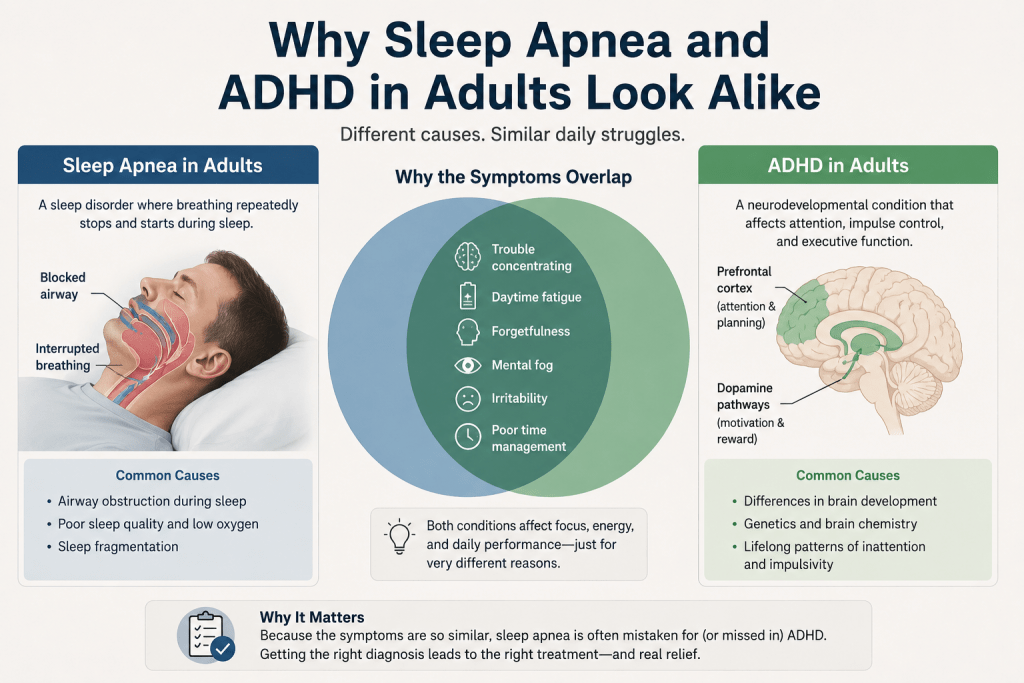
Why Sleep Apnea and ADHD in Adults Look Alike
ADHD in adults is often described through trouble focusing, forgetfulness, restlessness, irritability, and a foggy mind. The challenge is that poor sleep can create the very same picture. When the brain does not get steady rest, attention and mood suffer the next day.
Both conditions share a long list of daytime symptoms, which is exactly why they can be confused. A person who cannot concentrate at work may assume it is an attention problem. In some cases, the real driver is broken, low-quality sleep happening every night without their full awareness.
This is general information, not a diagnosis. Only a qualified clinician can tell what is actually going on for any one person. The goal here is simply to understand why the overlap exists.
CHECK YOUR SLEEP SYMPTOMS: TAKE THE 2 MINUTE QUIZ
TAKE THE QUIZ
What Sleep Apnea Does to the Brain
Sleep apnea is a condition where breathing repeatedly pauses during the night. Each pause can briefly disturb sleep and lower oxygen for a moment. You can read a clear overview of what sleep apnea is to understand the basics.
These interruptions stop the brain from reaching the deep, restorative stages it needs. As a result, the next day can feel scattered and slow. Many people describe this as a heavy mental fog, which is well covered in this piece on sleep apnea and brain fog.
When the brain is starved of quality rest night after night, focus and memory naturally take a hit. That is the core reason the daytime effects can resemble attention problems. The brain is simply running on empty.
The Daytime Symptoms That Overlap
The list of shared symptoms is long. Both can involve trouble paying attention, mental fog, low motivation, and a short fuse. If you often feel exhausted no matter how much you sleep, that fatigue can quietly drain your focus.
People also report feeling foggy and disconnected during the day, along with mood swings. Many notice they have become more irritable than usual without a clear reason. These feelings are real, and they deserve a real answer rather than a guess.
Because the symptoms blend together, the cause is not always obvious from the outside. That is why looking at how a person actually sleeps can add a missing piece. It turns a guessing game into something measurable.
Why Adults Get Missed More Often
Sleep apnea in adults can be quiet. Snoring is not always loud, and some people stop breathing without ever waking fully. A bed partner may not notice, and the sleeper may not remember a thing.
Because of this, the daytime tiredness gets explained away. Busy schedules, stress, and aging often take the blame first. Some adults spend years thinking they simply have a focus problem when their sleep is the real story. Learning the common signs of sleep apnea can help you spot clues worth raising with a doctor.
Adults are especially likely to overlook sleep apnea because the nightly events happen out of sight. This is one reason a structured look at sleep can be so revealing. It catches what self-observation cannot.
The Mood and Mental Health Connection
Poor sleep does not only affect focus. It can also lower mood and drain motivation. The link between sleep apnea and depression shows how closely rest and emotional health are tied together.
Some people find themselves feeling depressed and tired all the time and assume it is purely a mood issue. Yet broken sleep can sit underneath both the mood and the focus problems at once. Untangling these threads is something a clinician should do, not a self-diagnosis. Sharing the full set of symptoms with your doctor gives the clearest path forward.
None of this means sleep apnea explains every case of attention trouble. ADHD in adults is a real condition with its own evaluation. The point is that sleep deserves a place in the conversation.
How Sleep Testing Adds Clarity
A sleep study measures what your body does while you rest. It can track breathing pauses, oxygen behavior, and how your sleep moves through its stages. This gives real data instead of assumptions.
Many evaluations can now begin at home. A home sleep test is a convenient option for a lot of people, and SLIIIP ships these tests to your door. You can also see how a home sleep test works before you start, or take a quick sleep apnea self-check quiz to gather your thoughts.
Testing cannot diagnose ADHD, but it can show whether disrupted breathing is shaping your nights. That information helps your physician see the full picture before drawing conclusions. Starting from home removes a barrier that keeps many adults from ever getting checked.
Lifestyle Habits That Support Focus and Rest
While diagnosis belongs with your own doctor, certain everyday habits support better sleep and steadier daytime focus. None of these are treatments for ADHD or sleep apnea. They are simple wellness steps that many people find helpful.
A steady sleep schedule trains your body to settle and rise at the same times. The importance of consistent sleep is one of the most reliable ways to feel sharper. Cutting screens before bed and keeping the room cool and dark also help.
Your sleeping position can affect breathing, so it is worth paying attention to. This guide on the best sleeping position walks through the options. Gentle daily movement, limited late caffeine, and a wind-down routine can all support deeper rest. If you want more depth, here is how to get more deep sleep.
Avoiding alcohol close to bedtime is another small win, since alcohol can relax the airway and fragment sleep. As always, talk with your physician before making changes if you have a known health condition.
Watch: Are You Treating the Wrong Disease?
Trusted External Resources
For a broader, science-backed background, two reliable sources are worth a look. The CDC offers clear, general guidance on healthy sleep for adults through its sleep and sleep health page. The National Heart, Lung, and Blood Institute provides a detailed overview of sleep apnea and how it affects breathing.
These resources are educational only. They do not replace advice from your own care team, and Dr. Avinesh Bhar encourages anyone struggling with focus or fatigue to share the full story with their physician.
At Sliiip, we accept the following insurances:

SLIIIP’s board-certified sleep physicians can do sleep evaluations for sleep apnea. Virtual consultations in all 50 states. Home sleep tests shipped to your door.
Frequently Asked Questions
Can sleep apnea really feel like ADHD?
Yes, the daytime effects can look similar. Poor sleep can cause trouble focusing, forgetfulness, restlessness, and irritability, which overlap with adult ADHD symptoms. This is general information, not a diagnosis.
Does sleep apnea cause ADHD?
No. Sleep apnea and ADHD in adults are separate conditions. Sleep apnea can produce ADHD-like symptoms, but only a clinician can determine what is actually happening for a given person.
Why do the two get confused in adults?
The shared symptoms, like fog and poor focus, look the same from the outside. Adults often blame stress or aging, so the nightly breathing problem goes unnoticed.
What are the main overlapping symptoms?
Trouble paying attention, mental fog, low motivation, irritability, and daytime tiredness can appear in both. The overlap is exactly why a closer look at sleep can help.
Can poor sleep affect my focus that much?
Yes. When the brain misses deep, restorative sleep, attention and memory suffer the next day. Repeated nights of broken rest can leave the mind feeling scattered.
Is loud snoring always present with sleep apnea?
No. Some people have quiet breathing pauses with little snoring. That is one reason adults often miss it and why testing is more reliable than symptoms alone.
How would I know if my focus problem is sleep related?
You may not know on your own, since the events happen while you sleep. A sleep evaluation gathers real data that can reveal disrupted breathing.
Can a sleep test diagnose ADHD?
No. A sleep test shows how you breathe and rest during the night. It cannot diagnose ADHD, but it can help your doctor see whether sleep is part of the picture.
What does a home sleep test measure?
It records breathing patterns, pauses, and oxygen behavior while you sleep in your own bed. SLIIIP ships these tests to your door for added convenience.
Should I stop my ADHD evaluation to check for sleep apnea?
That is a decision for your clinician. Both can be looked at, and your doctor can decide the right order based on your full history.
Can sleep apnea affect mood, not just focus?
Yes. Poor sleep can lower mood and motivation. The link between disrupted sleep and depression is well known, so mood changes are worth reporting.
Do adults with focus problems often have undiagnosed sleep apnea?
It is common enough that doctors consider it. Many adults assume they have a focus issue when broken sleep is contributing. A check can add clarity.
Will treating sleep improve my concentration?
That is a medical question for your own physician. What is clear is that healthy, steady sleep supports focus, mood, and energy in general.
Are mental fog and brain fog the same thing?
People use both terms for the same heavy, slow feeling. It can come from many causes, including poor sleep, so it is worth mentioning to a doctor.
Can I do a sleep evaluation from home with SLIIIP?
Yes. SLIIIP offers virtual consultations in all 50 states and ships home sleep tests to your door, so you can start without traveling to a lab.
Does caffeine make the overlap worse?
Late caffeine can disturb sleep, which may worsen next-day focus and fatigue. Many people benefit from limiting caffeine in the afternoon and evening.
Is irritability a sign of poor sleep?
It can be. Short temper and mood swings often follow nights of broken rest. If irritability is new or growing, it is worth raising with your doctor.
Can sleep apnea and ADHD in adults exist together?
Yes, a person can have both. That is another reason a careful evaluation matters, so each issue gets the attention it needs.
What lifestyle habits help with focus and rest?
A steady schedule, a cool dark room, less late caffeine, a good sleeping position, and a wind-down routine support better sleep. These are wellness steps, not treatments.
How can SLIIIP help me figure this out?
SLIIIP connects you with board-certified sleep physicians through virtual visits and home sleep testing nationwide. The team helps you gather data and bring clear questions to your overall care.
SLIIIP’s board-certified sleep physicians can do sleep evaluations for sleep apnea. Virtual consultations in all 50 states. Home sleep tests shipped to your door.
Latest posts
-
Evie Ring Sleep Tracking Review: Does It Work?
Last updated: September 14, 2026. Medically reviewed by Dr. Avinesh Bhar, Board-Certified Sleep Physician, SLIIIP.com. The Evie Ring tracks sleep using a finger-based light sensor that estimates heart rate, movement,…
-
Do EEG Sleep Headbands Actually Track Sleep Accurately?
Last updated: September 14, 2026. Medically reviewed by Dr. Avinesh Bhar, Board-Certified Sleep Physician, SLIIIP.com. EEG sleep headbands, like the Dreem headband, use dry electrodes to record brain wave activity,…
-
Circular Ring Sleep Accuracy: What It Gets Right and Wrong
Last updated: September 14, 2026. Medically reviewed by Dr. Avinesh Bhar, Board-Certified Sleep Physician, SLIIIP.com. The Circular Ring estimates sleep stages, heart rate, and recovery using a finger-worn light sensor,…
Get updates
Spam-free subscription, we guarantee. This is just a friendly ping when new content is out.

