👉 Register for Free. How to Diagnose Sleep Apnea Faster in Primary Care – FREE Webinar by Dr. Audrey Wells. – Friday, April 24 at 12 PM ET

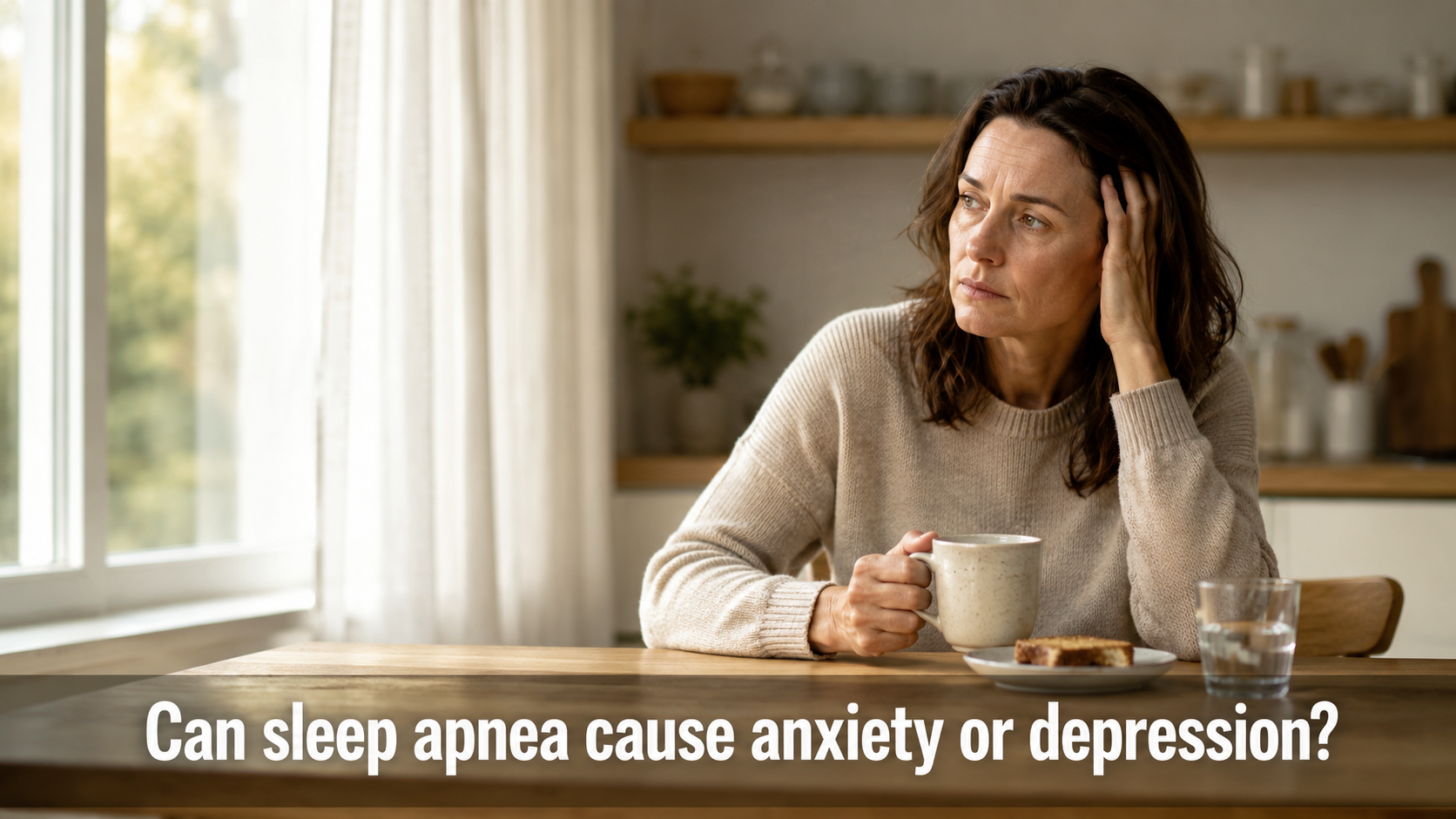
Can Sleep Apnea Cause Anxiety or Depression?
Sleep apnea, anxiety, and depression can blur into one tangled mess until the right evaluation pulls them apart, and according to Dr. Avinesh Bhar, Board-Certified Sleep Physician at SLIIIP.com, the overlap shows up in patients almost every week. Many people walk into a sleep visit thinking the problem is just stress, only to discover their breathing has been broken at night for years. Disrupted oxygen, broken sleep, and a tired brain can mimic or amplify mood symptoms in ways that mood medication alone cannot fix.
SLIIIP’s board-certified sleep physicians can do sleep evaluations for sleep apnea. Virtual consultations in all 50 states. Home sleep tests shipped to your door.
How Sleep Apnea, Anxiety, and Depression Connect
Sleep apnea is a breathing problem that happens during sleep. The airway narrows or collapses, and oxygen drops over and over through the night. The brain reacts by waking up just enough to restart breathing, often hundreds of times before morning, without the person ever knowing.
That hidden pattern leaves the brain in a low-grade state of stress. Heart rate spikes. Cortisol rises. Deep sleep gets shredded. After weeks or months of this, mood, focus, and energy start to slip. People feel irritable, on edge, or low without an obvious reason.
This is why so many patients show up first at a primary care or therapy visit with symptoms that look like pure anxiety or depression. The breathing problem hides under the surface, and the mood symptoms get the spotlight.
CHECK YOUR SLEEP SYMPTOMS: TAKE THE 2 MINUTE QUIZ
TAKE THE QUIZ
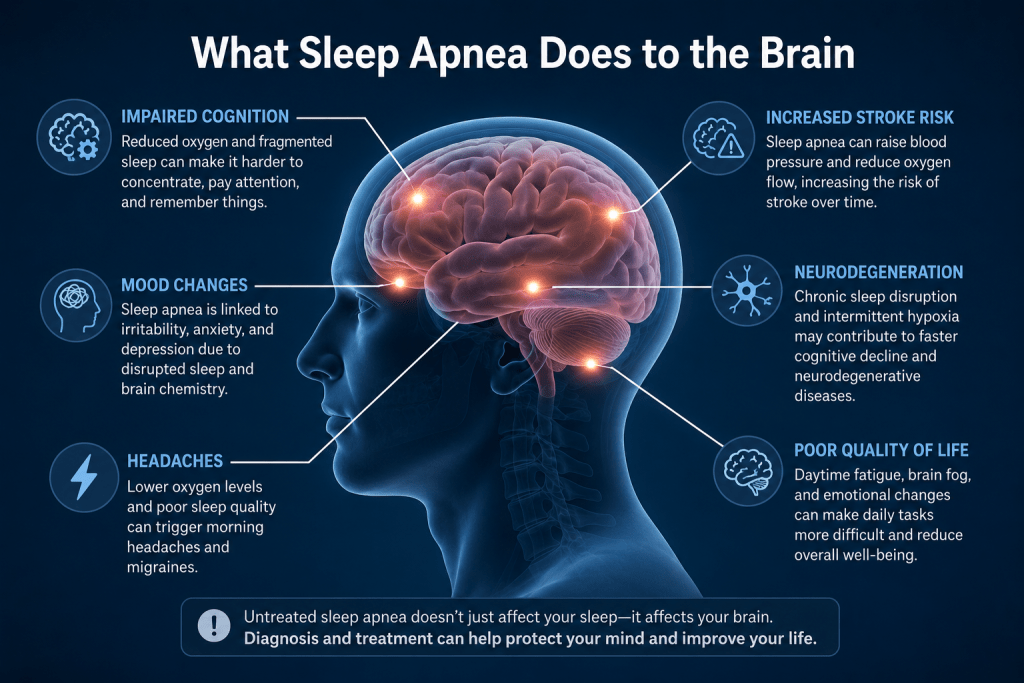
What Sleep Apnea Does to the Brain
Every time breathing pauses, the brain has to wake up. Even if the sleeper does not remember it, the disruption is real. The combination of low oxygen, fragmented sleep, and ongoing stress hormones changes how the brain processes emotion.
Over time, this can affect:
- Mood regulation
- Stress tolerance
- Memory and focus
- Patience and impulse control
- Motivation and energy
For a deeper look at the mental fog this can cause, read sleep apnea extreme brain fog.
Sleep Apnea and Anxiety
Anxiety from sleep apnea often shows up as a wired, jumpy feeling that does not match the day. People describe waking with a racing heart, gasping awake, or feeling on edge for no clear reason. The body has been fighting for breath all night, even if the mind cannot recall it.
If your heart pounds at night, see why do I wake up with my heart racing. If you wake up feeling braced for the day, why do I wake up anxious explains common patterns. Many people who think they have a pure anxiety disorder are surprised by what a sleep evaluation reveals.
Sleep Apnea and Depression
Depression linked to sleep apnea often feels heavy in a physical way. The body is tired. The morning feels impossible. Concentration is poor, and small tasks feel huge. Mood lifts can be hard to keep, even with therapy or medication, when the brain is starved of restorative sleep night after night.
Read more at sleep apnea and depression and is my depression actually a sleep problem. For people who feel low and exhausted no matter what, why do I feel depressed and tired all the time is a useful next read.
Why Sleep Apnea Is Easy to Miss
Sleep apnea does not always come with loud snoring or a partner pointing out gasping. Quiet forms exist, especially in women, and they can be missed for years. Some people have no daytime sleepiness at all and instead show up only with mood or anxiety symptoms.
Common but easy to dismiss signs include:
- Waking up tired even after a full night in bed
- Morning headaches
- Dry mouth in the morning
- Frequent trips to the bathroom at night
- Irritability or short temper
- Foggy thinking and poor focus
- Low motivation that does not respond to lifestyle changes
For more, see silent sleep apnea and signs of sleep apnea.
When Mood Treatment Alone Falls Short
Many people try therapy, antidepressants, or anxiety medication first. Some get partial relief. Others stay stuck. If sleep apnea is the engine driving the mood symptoms, treating the mood without treating the sleep can leave a person spinning their wheels.
This does not mean mental health care is wrong. It means it may not be the only piece. A sleep evaluation can show whether disordered breathing is part of the picture, and that information often changes the whole care plan.
For a broader look at the mental health and sleep connection, read effective sleep solutions for mental health and can lack of sleep cause depression.
What a Diagnosis Can Change
When sleep apnea is identified and treated, many people notice a shift in mood, energy, and focus within weeks. Better breathing at night means deeper sleep, steadier oxygen, and a calmer nervous system, which can lift the floor under both anxiety and depression.
The National Heart, Lung, and Blood Institute notes that untreated sleep apnea is linked to higher risk of high blood pressure, heart problems, and other health concerns. Treating it does more than help mood. It can protect long-term health.
The Centers for Disease Control and Prevention reports that adults need at least seven hours of quality sleep per night for the best health and well-being. People with sleep apnea may spend that time in bed but still miss out on the deep, restorative sleep the brain needs.
Watch: The Dangers of Poor Sleep
Lifestyle Habits That Support Better Sleep
While lifestyle changes will not cure sleep apnea on their own, they can support better sleep and lower the load on the body. Steady habits give the nervous system fewer surprises and more chances to recover.
Habits worth building:
- A regular wake time, even on weekends
- Limited alcohol, especially close to bed
- Side sleeping when possible
- Weight management when advised by a clinician
- A wind-down routine that reduces screen time
- Time outside in morning light
- Slow breathing or meditation before bed
For people whose minds will not settle, can’t shut brain off at night and why do I feel anxious at night offer practical reads.
How SLIIIP Can Help
SLIIIP.com gives people a way to evaluate sleep apnea without leaving home. Patients can meet a board-certified sleep physician by video, complete a home sleep test if needed, and get a personalized plan that fits their life.
Dr. Avinesh Bhar and the SLIIIP team take time to ask the questions that matter, including the ones about mood, energy, and stress that often get rushed in short visits. The process is private, structured, and built around clear answers, not guesswork. If sleep apnea is part of your anxiety or depression picture, finding out is the first step toward feeling like yourself again.
At Sliiip, we accept the following insurances:

SLIIIP’s board-certified sleep physicians can do sleep evaluations for sleep apnea. Virtual consultations in all 50 states. Home sleep tests shipped to your door.
Frequently Asked Questions
- Can sleep apnea cause anxiety or depression? Yes. Disrupted sleep, low oxygen, and ongoing stress responses can trigger or worsen both anxiety and depression.
- Can treating sleep apnea improve mood? Many people notice a steadier mood, better focus, and more energy after sleep apnea is properly treated.
- Why do I wake up with anxiety if I have sleep apnea? Breathing pauses can spike heart rate and stress hormones, which can leave the body feeling braced on waking.
- Can sleep apnea mimic a panic attack? Yes. Gasping awake or waking with a racing heart can feel like panic, even when the cause is breathing related.
- Do antidepressants help if sleep apnea is the real issue? They may give partial relief, but mood often improves more once the underlying sleep problem is addressed.
- Can mild sleep apnea still affect mood? Yes. Even mild sleep apnea can disrupt deep sleep enough to affect energy and mood over time.
- How is sleep apnea diagnosed? Through a sleep study, which can be done at home or in a lab, and reviewed by a board-certified sleep physician.
- Can a home sleep test detect sleep apnea? Yes. A home sleep test can identify many cases of sleep apnea, especially obstructive types.
- Does sleep apnea affect women differently? Yes. Women may show more fatigue, mood, and insomnia symptoms and less classic snoring.
- Can children have sleep apnea-related mood issues? Yes. In children, untreated sleep apnea can show up as irritability, attention issues, or behavior changes.
- Why do I feel low even after eight hours of sleep? Hours in bed do not equal restorative sleep. Sleep apnea can erase the depth needed to feel rested.
- Can sleep apnea cause panic disorder? Sleep apnea does not cause panic disorder directly, but the symptoms can overlap and worsen each other.
- Is depression linked to sleep apnea more common in men or women? Both are affected, but sleep apnea-linked depression is often missed in women due to subtler symptoms.
- How long until mood improves after sleep apnea treatment? Many people notice changes within a few weeks, though full benefits may take longer.
- Can stress make sleep apnea worse? Stress can worsen sleep quality overall, which can amplify the effects of sleep apnea.
- Should I get a sleep test if I already see a therapist? Yes, if mood symptoms are not improving as expected. A sleep evaluation can fill in the missing piece.
- Can sleep apnea cause memory problems? Yes. Poor sleep quality can affect short-term memory and focus over time.
- Does CPAP improve anxiety and depression? Many people report better mood and lower anxiety once their breathing is supported through sleep.
- Are there treatment options besides CPAP? Yes. Oral appliances and other approaches may work for some patients. A sleep physician can guide the choice.
- When should I talk to a sleep specialist? If you have ongoing fatigue, mood symptoms, snoring, gasping at night, or unrefreshing sleep, a sleep evaluation is worth booking.
Ready to Get Real Answers?
Sleep apnea, anxiety, and depression do not always announce themselves clearly. A real evaluation can show what is happening at night and what to do next, without long waits or in-person hassle.
SLIIIP’s board-certified sleep physicians can do sleep evaluations for sleep apnea. Virtual consultations in all 50 states. Home sleep tests shipped to your door.
Thank you for reading this article.
Latest posts
-
Evie Ring Sleep Tracking Review: Does It Work?
Last updated: September 14, 2026. Medically reviewed by Dr. Avinesh Bhar, Board-Certified Sleep Physician, SLIIIP.com. The Evie Ring tracks sleep using a finger-based light sensor that estimates heart rate, movement,…
-
Do EEG Sleep Headbands Actually Track Sleep Accurately?
Last updated: September 14, 2026. Medically reviewed by Dr. Avinesh Bhar, Board-Certified Sleep Physician, SLIIIP.com. EEG sleep headbands, like the Dreem headband, use dry electrodes to record brain wave activity,…
-
Circular Ring Sleep Accuracy: What It Gets Right and Wrong
Last updated: September 14, 2026. Medically reviewed by Dr. Avinesh Bhar, Board-Certified Sleep Physician, SLIIIP.com. The Circular Ring estimates sleep stages, heart rate, and recovery using a finger-worn light sensor,…
Get updates
Spam-free subscription, we guarantee. This is just a friendly ping when new content is out.

