👉 Register for Free. How to Diagnose Sleep Apnea Faster in Primary Care – FREE Webinar by Dr. Audrey Wells. – Friday, April 24 at 12 PM ET


Is It Just Snoring? Snoring and Heart Health: 4 Dangerous Signs Your Heart Is at Risk
Most people brush off snoring as a harmless habit, but the link between snoring and heart health deserves a closer look, says Dr. Avinesh Bhar, Board-Certified Sleep Physician at SLIIIP.com, because loud nightly snoring can sometimes point to a sleep problem that adds strain to your heart. Snoring on its own is usually not dangerous. But when it comes with pauses in breathing, morning headaches, a racing heart at night, or all day exhaustion, the connection between snoring and heart health is worth taking seriously.
SLIIIP’s board-certified sleep physicians can do sleep evaluations for sleep apnea. Virtual consultations in all 50 states. Home sleep tests shipped to your door.
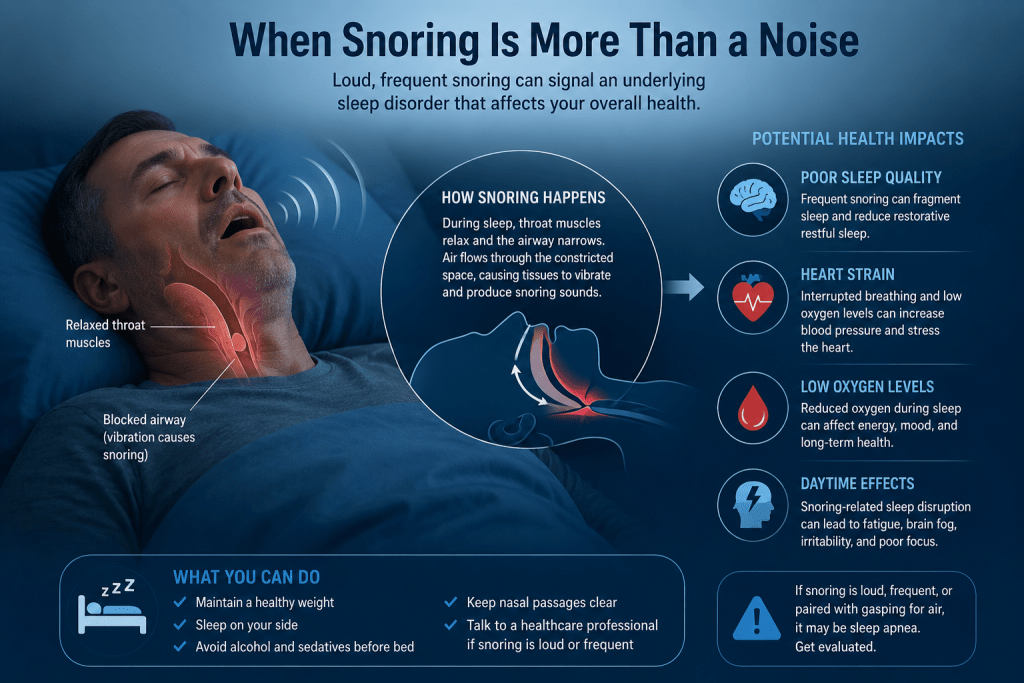
When Snoring Is More Than a Noise
Almost everyone snores once in a while. A cold, a glass of wine, or sleeping on your back can all cause it. That kind of snoring usually means nothing.
The picture changes when snoring is loud, happens most nights, and comes with other warning signs. Heavy, regular snoring can be a sign of obstructive sleep apnea, a condition where the airway narrows or closes during sleep and breathing keeps stopping and starting. Each pause makes the body work harder to get air, and that extra effort can put stress on the heart over time.
This is the heart of the snoring and heart health connection. It is not the sound itself that matters. It is what the sound may be telling you about your breathing while you sleep. If you have wondered whether your snoring is normal, our guide on is it normal to snore this much is a good place to start, along with our overview of sleep apnea and snoring.
Below are four signs that suggest your snoring may be worth a closer look.
CHECK YOUR SLEEP SYMPTOMS: TAKE THE 2 MINUTE QUIZ
TAKE THE QUIZ
Sign 1: Snoring With Pauses, Gasping, or Choking
The first and clearest sign is snoring that stops and starts, often with gasping, choking, or silence followed by a loud snort. A bed partner is often the first to notice.
These pauses can mean your breathing is repeatedly interrupted during sleep, which is the core feature of sleep apnea and a key reason snoring and heart health are linked. Every time breathing stops and restarts, oxygen levels can dip and the body has to react, which can strain the heart night after night.
If this sounds familiar, learn the signs of sleep apnea and read about why people wake up gasping for air. You can also take our sleep apnea quiz to see where you stand.
Sign 2: Morning Headaches and High Blood Pressure
The second sign shows up in the morning and at the doctor’s office. Waking up with headaches, along with blood pressure that runs high, can be connected to interrupted breathing during sleep.
When breathing keeps pausing, oxygen levels fall and rise through the night. That pattern can affect blood pressure and leave you waking up with a heavy head. High blood pressure is one of the most common heart concerns tied to sleep breathing problems.
This does not mean snoring causes high blood pressure for everyone. It means the two can travel together and are worth checking. For more, see our guides on waking up with headaches and whether sleep apnea can cause high blood pressure.
Sign 3: Waking Up With a Racing or Pounding Heart
The third sign happens in the middle of the night. You wake up suddenly with your heart racing or pounding, sometimes feeling anxious or short of breath.
When breathing pauses during sleep, the body can respond with a surge that speeds up the heart, which is why some people wake up with a racing heart. Over time, this kind of repeated stress is part of why doctors look at the link between sleep breathing and heart rhythm.
If you often wake up this way, our article on why you wake up with your heart racing explains more. You can also read about sleep apnea and atrial fibrillation, an irregular heart rhythm that research has connected to sleep breathing problems.
Sign 4: All Day Exhaustion No Matter How Long You Slept
The fourth sign is daytime exhaustion that does not match the hours you spent in bed. You sleep a full night but wake up drained, then fight to stay alert all day.
When snoring and interrupted breathing break up your sleep, your body never gets the deep, steady rest it needs, so you feel tired even after eight hours. That constant tiredness is one of the most common signals that something is disrupting your sleep quality.
Ongoing fatigue is also part of why sleep and heart health are linked, since poor rest affects the whole body. If this is your main concern, our guides on why you wake up tired and how sleep apnea affects the heart go deeper.
Why the Heart Connection Matters
Putting it together, the reason snoring and heart health get discussed so often is simple. Loud, regular snoring can be a sign of sleep apnea, and sleep apnea makes the body work harder through the night.
According to the National Heart, Lung, and Blood Institute, sleep apnea is linked to a range of heart and circulation concerns, which is why it is worth identifying rather than ignoring. The Centers for Disease Control and Prevention also notes that healthy sleep supports overall health.
To be clear, snoring does not mean you have heart disease, and not everyone who snores has sleep apnea. The point is that loud, frequent snoring with warning signs is a reason to get checked, not a reason to panic. Our articles on sleep and heart disease and whether sleep apnea can cause heart disease explain the bigger picture.
What You Can Do About Snoring
There are simple steps that may ease snoring and support better sleep. None of these are treatments for a heart condition or a replacement for a professional evaluation.
Try Lifestyle Adjustments
Sleeping on your side instead of your back, keeping a steady sleep schedule, and limiting alcohol in the evening can all reduce snoring for some people. Our guide on how to stop snoring covers more options.
Keep Your Airway Clear
Staying hydrated and managing congestion can help air move more freely at night. A cool, clean sleep space also helps.
Pay Attention to Patterns
Notice whether your snoring comes with pauses, gasping, headaches, a racing heart, or daytime tiredness. Tracking these patterns gives a clearer picture to share with a sleep physician.
Get Evaluated If Signs Add Up
If several warning signs show up together, a sleep evaluation can tell you whether sleep apnea is part of the picture. Learn how to get a home sleep test to see what the process looks like.
Watch: Why men snore?
When to Talk to a Sleep Physician
If your snoring is loud and frequent, and it comes with pauses, morning headaches, a racing heart at night, or all day exhaustion, it is reasonable to talk with a professional. You do not have to wait until something feels serious.
Dr. Avinesh Bhar notes that a sleep evaluation can help sort out whether snoring is harmless or a sign of sleep apnea, so you can protect both your sleep and your heart health. With SLIIIP, you can start with a virtual consultation from home, and get a home sleep test shipped to your door if one is needed.
At Sliiip, we accept the following insurances:

SLIIIP’s board-certified sleep physicians can do sleep evaluations for sleep apnea. Virtual consultations in all 50 states. Home sleep tests shipped to your door.
FAQ: Snoring and Heart Health
Is snoring bad for your heart?
Snoring by itself is usually harmless. Loud, frequent snoring that comes with pauses in breathing can be a sign of sleep apnea, which is linked to heart concerns.
How are snoring and heart health connected?
Heavy snoring can be a sign of sleep apnea, where breathing keeps stopping during sleep. That pattern makes the body work harder and can add strain to the heart over time.
Does snoring always mean sleep apnea?
No. Many people snore without having sleep apnea. The warning signs alongside snoring are what matter most.
What are the dangerous signs to watch for?
Pauses or gasping during sleep, morning headaches with high blood pressure, waking with a racing heart, and all day exhaustion are key signs worth checking.
Can snoring raise blood pressure?
Snoring tied to interrupted breathing can be connected to higher blood pressure. The two often travel together and are worth evaluating.
Why do I wake up with my heart racing?
A pause in breathing during sleep can trigger a surge that speeds up the heart, which can wake you up feeling like your heart is pounding.
Can sleep apnea affect heart rhythm?
Research has linked sleep apnea to irregular heart rhythms like atrial fibrillation. This is one reason ongoing snoring with warning signs is worth a look.
Why am I still tired after a full night of sleep?
Snoring and interrupted breathing break up your sleep, so you miss out on deep, steady rest and wake up tired even after enough hours.
Is loud snoring worse than quiet snoring?
Loud, frequent snoring, especially with pauses or gasping, is more likely to signal a breathing problem than occasional soft snoring.
Can I have sleep apnea without knowing it?
Yes. Many people are unaware because it happens during sleep. A bed partner often notices the snoring and pauses first.
Does my sleeping position affect snoring?
For some people, sleeping on the back makes snoring worse. Side sleeping can help, though it is not a fix for sleep apnea.
Can losing weight reduce snoring?
For some people, weight changes can affect snoring. Results vary, and a professional can help you understand your situation.
Does alcohol make snoring worse?
Alcohol can relax the airway and make snoring worse, so limiting it in the evening may help.
Should I be worried if only my partner notices the snoring?
A partner noticing loud snoring or pauses is valuable information. It is one of the most common ways sleep apnea is first spotted.
Can snoring be treated without a CPAP machine?
There are several approaches, and the right one depends on what is causing the snoring. A sleep physician can review your options.
How does a home sleep test work?
A home sleep test lets you do a sleep study in your own bed with a device shipped to you, then a physician reviews the results.
Is snoring in children the same concern?
Snoring in children can have different causes and is worth raising with a professional. This article focuses on adults.
When should I see a sleep physician about snoring?
If snoring is loud and frequent and comes with pauses, headaches, a racing heart, or daytime exhaustion, a professional opinion is reasonable.
Can a virtual visit help with snoring concerns?
Yes. A sleep physician can review your symptoms during a virtual visit and help decide whether a sleep test is needed.
Does SLIIIP offer at home sleep testing?
Yes. SLIIIP offers virtual consultations in all 50 states and can ship a home sleep test to your door when one is appropriate.
Take the Next Step for Your Sleep and Your Heart
If your snoring comes with pauses, morning headaches, a racing heart at night, or constant tiredness, it is worth finding out what is behind it. A sleep physician can help you protect both your sleep and your heart health.
SLIIIP’s board-certified sleep physicians can do sleep evaluations for sleep apnea. Virtual consultations in all 50 states. Home sleep tests shipped to your door.
Latest posts
-
Circular Ring Sleep Accuracy: What It Gets Right and Wrong
Last updated: September 14, 2026. Medically reviewed by Dr. Avinesh Bhar, Board-Certified Sleep Physician, SLIIIP.com. The Circular Ring estimates sleep stages, heart rate, and recovery using a finger-worn light sensor,…
-
Ballistocardiography Sleep Sensors: How Under-Mattress Tracking Works
Last updated: September 14, 2026. Medically reviewed by Dr. Avinesh Bhar, Board-Certified Sleep Physician, SLIIIP.com. Ballistocardiography sleep sensors sit under your mattress and detect the tiny mechanical vibrations your body…
-
RingConn vs Oura: Which Smart Ring Tracks Sleep Better?
Last updated: September 10, 2026. Medically reviewed by Dr. Avinesh Bhar, Board-Certified Sleep Physician, SLIIIP.com. RingConn and Oura both track sleep through a finger-worn ring, but they differ most in…
Get updates
Spam-free subscription, we guarantee. This is just a friendly ping when new content is out.

